Sourcing desiccant air dryers from China
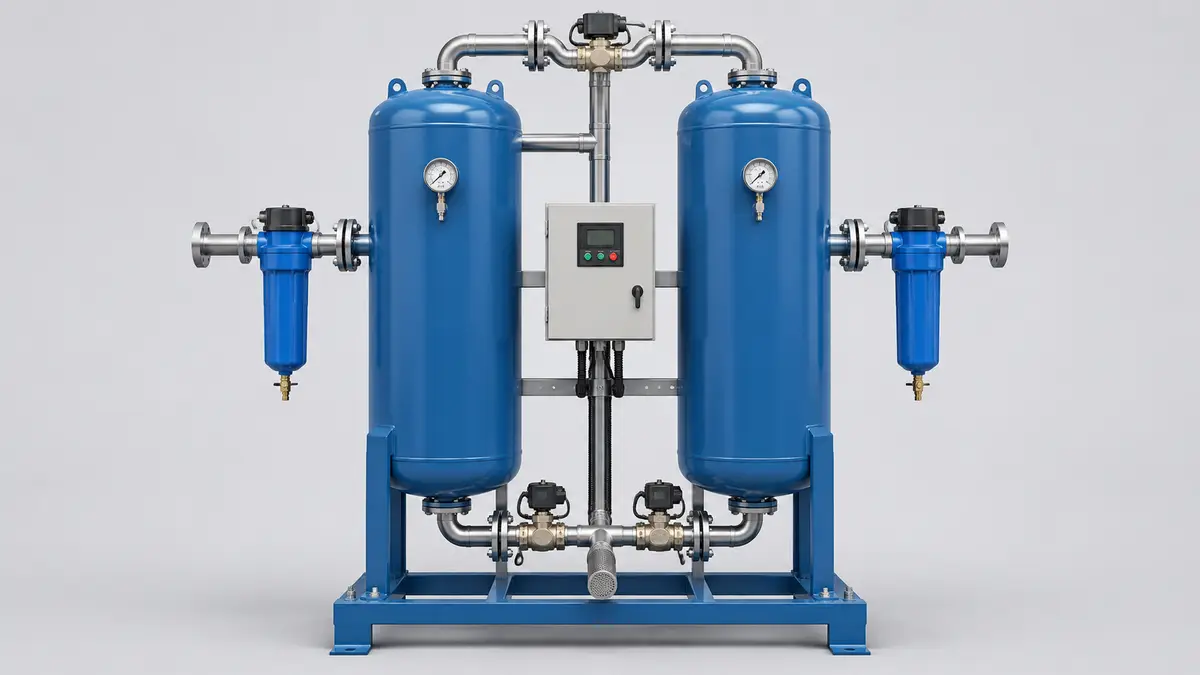
Desiccant compressed-air dryers from China have 0% UK duty across the relevant lines supplied. Pressure-equipment requirements must be checked before sale in Great Britain. Specify pressure dew point, inlet conditions and purge-air demand. Cambridge China Bridge sources desiccant compressed-air dryers.
Buying from China for a business? How our UK China sourcing agent service works · China sourcing agent for small orders and first imports
UK duty on desiccant compressed-air dryers
Read from the UK Trade Tariff on 17 December 2026, all supplied lines under heading 8421 carry 0% duty for goods from China. The supplied facts record no anti-dumping or countervailing duties, suspensions or attached import controls. Import VAT is 20%.
Heading 8421 includes apparatus for filtering or purifying gases. Check 8421 39 25 90 for a complete desiccant compressed-air dryer. The stainless-steel housing line is conditional on its construction and bore sizes; the parts lines concern separately imported qualifying parts. Do not classify loose desiccant automatically as machinery parts.
Confirm the commodity code using the dryer specification, drawings and shipment contents. For the related dryer family and wider heading context, see refrigerated compressed-air dryers.
| Goods | Commodity code | Duty | Anti-dumping or countervailing duty on China |
|---|---|---|---|
| Air filtering or purifying apparatus, including qualifying desiccant air dryers | 8421 39 25 90 | 0% | None |
| Stainless-steel gas purifiers with inlet and outlet bores not exceeding 1,3 cm | 8421 39 15 00 | 0% | None |
| Parts of apparatus classified under 8421 39 15 | 8421 99 10 00 | 0% | None |
| Other filtering or purifying machinery parts | 8421 99 90 99 | 0% | None |
Specify dew point, regeneration and pressure towers
Specify pressure dew point at the outlet, inlet temperature and pressure, inlet moisture conditions, usable outlet flow and allowable pressure drop. State the flow reference conditions. Choose heatless, heated or blower-assisted regeneration, and agree purge-air consumption, electrical demand, desiccant type, filter arrangement and access for servicing.
Check the pressure-equipment classification of the towers and assembled dryer before ordering. Applicable pressure-equipment requirements must be met before placement on the Great Britain market; the conformity assessment procedure depends on classification. Ask for the assessment basis and documents for the exact assembly.
For mains-powered versions, check electrical safety and electromagnetic compatibility against the supplied configuration, as explained in our CE and UKCA guide. Before using qualifying pressure equipment, a written scheme of examination must be in place and an examination undertaken. Discuss the proposed installation with the person responsible for examining the pressure system.
Worked duty example
Illustrative example, not a quote: 4 compact desiccant compressed-air dryers; illustrative order, not a quote under 8421 39 25 90, invoiced at £4,000 free on board, with £2,000 of freight and insurance to the UK. The customs value is £6,000. Duty at 0% is £0. Import VAT at 20% is charged on the customs value plus duty, £6,000, so it is £1,200. With no duty, the only import tax is the VAT, which a VAT-registered importer can usually reclaim. The import duty and VAT guide explains each step.
Inspection checklist
Performance: witness dew-point testing through regeneration and tower changeover at the agreed inlet conditions and flow; record pressure drop and purge-air consumption.
Pressure assembly: compare tower identification, pressure ratings, fittings and protective devices with the approved drawings and supplied documentation; review the factory leak-test records.
Controls: check valve sequencing, repressurisation, alarms, dew-point sensor response and heater interlocks where fitted; record the tested controller settings.
Arrival: inspect towers, pipework and mountings for transit damage, check desiccant dust and filter condition, and reconcile serial numbers, accessories and documents with the packing list. Agree the scope through quality inspection.
Working out your own order? Send us the product on WhatsApp and we reply the same working day: WhatsApp us
What goes wrong
A catalogue flow rating can hide different inlet conditions or substantial purge losses. A brief dew-point reading can miss wet air during tower changeover. Agree the acceptance conditions and test sequence before production, including how the factory will measure usable outlet flow.
Oil carry-over, failed drains and unsuitable upstream filtration can contaminate the desiccant. Dust carry-over can expose poor bed restraint or missing downstream filtration. Ask for a maintenance plan covering filters, valves, silencers and desiccant replacement, and retain the tested settings for commissioning.
Cambridge China Bridge sources these products for UK businesses, checking the factory and the documents before shipment. See factory verification. For machinery and equipment, see machinery imports.
Frequently asked questions
What is the UK import duty on desiccant air dryers from China?
The relevant supplied lines carry 0% duty, with no recorded anti-dumping or countervailing duty. Import VAT is 20%. Confirm the complete dryer’s commodity code before shipment.
Which dew-point specification should I give the factory?
State the required outlet pressure dew point together with inlet temperature, pressure, moisture conditions and usable outlet flow. Ask for results through regeneration and tower changeover.
Do desiccant air dryers need pressure-equipment checks?
Check the towers and assembled dryer against the applicable pressure-equipment requirements. The conformity assessment procedure depends on classification; request the assessment basis for the exact assembly.
How do I compare heatless and heated desiccant dryers?
Compare usable outlet flow, purge-air consumption, electrical demand, pressure drop and dew-point stability under the same inlet conditions. Include filters, controls and maintenance access in the comparison.