Sourcing densified fingerboard blanks from China
Densified wood fingerboard blanks qualifying under heading 4413 pay 0% UK duty from China, with no anti-dumping or countervailing duty listed. Before first placing this timber on the Great Britain market, confirm the applicable timber due-diligence requirements with the relevant authority or your customs broker. Cambridge China Bridge sources densified wood fingerboard blanks.
Buying from China for a business? How our UK China sourcing agent service works · China sourcing agent for small orders and first imports
Duty on densified wood fingerboard blanks
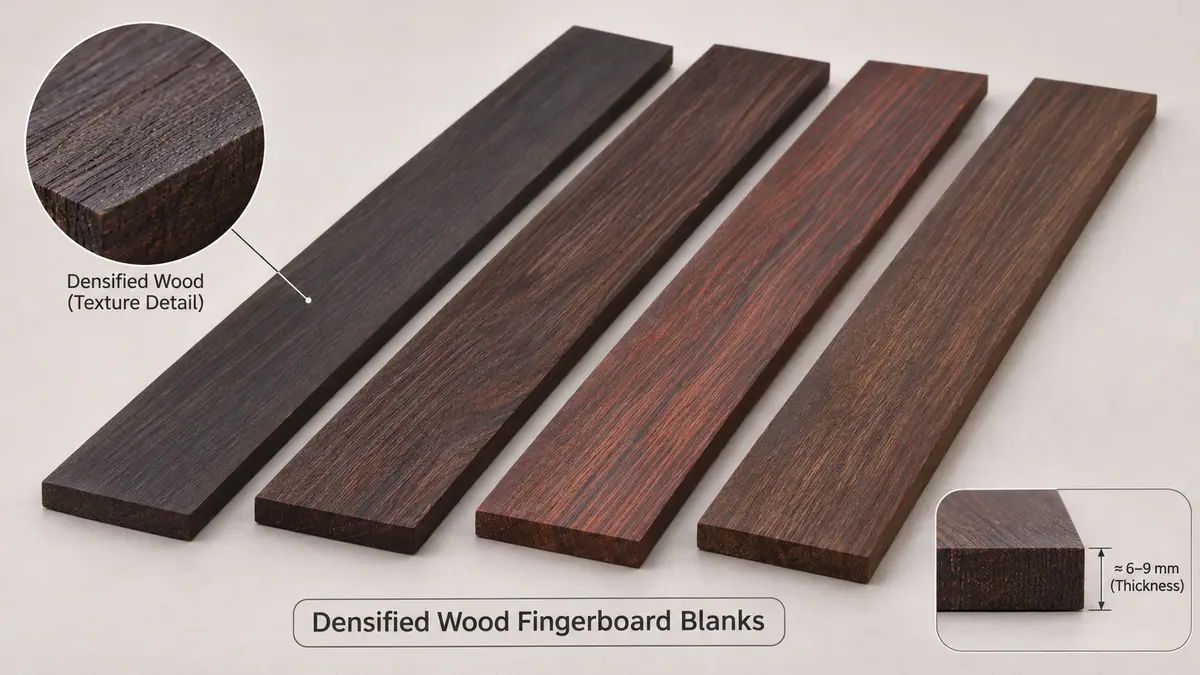
Heading 4413 covers densified wood in blocks, plates, strips or profile shapes. This guide concerns stock for machining fingerboards. The table shows different stock forms under the same tariff line, rather than separate commodity codes. See the wider densified wood guide for other uses.
Read from the UK Trade Tariff on 4 October 2026, code 4413 00 00 00 carried 0% duty for goods from China. The supplied tariff record lists no anti-dumping or countervailing duty, suspensions or attached import controls. Densified wood remains covered by timber due diligence: the importer first placing it on the Great Britain market needs species, harvest country and legality evidence. Traders must retain records of their timber suppliers and business customers.
Confirm the commodity code against the material, densification process and condition at shipment. Provide drawings and photographs showing any shaping or machining; do not assume a finished instrument component has the same classification as wood stock.
| Goods | Commodity code | Duty | Anti-dumping or countervailing duty on China |
|---|---|---|---|
| Densified wood blocks for cutting fingerboard blanks | 4413 00 00 00 | 0% | None |
Specify the blank for your fingerboard process
Specify the wood species, lamination arrangement, densification process, resin and colour. Agree length, width, thickness, flatness and machining allowance against a drawing. State whether you want plain stock or machining, including tapering, surface curvature or fret slots, and identify which operations your workshop will perform.
Agree moisture, density and appearance criteria using an approved sample. Trial the blank with your actual cutters, fret-slotting process, adhesive and finish. Check slot edges for chipping, fret seating for splitting, glue adhesion and colour transfer after handling. Ask for species and harvest-origin documents before ordering.
Worked duty example
Illustrative example, not a quote: Illustrative order: 2,000 densified wood strip blanks for fingerboard machining under 4413 00 00 00, invoiced at £9,500 free on board, with £1,530 of freight and insurance to the UK. The customs value is £11,030. Duty at 0% is £0. Import VAT at 20% is charged on the customs value plus duty, £11,030, so it is £2,206. With no duty, the only import tax is the VAT, which a VAT-registered importer can usually reclaim. The import duty and VAT guide explains each step.
Inspection checklist
Dimensions: measure length, width, thickness, bow and twist against the drawing; confirm enough material remains for the intended machining.
Material and moisture: compare density, moisture, colour and layer arrangement with the agreed specification and approved sample.
Machining and bonding: cut and slot a sample; inspect for chipped edges, cracks, open glue lines and delamination, then trial the intended adhesive and finish.
Packing and traceability: check for damp wrapping, mould and damaged edges; match batch identification to the material and harvest-origin documents. Use the inspection guide to brief the checks.
Working out your own order? Send us the product on WhatsApp and we reply the same working day: WhatsApp us
What goes wrong
A blank can look acceptable before machining but chip at fret slots, split during fret installation or expose weak glue lines when surfaced. Uneven moisture can leave too little usable thickness after flattening. Resin or colour variation can change the appearance and the response to glue or finish.
Approve a machined sample before releasing the production batch. Keep the drawing, material specification and sample linked to the order, and repeat the machining checks on arrival. If species or harvest evidence is missing, confirm with the relevant authority or your customs broker what is needed for the timber due-diligence file.
Cambridge China Bridge sources these products for UK businesses, checking the factory and the documents before shipment. See factory verification. For repeat volumes, see container programmes.
Frequently asked questions
What is the UK import duty on densified wood fingerboard blanks from China?
Blanks qualifying under 4413 00 00 00 carried 0% duty in the supplied tariff record. No anti-dumping or countervailing duty was listed.
Do densified fingerboard blanks need timber due diligence?
For blanks covered by heading 4413, confirm with the relevant authority or your customs broker whether timber due diligence applies before first placement on the Great Britain market and what evidence is needed. Ask the supplier for species, harvest country and legality evidence.
Can I use the same code for a finished fingerboard?
Confirm classification from the actual condition at shipment. Give your customs broker the material details, drawing and machining description before using the wood-stock code.
What should I test before ordering fingerboard blanks?
Machine and slot a sample with your workshop tools. Check chipping, splitting, fret seating, glue adhesion and finish compatibility, alongside moisture, flatness and usable dimensions.