Sourcing defatted soya flour from China
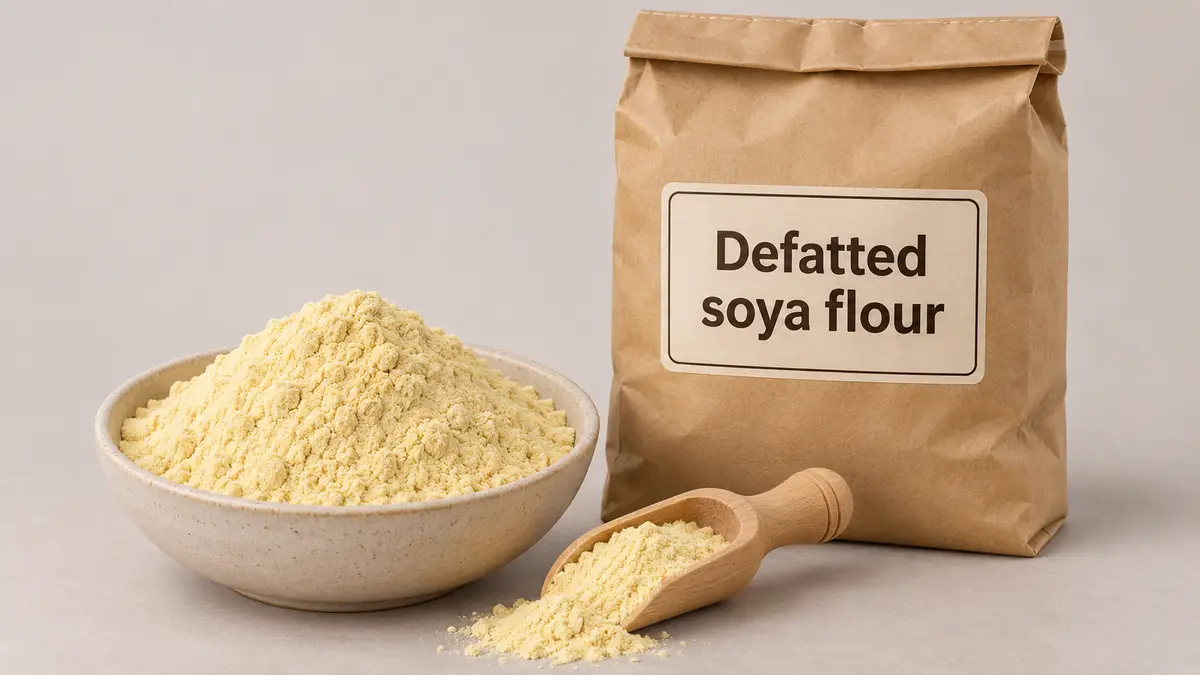
Defatted soya flour from China carries 0% UK duty when classified as soybean oil-extraction residue. For food use, imported soya flour must meet the same or equivalent food hygiene standards and procedures as food produced in Great Britain. Cambridge China Bridge sources defatted soya flour.
Buying from China for a business? How our UK China sourcing agent service works · China sourcing agent for small orders and first imports
Duty and the extraction process
Read from the UK Trade Tariff on 24 November 2026, heading 2304 covers solid residues from soybean oil extraction, including ground material. The supplied line, 2304 00 00 00, carries 0% duty for goods from China, with no anti-dumping or countervailing duty and no suspension listed. This guide concerns defatted flour made from that extraction residue.
The tariff attaches organic import and waste import controls, plus an export waste control relevant to later exports. Organic imports from China into Great Britain need a certificate of inspection for each consignment and checks against the recognised organic registers. For waste entering England under notification controls, the exporter applies for consent in the dispatch country. Ask your customs broker to confirm waste status and the applicable controls before shipment.
Give your broker the extraction process, composition, subsequent treatment and intended use to confirm the commodity code. A supplier's flour description alone is insufficient. For the broader product family, see oilcake and soybean meal. The supplied tariff file contains only this commodity line.
| Goods | Commodity code | Duty | Anti-dumping or countervailing duty on China |
|---|---|---|---|
| Defatted soya flour from soybean oil extraction | 2304 00 00 00 | 0% | None |
Specify extraction, heat treatment and flour performance
State whether the flour is intended for food or feed, how the oil was extracted, whether hulls were removed and what heat treatment followed. Agree protein, residual oil, moisture, fibre, ash and particle size, including the laboratory methods and reporting basis. For solvent extraction, ask the laboratory to include residual-solvent testing in the purchase specification.
For bakery or other food use, compare colour, flavour, water absorption and performance in your own recipe with an approved sample. Record whether enzyme activity is wanted or whether toasted flour is needed. Agree urease activity and protein solubility checks where relevant to the application.
Flour from genetically modified sources must be labelled accordingly. For feed use, confirm applicable feed business registration, feed labelling and undesirable substance requirements with the relevant authority. Agree the intended use before approving the supplier's specification.
Worked duty example
Illustrative example, not a quote: Illustrative order: 12 tonnes of defatted soya flour under 2304 00 00 00, invoiced at £30,000 free on board, with £3,500 of freight and insurance to the UK. The customs value is £33,500. Duty at 0% is £0. Import VAT at 20% is charged on the customs value plus duty, £33,500, so it is £6,700. With no duty, the only import tax is the VAT, which a VAT-registered importer can usually reclaim. The import duty and VAT guide explains each step. This assumes the goods are standard-rated for VAT. Most food for human consumption is zero-rated, and animal feed can be too, in which case no import VAT is due, so check the rate for your product in HMRC's VAT Notice 701/14.
Inspection checklist
Identity: match the extraction route, heat treatment and flour appearance to the contract and retained sample. Investigate unexpected hull fragments, grit or coarse meal.
Analysis: independently sample the shipment and compare protein, oil, moisture, fibre, ash and particle size with the agreed specification. Agree microbiological, contaminant and residual-solvent testing with the laboratory for the intended use.
Condition: inspect arriving bags for dampness, caking, insects, mould and unusual odours. Check liners, seams and pallet condition, and retain samples from affected bags separately.
Documents: match batch references on bags, analysis reports and delivery documents. Check genetically modified status and organic paperwork where relevant. For prepacked food, allergens must be emphasised each time they appear in the ingredients list.
Working out your own order? Send us the product on WhatsApp and we reply the same working day: WhatsApp us
What goes wrong
Flour can meet a protein specification yet perform differently because heat treatment, particle size or protein solubility has changed. Excess hull material changes fibre and colour; damp bags cake during transit. Compare production samples in the intended recipe and agree which results determine acceptance.
A feed-grade specification does not establish suitability for food use. Missing batch links, unsupported non-genetically-modified claims or incomplete organic paperwork leave the buyer unable to verify the supplied lot. Agree sampling and document checks through the quality inspection guide.
Cambridge China Bridge sources these products for UK businesses, checking the factory and the documents before shipment. See factory verification. For repeat volumes, see container programmes.
Frequently asked questions
What is the UK import duty on defatted soya flour from China?
The supplied tariff record gives 0% under 2304 00 00 00 for soybean oil-extraction residue, with no anti-dumping or countervailing duty and no suspension listed. Confirm that the actual flour belongs in this heading.
Can I use feed-grade defatted soya flour in food?
A feed specification does not establish food suitability. Obtain a food-use specification, processing details and suitable batch testing. Imported food-use soya flour must meet the same or equivalent hygiene standards as food produced in Great Britain.
Does flour made from genetically modified soya need labelling?
Yes. Official guidance says flour from a genetically modified source must be labelled as genetically modified. Obtain the supplier's source declaration and match it to the shipment.
What paperwork is needed for organic defatted soya flour?
For China-to-Great-Britain organic imports, obtain a certificate of inspection for each consignment and check the exporter’s control body and export country against the recognised organic registers.
Sources
- UK Trade Tariff — commodity codes and duty
- Food Standards Agency: importing cereals
- Food Standards Agency: allergen guidance for food businesses
- Food Standards Agency: genetically modified foods
- Importing organic food, feed and seed to the UK
- Environment Agency: waste export and import
- HMRC — Food products (VAT Notice 701/14)