Sourcing darkroom print washers from China
Darkroom photographic print washers and dedicated parts within heading 9010 carry 0% UK duty from China across the relevant lines, with no trade remedies shown. Importers supplying consumer-use washers are responsible for their safety; check water flow and leaks before shipment. Cambridge China Bridge sources darkroom photographic print washers.
Buying from China for a business? How our UK China sourcing agent service works · China sourcing agent for small orders and first imports
UK duty on darkroom print washers
Read from the UK Trade Tariff on 3 October 2026, heading 9010 covers photographic laboratory apparatus and equipment, projection screens and parts. For a standalone darkroom print washer, consider 9010 50 00 00; dedicated parts and accessories fall for consideration under 9010 90 20 00. Both carry 0% duty for goods from China. The supplied extract shows no anti-dumping or countervailing duty and no suspensions.
The extract attaches a control labelled DCMS Export Licence. Official guidance states that importing objects of cultural interest into Great Britain has no licensing requirement. Ask your customs broker to confirm how the attached control applies to your goods, particularly used equipment, and check any country-of-export paperwork.
The table repeats the relevant equipment and parts codes for different buying descriptions. Confirm the commodity code using the washer's function, construction and supplied components. Separately supplied generic hoses or pumps need their own classification check. See photographic paper processing machines for the wider equipment family and UK import duty and VAT for the calculation method.
| Goods | Commodity code | Duty | Anti-dumping or countervailing duty on China |
|---|---|---|---|
| Darkroom photographic print washers | 9010 50 00 00 | 0% | None |
| Dedicated print-washer parts | 9010 90 20 00 | 0% | None |
Specify print spacing and water circulation
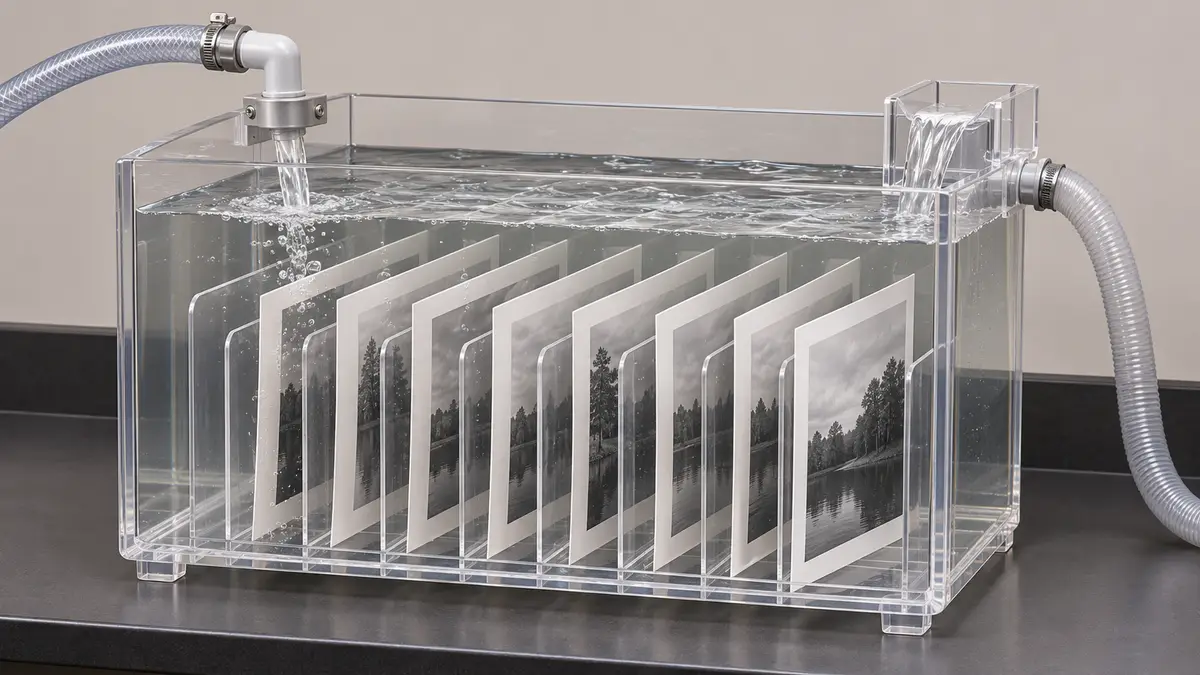
Specify fibre-based or resin-coated paper, maximum print dimensions, usable compartment size, divider spacing and batch capacity. Agree tank material, joint construction, inlet fittings, overflow position, drain arrangement and access for cleaning. State whether the washer is a passive water-fed tank or includes a powered pump.
Ask the factory to demonstrate circulation with the intended paper loaded. Prints should remain separated without blocking the inlet or overflow. Agree a method for checking residual fixer after washing rather than accepting an unsupported archival claim. Request packing that protects tank corners, dividers and projecting fittings.
Importers supplying consumer-use washers are responsible for their safety. Check sharp edges, stability when filled and hose security. For powered models, request electrical safety evidence matching the finished model. Where electrical equipment safety rules apply, the importer must ensure that easily understandable English instructions accompany the equipment.
Worked duty example
Illustrative example, not a quote: 50 passive darkroom print washers, illustrative order only under 9010 50 00 00, invoiced at £10,000 free on board, with £900 of freight and insurance to the UK. The customs value is £10,900. Duty at 0% is £0. Import VAT at 20% is charged on the customs value plus duty, £10,900, so it is £2,180. With no duty, the only import tax is the VAT, which a VAT-registered importer can usually reclaim. The import duty and VAT guide explains each step.
Inspection checklist
Tank: fill the sample, inspect joints and fittings for leaks, and check stability on the intended bench.
Circulation: load the agreed paper, check separation and water movement throughout the tank, and confirm the overflow drains freely.
Print contact: inspect divider edges and surfaces for burrs, scratches or trapped debris that could mark wet prints.
Packing: check corner protection, secured dividers and fittings, and compare the supplied components with the approved sample. Use our quality inspection guide to brief the inspector.
Working out your own order? Send us the product on WhatsApp and we reply the same working day: WhatsApp us
What goes wrong
A washer can look sound when empty yet leak when filled. Dividers can bow, trap prints together or leave pockets with poor circulation. Rough edges scratch softened paper, while an undersized overflow lets the tank spill onto the bench. Test the loaded sample and agree acceptance checks before production.
Cracked corners and broken hose connections can result from packing that leaves fittings exposed. Check arrival damage before filling the washer. Keep photographs of defects and compare replacement parts with the approved design; a changed divider or inlet can alter washing performance.
Cambridge China Bridge sources these products for UK businesses, checking the factory and the documents before shipment. See factory verification. For components and parts, see sourcing for manufacturers.
Frequently asked questions
What is the UK import duty on darkroom print washers from China?
The supplied tariff extract shows 0% for photographic laboratory equipment under 9010 50 00 00 and dedicated parts under 9010 90 20 00, with no trade remedies or suspensions.
Can the same washer handle fibre-based and resin-coated prints?
Ask for a loaded demonstration with each intended paper type. Check print separation, wet-paper handling and circulation, and agree how washing performance will be assessed.
What paperwork should I ask for on a powered print washer?
Request electrical safety evidence matching the finished model. Where electrical equipment safety rules apply, the importer must ensure that easily understandable English instructions accompany it.
What should I check when a print washer arrives?
Check tank corners, joints, dividers and fittings before filling. Then test for leaks, stability, unobstructed drainage and circulation with the intended prints loaded.