Sourcing photo paper processors from China
Photographic paper processing machines and relevant parts from China carry 0% UK duty across the selected lines. New machinery supplied in Great Britain must have UKCA or CE marking, a declaration of conformity and English instructions. Cambridge China Bridge sources photographic paper processing machines.
Buying from China for a business? How our UK China sourcing agent service works · China sourcing agent for small orders and first imports
Duty on paper processors and their parts
Read from the UK Trade Tariff on 3 October 2026, heading 9010 covers photographic laboratory apparatus, equipment and parts, alongside other goods. The selected paper-processing lines all carry 0% duty for goods from China. The supplied snapshot records no anti-dumping or countervailing duties and no suspensions on these lines.
The snapshot attaches a control labelled “DCMS Export Licence”, with document-waiver wording. Government guidance states that cultural objects have no import licensing requirement in Great Britain, but imports from China must comply with China's export licensing regime where applicable. Ask your customs broker to confirm the attached control and any waiver for your shipment.
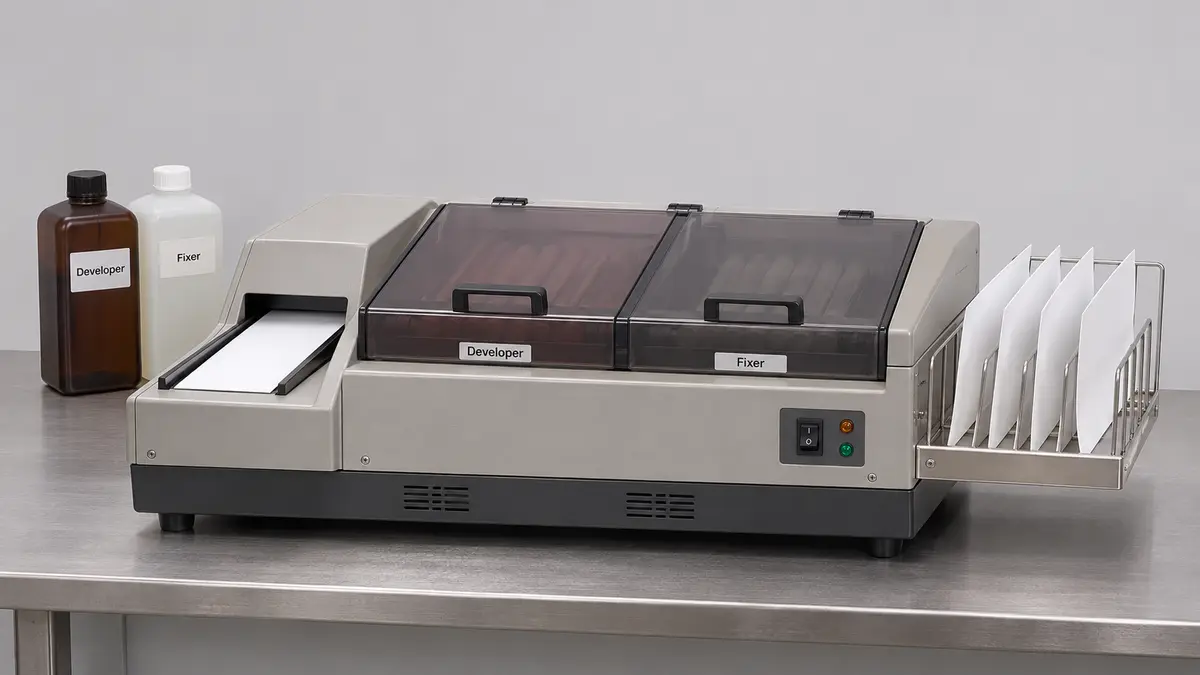
Distinguish automatic development of paper in rolls from other laboratory equipment, and identify the parent machine when ordering parts. Confirm the commodity code using the machine's functions and paper format. For the wider heading, see photographic film developing machines.
| Goods | Commodity code | Duty | Anti-dumping or countervailing duty on China |
|---|---|---|---|
| Automatic developing equipment for photographic paper in rolls | 9010 10 00 00 | 0% | None |
| Other photographic laboratory equipment, including other paper processors | 9010 50 00 00 | 0% | None |
| Parts and accessories for other photographic laboratory equipment | 9010 90 20 00 | 0% | None |
| Other parts and accessories, including for automatic roll-paper processors | 9010 90 80 00 | 0% | None |
Specify the paper path and processing chemistry
State whether the machine processes rolls or cut sheets, colour or black-and-white paper, and the intended chemistry. Specify paper width, thickness and surface, transport speed, bath temperature control, tank capacity, replenishment method, washing, drying and output handling. Agree water, drainage, extraction and electrical connections against the installation site.
Request a processing trial using your intended paper and chemistry, with control strips and finished prints retained for comparison. Agree access for cleaning racks, replacing rollers and servicing pumps. List spare seals, heaters, sensors and drive components by the supplier's part references.
For new machinery supplied in Great Britain, require UKCA or CE marking, a declaration of conformity and English instructions. Check electromagnetic compatibility evidence for powered controls where the equipment falls within those rules. The responsible person must ensure the technical file is compiled and available on request.
Worked duty example
Illustrative example, not a quote: A photographic roll-paper processing machine for a print laboratory, illustrative only under 9010 10 00 00, invoiced at £36,000 free on board, with £2,400 of freight and insurance to the UK. The customs value is £38,400. Duty at 0% is £0. Import VAT at 20% is charged on the customs value plus duty, £38,400, so it is £7,680. With no duty, the only import tax is the VAT, which a VAT-registered importer can usually reclaim. The import duty and VAT guide explains each step.
Inspection checklist
Paper transport: run the agreed paper through the complete path; check tracking, roller marks, scratches, jams and wet sheets sticking together.
Processing: compare control strips and prints with the approved trial; check bath stability, replenishment delivery, circulation and tank leaks.
Drying and safety: check dry, flat output, heater control, guards, cover interlocks and emergency stopping against the agreed specification.
Arrival: inspect racks, tanks and pipe connections for transit damage; match the machine identity to its declaration and check English instructions and ordered spares. Use our quality inspection guide.
Working out your own order? Send us the product on WhatsApp and we reply the same working day: WhatsApp us
What goes wrong
A demonstration with the supplier's paper can hide problems with your stock. Incorrect transport settings, worn or unsuitable rollers, unstable bath temperatures and inconsistent replenishment can produce scratches, uneven colour or variable density. Make acceptance depend on an agreed trial with your materials.
Residual liquid, unsecured racks and exposed pipe connections can cause leaks or damage during transport. Agree draining, cleaning, internal restraint and protection before packing. A conformity mark alone does not show that the supplied configuration matches the documents; compare the model, controls and installed options.
Cambridge China Bridge sources these products for UK businesses, checking the factory and the documents before shipment. See factory verification. For components and parts, see sourcing for manufacturers.
Frequently asked questions
What is the UK import duty on photographic paper processing machines from China?
The supplied tariff snapshot shows 0% duty on the selected machines and parts under heading 9010, with no recorded anti-dumping or countervailing duty.
Which commodity code covers an automatic roll-paper processor?
9010 10 00 00 expressly covers automatic developing equipment for photographic paper in rolls. Other laboratory equipment and separately imported parts have different lines; confirm the actual machine's functions.
Do photographic paper processors need CE or UKCA marking?
Check the evidence for the exact supplied model.
How should I test a paper processor before shipment?
Use your intended paper and chemistry. Compare control strips and finished prints with the approved trial, then check transport marks, bath stability, replenishment, leaks and dry output.