Sourcing copper heat-exchanger tubes from China
Copper heat-exchanger tubes from China carry a flat 4% UK duty across the listed tube lines, with no listed trade remedies. Specify alloy, wall thickness and cleanliness, and confirm pressure-equipment scope for the intended supply. Cambridge China Bridge sources copper heat-exchanger tubes.
Buying from China for a business? How our UK China sourcing agent service works · China sourcing agent for small orders and first imports
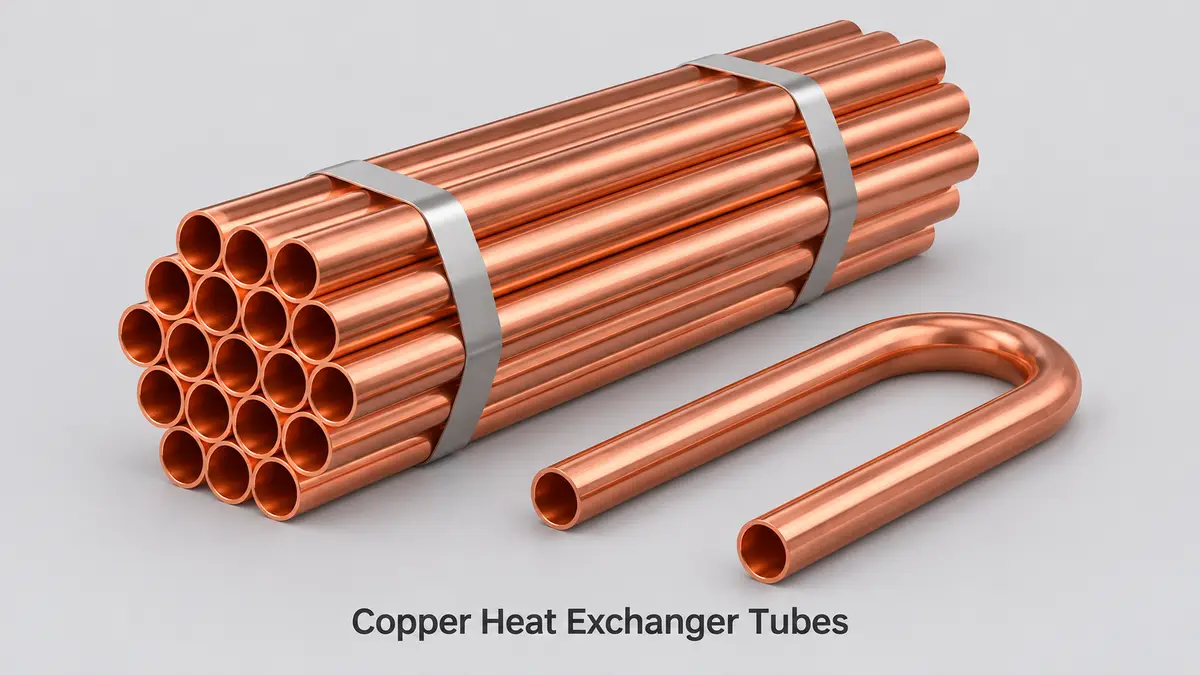
UK duty on copper heat-exchanger tubes
Read from the UK Trade Tariff on 1 October 2026, heading 7411 covers copper tubes and pipes. Relevant heat-exchanger supplies include refined copper straight tubes and coils, brass tubes and cupro-nickel tubes. The listed Chinese-origin lines all carry 4% duty. The supplied tariff record lists no anti-dumping or countervailing measures, suspensions or import controls.
Confirm the alloy and supplied form before choosing the commodity code. Describe any further processing to your customs broker rather than selecting a coil code from its shape alone. For related products within the heading, see our copper refrigeration and capillary tubes guide.
| Goods | Commodity code | Duty | Anti-dumping or countervailing duty on China |
|---|---|---|---|
| Straight refined copper tubes | 7411 10 10 00 | 4% | None |
| Unprocessed refined copper level wound coils, smooth or inner-grooved | 7411 10 90 10 | 4% | None |
| Other refined copper tubes | 7411 10 90 90 | 4% | None |
| Straight brass tubes | 7411 21 10 00 | 4% | None |
| Cupro-nickel or nickel silver tubes | 7411 22 00 00 | 4% | None |
Specify the tube for the exchanger design
Write the material grade, temper, outside diameter, wall thickness and tolerances into the order. State straight length or coil format, surface finish, smooth or inner-grooved bore, end preparation and internal cleanliness. For formed tubes, supply a drawing showing bend geometry and permitted ovality. Ask the exchanger designer to confirm compatibility with the fluid, operating temperature and joining method.
The pressure-equipment safety regulations cover pressure equipment and assemblies with maximum allowable pressure above 0.5 bar, subject to exclusions. Heat exchangers consisting of pipes for cooling or heating air are considered piping. Ask the designer to confirm the regulatory scope of the supplied product before purchase, including whether the order is tube stock, piping or an assembly.
Request batch-linked mill certificates and agree material, dimensional and leak-test acceptance criteria with the designer. Specify sealed ends and supports that prevent long tubes rubbing or sagging during transport. Use factory verification to check the supplier's production and testing capability.
Worked duty example
Illustrative example, not a quote: Illustrative batch of straight copper tubes for replacement heat-exchanger bundles under 7411 10 10 00, invoiced at £21,500 free on board, with £2,500 of freight and insurance to the UK. The customs value is £24,000. Duty at 4% is £960. Import VAT at 20% is charged on the customs value plus duty, £24,960, so it is £4,992. Import taxes total £5,952; a VAT-registered importer can usually reclaim the VAT, so the lasting cost is the £960 of duty. The import duty and VAT guide explains each step.
Inspection checklist
Material: match bundle labels and mill certificates to the ordered grade and temper; arrange composition or hardness checks where the application warrants them.
Dimensions: measure outside diameter and wall thickness around sample tube ends; check straightness, ovality, cut length and formed bends against the drawing.
Bore and ends: check for moisture, oil residue, chips and damaged caps; inspect end preparation and burrs before joining trials.
Integrity and packing: review batch-linked test records against the agreed acceptance criteria, inspect dents and rub marks, and check bundle supports. See quality inspection explained.
Working out your own order? Send us the product on WhatsApp and we reply the same working day: WhatsApp us
What goes wrong
Thin walls, incorrect temper and flattened bends can leave tubes unsuitable for the intended bundle. A tube that looks correct externally may contain residue or moisture. Poor end preparation can disrupt joining, while mixed grades or lost batch labels make certificates difficult to match to delivered stock.
Agree the inspection and test plan before production. Trial samples through the intended bending, tube-sheet fitting and joining operations before accepting the batch. Record arrival damage separately from manufacturing defects, and hold affected bundles for review rather than mixing them into usable stock.
Cambridge China Bridge sources these products for UK businesses, checking the factory and the documents before shipment. See factory verification. For repeat volumes, see container programmes.
Frequently asked questions
What is the UK import duty on copper heat-exchanger tubes from China?
The supplied tariff record shows 4% on every listed line in heading 7411, with no listed anti-dumping or countervailing measures.
Which commodity code applies to straight copper tubes?
Straight refined copper tubes are listed under 7411 10 10 00. Brass and cupro-nickel tubes have separate lines, so confirm the material and supplied form.
Can I order heat-exchanger tubes by diameter alone?
Specify wall thickness, grade, temper, tolerances, bore condition and end preparation as well. Give formed-tube drawings and agree acceptance criteria with the exchanger designer.
Do pressure-equipment rules cover air heat exchangers?
Ask the designer to confirm scope, exclusions and the assessment route for the supplied product.