Sourcing copper cookware and homeware from China
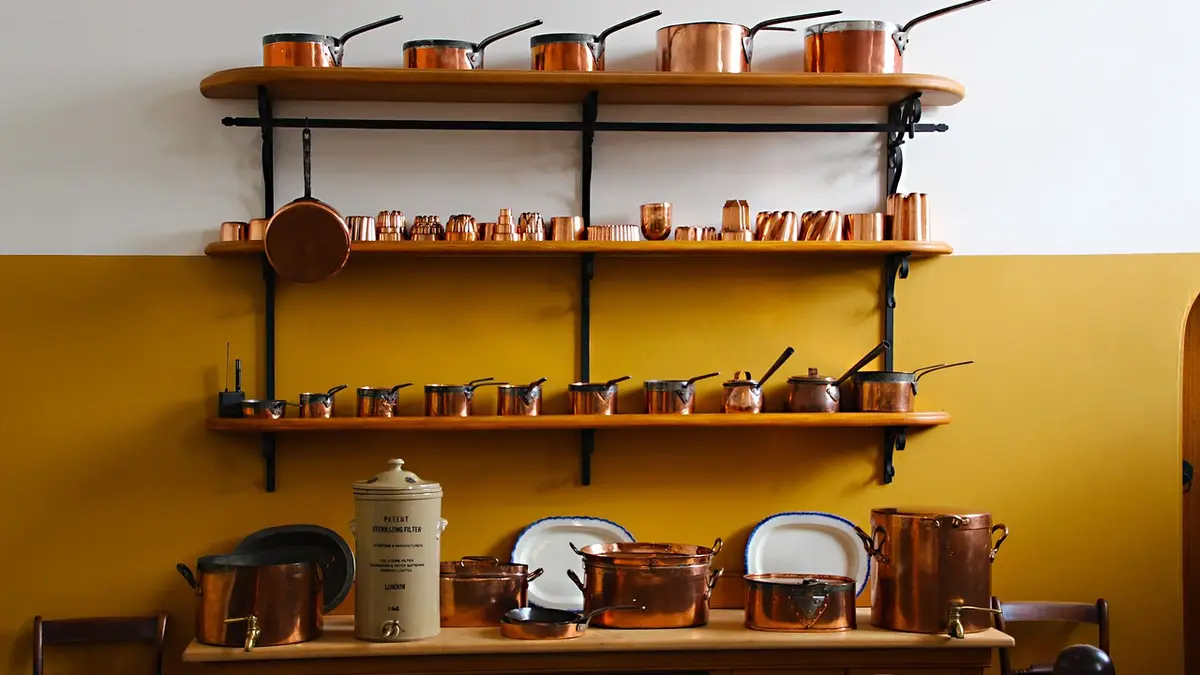
Table, kitchen and household articles of copper from China, including copper saucepans and pans, mugs and jugs, kettles, trays, pot scourers, and copper sanitary ware such as basins and baths, pay 0% UK duty, with no anti-dumping duty. Copper that touches food needs a lining or a food contact assessment, and tin linings must be free of lead. Cambridge China Bridge sources copper homeware.
Buying from China for a business? How our UK China sourcing agent service works · China sourcing agent for small orders and first imports
Zero duty
Read from the UK Trade Tariff on 25 September 2026, non-electric domestic cooking and heating apparatus of copper, other table, kitchen and household articles, pot scourers and polishing pads, and copper sanitary ware, hand-made or not, of heading 7418 carried 0% duty on goods from China, with no anti-dumping measure.
Copper-plated steel or aluminium articles are classified by the base metal, electric kettles are in heading 8516, and taps in 8481, covered in the copper and brass fittings guide; confirm the commodity code.
| Goods | Commodity code | Duty | Anti-dumping duty on China |
|---|---|---|---|
| Non-electric domestic cooking apparatus | 7418 10 10 00 | 0% | None |
| Other household articles, hand-made | 7418 10 90 10 | 0% | None |
| Other household articles | 7418 10 90 90 | 0% | None |
| Sanitary ware, hand-made | 7418 20 00 10 | 0% | None |
| Sanitary ware, other | 7418 20 00 90 | 0% | None |
Food contact and linings
Articles intended to touch food must not transfer their constituents in amounts that could endanger health, under Article 3 of retained Regulation (EC) No 1935/2004, enforced in England by the Materials and Articles in Contact with Food (England) Regulations 2012. Unlined copper releases copper into acidic food and drink, so pans, mugs and jugs for food are normally lined with tin, stainless steel or nickel, and the supplier should provide a declaration and migration test for the lining.
Tin linings must be made from lead-free tin, and solder and brazing on handles must not be exposed to food. Lacquered decorative copper is not food safe, so label it as decorative only; see food contact materials.
Worked duty example
For a made-up shipment of 3,000 tin-lined copper saucepans under 7418 10 10 00, add the £2,500 of freight and insurance to the £36,000 free-on-board price and customs sees £38,500. Duty on copper cookware is zero, leaving import VAT of £7,700, 20% of the customs value. For a VAT-registered buyer that is a cash-flow cost rather than a lasting one. The duty and VAT guide walks through the calculation.
Inspection checklist
Material and construction: copper wall and base thickness measured with an ultrasonic gauge at several points, the body checked with a handheld XRF analyser so that copper-clad aluminium or steel is not sold as solid copper, base flatness checked on a surface plate, and any induction claim tested on an induction hob.
Linings and food contact: tin linings analysed by XRF for lead, stainless and nickel linings checked for bonding by repeated heating and quenching, and migration tests on finished pieces with an acidic food simulant for copper, nickel, tin and lead, judged against the release limits in the Council of Europe technical guide on metals and alloys used in food contact materials.
Finish and packing: decorative lacquer tested for adhesion by the cross-cut method of ISO 2409, pieces that are not food safe marked 'decorative only', handle rivets and welds pull-tested and checked for looseness, polished surfaces inspected for tarnish, dents and scratches, each piece bagged with anti-tarnish film and desiccant, and cartons sampled to ISO 2859-1.
Working out your own order? Send us the product on WhatsApp and we reply the same working day: WhatsApp us
What goes wrong
Copper homeware fails on thickness, lining and finish. Pans sold as solid copper may be thin copper over aluminium or steel, which changes both the cooking and the classification. Tin linings that are too thin wear through, stainless linings delaminate when the bond is poor, and lead appears in solder or in cheap tin. Lacquer peels, polished copper tarnishes in humid containers, and rivets on handles loosen.
Ask for wall thickness and lining specifications, check with a magnet and a thickness gauge on samples, test the lining for lead and migration, check handle rivets and welds, and pack each piece in anti-tarnish bags with desiccant. At inspection, look for dents, scratches and lining gaps.
Cambridge China Bridge sources copper pans, mugs, kettles and copper sanitary ware, with linings, food contact tests and anti-tarnish packing agreed before the order. Read how we source kitchenware. For UK-to-China trade, see exporting cookware to China.
Frequently asked questions
What is the UK import duty on copper cookware from China?
Read from the UK Trade Tariff on 25 September 2026, copper cooking apparatus and household articles of heading 7418 carried 0% duty from China.
Do copper mugs need a lining?
For food and drink, normally yes. Unlined copper releases copper into acidic food, so tin, stainless or nickel linings are used.
What should a tin lining be tested for?
Lead content and migration, because linings must be lead-free and must not transfer harmful amounts of metal.
Are electric copper kettles in heading 7418?
No. Electric kettles are in heading 8516.