Sourcing coir, ramie and abaca fibre from China
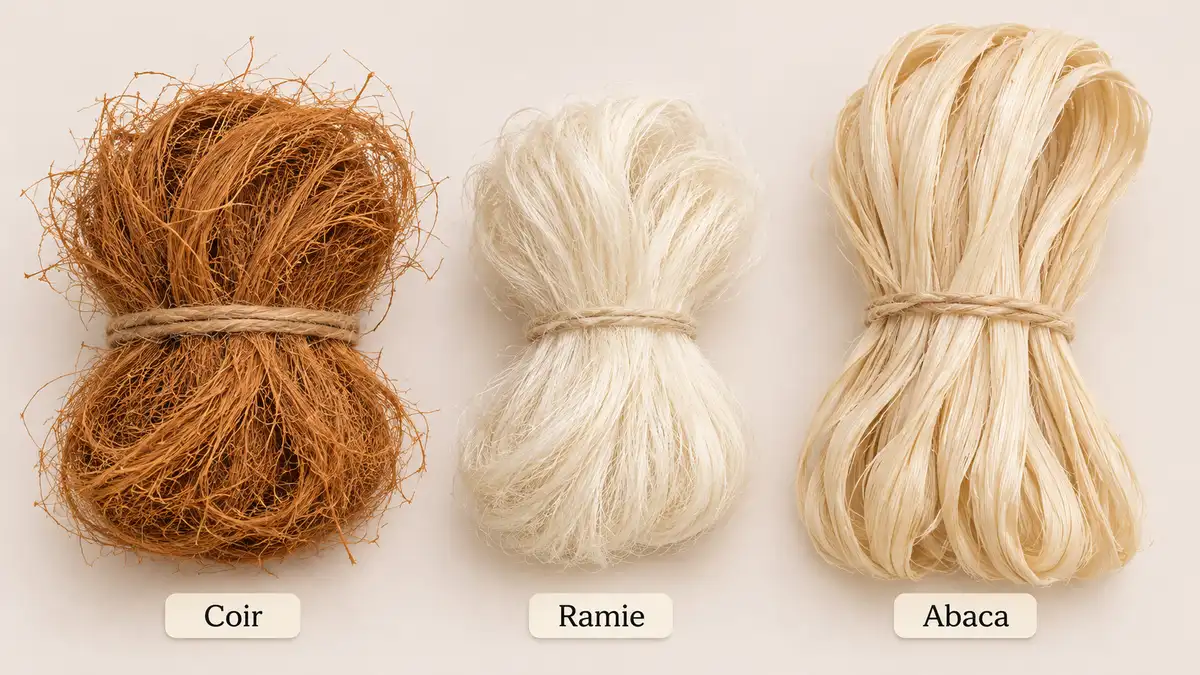
Coir, abaca (Manila hemp), ramie and other vegetable textile fibres from China, raw or processed but not spun, and their tow, noils and waste, pay 0% UK duty under the single code 5305 00 00 00, with no anti-dumping duty. Spinners, mattress and horticulture buyers check degumming, fibre length, strength, moisture and contamination.
Buying from China for a business? How our UK China sourcing agent service works · China sourcing agent for small orders and first imports
0% duty
Read from the UK Trade Tariff on 16 November 2026, heading 5305 covers coconut, abaca, ramie and other vegetable textile fibres not elsewhere specified or included, raw or processed but not spun, and their tow, noils and waste, including yarn waste and garnetted stock. It is a single code carrying 0% on goods from China, with no anti-dumping measure. The tariff also attaches a waste import control; new material clears on a declaration that it is not waste under the retained waste shipments regulation.
Jute is heading 5303 and flax 5301; coir mats and fabrics are made-up goods classified elsewhere. Our hessian and jute fabric guide covers jute cloth. Confirm the commodity code.
| Goods | Commodity code | Duty | Anti-dumping duty on China |
|---|---|---|---|
| Coconut, abaca, ramie and other vegetable textile fibres, raw or processed but not spun; tow, noils and waste | 5305 00 00 00 | 0% | None |
Specifying the fibre
Specify the fibre, whether raw, degummed or combed, residual gum content for ramie, fibre length and fineness, strength, colour, moisture, and limits on dust, pith and foreign matter, and packing in pressed bales. Products made from these fibres and sold to consumers need fibre composition labels.
Worked duty example
Illustrative example, not a quote: 5 tonnes of degummed ramie fibre in bales under 5305 00 00 00, invoiced at £12,000 free on board, with £900 of freight and insurance to the UK. The customs value is £12,900. Duty at 0% is £0. Import VAT at 20% is charged on the customs value plus duty, £12,900, so it is £2,580. With no duty, the only import tax is the VAT, which a VAT-registered importer can usually reclaim. The import duty and VAT guide explains each step.
Inspection checklist
Quality: check fibre length, degumming and colour on samples from several bales.
Moisture: measure moisture and check for mould or odour.
Contamination: check for pith, dust and foreign fibres, and bale marking. See our quality inspection guide.
Working out your own order? Send us the product on WhatsApp and we reply the same working day: WhatsApp us
What goes wrong
Fibre orders fail on moisture, degumming and contamination. Damp bales heat and go mouldy in the container, ramie is harsh because degumming was incomplete, and coir carries too much pith and dust.
Cambridge China Bridge sources natural fibres for UK spinners and product makers from small lots; see small orders.
Frequently asked questions
What is the UK import duty on ramie fibre from China?
Read from the UK Trade Tariff on 16 November 2026, vegetable fibres under 5305 00 00 00 carried 0% from China.
Is jute fibre in heading 5305?
No. Jute is heading 5303; heading 5305 covers coir, abaca, ramie and other vegetable fibres not specified elsewhere.
Why does fibre arrive mouldy?
Bales packed with too much moisture heat in the container; agree a moisture limit and test before loading.
Are coir doormats in heading 5305?
No. Mats and other made-up coir goods are classified elsewhere.