Sourcing coffee silverskin from China
Coffee silverskin classified as coffee husks and skins carries 0% UK duty from China. Confirm its intended use before ordering: customs classification does not establish food-use status, and novel foods need authorisation before sale in Great Britain. Cambridge China Bridge sources coffee silverskin.
Buying from China for a business? How our UK China sourcing agent service works · China sourcing agent for small orders and first imports
Coffee silverskin duty and import controls
Read from the UK Trade Tariff on 5 October 2026, heading 0901 covers coffee, coffee husks and skins, and coffee substitutes containing coffee. The relevant candidate for plain coffee silverskin is 0901 90 10 00, coffee husks and skins, carrying 0% duty for goods from China. The supplied tariff facts show no anti-dumping or countervailing duty and no suspension for this line.
The tariff attaches an organic-products import control. Confirm whether the proposed organic coffee consignment needs a certificate of inspection; the exporter’s control body issues it in the country of export. Confirm the paperwork for the proposed Chinese consignment with your organic control body and customs broker before dispatch.
Only the coffee husks and skins line is relevant to this focused table. Give your broker the material description, processing details and intended use to confirm the commodity code. For the wider product family, see dried coffee cherry husks.
| Goods | Commodity code | Duty | Anti-dumping or countervailing duty on China |
|---|---|---|---|
| Coffee husks and skins, including silverskin subject to classification | 0901 90 10 00 | 0% | None |
Specify the silverskin and its intended use
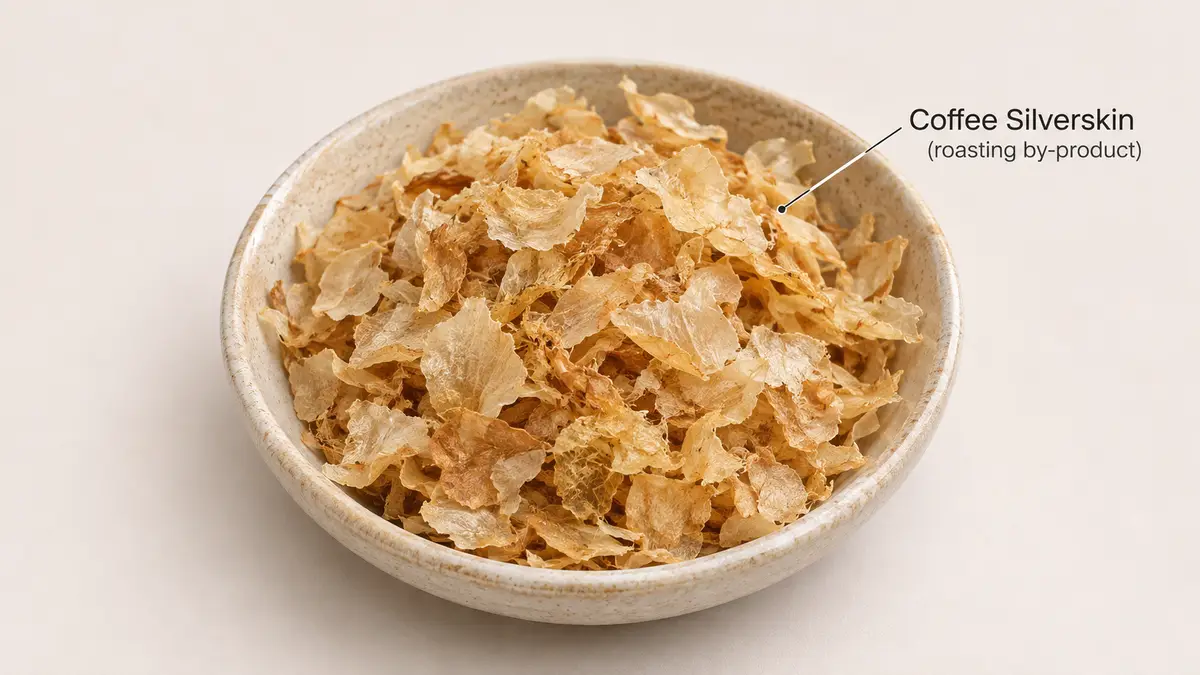
Describe the product as coffee bean silverskin collected during roasting. Ask the supplier to distinguish it from dried cherry husks, spent grounds and mixed roastery sweepings. Specify the coffee species, source roastery, collection method, flake or milled form, particle distribution, moisture acceptance criteria and permitted foreign matter.
State whether the purchase is for a non-food material trial or a proposed food ingredient. Before a food order, check the exact material’s food-use status rather than relying on ordinary coffee’s status. Novel foods need authorisation before being placed on the market in Great Britain. This guide does not establish a silverskin-specific determination.
Agree clean collection and storage arrangements, sealed liners, bag strength and batch identification. Approve a representative sample and define tests for moisture, contamination and the intended application. For proposed food use, agree laboratory checks for microbiology, mycotoxins and pesticide residues with your technical adviser.
Worked duty example
Illustrative example, not a quote: Illustrative order: 2 tonnes of bagged coffee silverskin for non-food material trials under 0901 90 10 00, invoiced at £1,800 free on board, with £2,000 of freight and insurance to the UK. The customs value is £3,800. Duty at 0% is £0. Import VAT at 20% is charged on the customs value plus duty, £3,800, so it is £760. With no duty, the only import tax is the VAT, which a VAT-registered importer can usually reclaim. The import duty and VAT guide explains each step. This assumes the goods are standard-rated for VAT. Most food for human consumption is zero-rated, and animal feed can be too, in which case no import VAT is due, so check the rate for your product in HMRC's VAT Notice 701/14.
Inspection checklist
Identity: compare the shipment with the approved silverskin sample and inspect for cherry husks, spent grounds, bean fragments and sweepings.
Condition: check moisture, musty or burnt odours, visible mould, insects and foreign matter against the agreed specification.
Consistency: check flake size, fines and bulk density; trial the material in your actual blending, milling or forming process.
Packing: inspect liners, seams and damp patches, reconcile bag weights, and match batch marks to the supplier’s records and test reports.
Working out your own order? Send us the product on WhatsApp and we reply the same working day: WhatsApp us
What goes wrong
A description such as coffee by-product leaves room for the wrong material. Mixed collection can introduce dust and debris; changing roast conditions can change colour and odour. Excess fines affect handling, while loosely packed flakes can make transport volume much greater than a weight-only quotation suggests.
Another failure is ordering a proposed food ingredient on the assumption that ordinary coffee rules settle its status. Resolve that question before committing to stock. Keep an approved sample and compare arrival samples with it; our quality inspection guide explains how to organise the checks.
Cambridge China Bridge sources these products for UK businesses, checking the factory and the documents before shipment. See factory verification. For repeat volumes, see container programmes.
Frequently asked questions
What is the UK import duty on coffee silverskin from China?
The supplied tariff facts show 0% for coffee husks and skins under 0901 90 10 00, with no trade remedy or suspension. Confirm that your silverskin belongs in this line.
Can I sell coffee silverskin as a food ingredient?
Check the exact product’s food-use status before ordering. Novel foods need authorisation before sale in Great Britain. This guide does not establish a silverskin-specific determination.
Is coffee silverskin the same as dried coffee cherry husks?
Specify the material separately: silverskin collected during roasting, rather than dried cherry husks. Ask for photographs, a process description and a representative sample.
What should I check before accepting a shipment?
Check identity, moisture, odour, mould, foreign matter, fines, bulk density and packaging. Match the batch to its records and compare performance with the approved sample.