Sourcing ceramic utensil holders from China
Ceramic utensil holders from China carry basic UK duty of 4% to 8% on the relevant non-porcelain kitchenware lines, plus residual anti-dumping duty of 36.10%. Consumer products must be safe. Specify a stable base, smooth rim and cleanable interior. Cambridge China Bridge sources ceramic utensil holders.
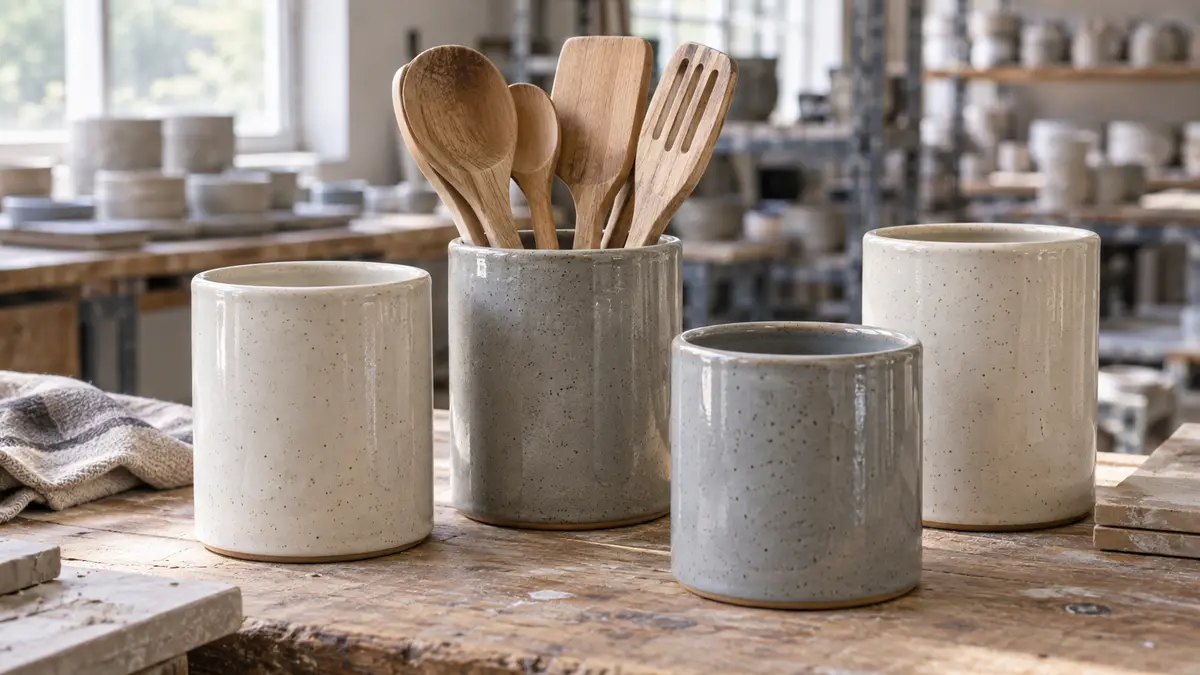
Duty on ceramic utensil holders
Read from the UK Trade Tariff on 29 September 2026, heading 6912 covers ceramic tableware, kitchenware, household and toilet articles other than porcelain or china. The selected lines are kitchenware candidates for free-standing utensil holders, distinguished by ceramic body and whether common pottery is hand-made. See stoneware dinnerware for the wider heading. For tagines, see our stoneware tagine sourcing guide. For fermentation accessories, see our ceramic fermentation weight sourcing guide.
Basic duty on these Chinese-origin lines is 4% for common pottery and stoneware, 8% for earthenware or fine pottery, and 6% for other ceramics. Each selected line lists residual anti-dumping duty of 36.10%, with no suspension or countervailing duty recorded. Confirm any company-specific rate before ordering. The tariff also attaches import and export waste controls and a cultural-object export licence measure; ask your customs broker to confirm their relevance to the shipment.
For waste imports to England under notification controls, the exporter must seek consent from the competent authority in the dispatch country, including China. Confirm the full waste requirements with your broker if the consignment contains waste. Supply photographs, material details and intended use when confirming the commodity code. Use the import duty and VAT guide for the calculation method.
| Goods | Commodity code | Duty | Anti-dumping or countervailing duty on China |
|---|---|---|---|
| Hand-made common pottery utensil holders | 6912 00 21 11 | 4% | 36.10% residual anti-dumping |
| Other common pottery utensil holders | 6912 00 21 91 | 4% | 36.10% residual anti-dumping |
| Stoneware utensil holders | 6912 00 23 10 | 4% | 36.10% residual anti-dumping |
| Earthenware or fine pottery utensil holders | 6912 00 25 10 | 8% | 36.10% residual anti-dumping |
| Utensil holders of other non-porcelain ceramics | 6912 00 29 10 | 6% | 36.10% residual anti-dumping |
Specify the body, opening and base
Specify the ceramic body, overall height, opening size, internal depth, base footprint and agreed dimensional tolerances. Send the factory the utensils the holder should accommodate. Approve a loaded sample so long spatulas do not make it tip when removed. Agree whether the base is polished, glazed or fitted with protective pads.
Define interior and exterior glaze coverage, colour variation, decoration position and acceptable surface defects. Agree cleaning instructions and test any dishwasher claim on the finished decoration. Consumer products must be safe; inspect sharp rims, breakage hazards and stability. Keep the approved sample as the production reference.
State whether the holder is only for utensil storage or also intended to hold food. For food-contact versions, confirm applicable lead and cadmium migration testing and any written declaration of compliance or supporting test documentation needed with the relevant food safety authority. Do not use a mug report as evidence for a different holder. Arrange testing and certification against the actual design and intended use. For ceramic spoon rests, see our ceramic spoon rest sourcing guide. For porcelain serving ware, see our porcelain sauce boat sourcing guide.
Worked duty example
Illustrative example, not a quote: Illustrative order: 2,000 stoneware utensil holders; anti-dumping duty also needs checking under 6912 00 23 10, invoiced at £7,000 free on board, with £600 of freight and insurance to the UK. The customs value is £7,600. Duty at 4% is £304. Import VAT at 20% is charged on the customs value plus duty, £7,904, so it is £1,580.80. Import taxes total £1,884.80; a VAT-registered importer can usually reclaim the VAT, so the lasting cost is the £304 of duty. The import duty and VAT guide explains each step.
Inspection checklist
Shape and stability: measure the opening and depth, check for a rocking base, and load the holder with the intended utensils.
Glaze and rim: compare colour with the approved sample; inspect the interior, rim and foot for cracks, chips, rough edges and glaze defects.
Cleaning and decoration: check that the interior can be reached for cleaning, and test the agreed care method for staining or decoration loss.
Arrival and packing: inspect unpacked holders for concealed cracks and chipped feet; check that dividers and cushioning prevent contact between pieces. Record defects against the delivery batch using the inspection guide.
Working out your own order? Send us the product on WhatsApp and we reply the same working day: WhatsApp us
What goes wrong
A narrow base and tall opening can make a loaded holder unstable. A warped foot rocks on a worktop, rough unglazed areas scratch surfaces, and pooled glaze or a tight neck makes cleaning awkward. Transport damage often appears at the rim or foot despite an intact outer carton.
Orders also fail when the factory changes the ceramic body or glaze after sample approval. Retain the approved sample, agree checks on the finished decorated product and inspect packing before dispatch. Budgeting only for basic duty can miss the anti-dumping charge.
Cambridge China Bridge sources these products for UK businesses, checking the factory and the documents before shipment. See factory verification. For own-brand ranges, see sourcing for brands. For trade in the other direction, see exporting UK ceramic ware to China.
Frequently asked questions
What is the UK import duty on ceramic utensil holders from China?
The selected kitchenware lines carry basic duty of 4% to 8%, plus residual anti-dumping duty of 36.10%. Confirm the ceramic body, commodity code and any company-specific anti-dumping rate.
Which commodity code applies to a stoneware utensil holder?
6912 00 23 10 is the selected stoneware kitchenware candidate. Ask your broker to confirm it against the actual material, construction and intended use.
Does a ceramic utensil holder need food-contact testing?
State its intended use first. For versions intended to hold food, agree ceramic lead and cadmium migration testing and obtain the declaration of compliance and supporting test documentation.
How do I check whether a utensil holder will tip over?
Load an approved sample with the intended utensils, then remove and replace them on a level worktop. Check for rocking, sliding and tipping, and repeat the agreed check on production samples.