Sourcing ceramic spoon rests from China
Non-porcelain ceramic spoon rests from China carry ordinary UK duty of 4% to 8%, plus anti-dumping duty with a residual rate of 36.10%. Ceramic food-contact rules require lead and cadmium migration compliance, a written declaration and supporting test documentation. Cambridge China Bridge sources ceramic spoon rests.
Duty on ceramic spoon rests
Read from the UK Trade Tariff on 29 September 2026, heading 6912 covers ceramic tableware, kitchenware and other household or toilet articles other than porcelain or china. For spoon rests, the relevant kitchenware lines distinguish common pottery, stoneware, earthenware or fine pottery, and other ceramics. Porcelain spoon rests fall outside this heading.
Ordinary duty on the selected Chinese-origin lines is 4% for common pottery and stoneware, 8% for earthenware or fine pottery, and 6% for other ceramics. Each selected line lists residual anti-dumping duty of 36.10%, with no countervailing duty or suspension recorded. Check whether the exporter has a company-specific anti-dumping rate. The tariff also attaches waste import and export controls and a cultural-object export licence measure; confirm their relevance with your customs broker.
Waste shipment controls apply only where the material is waste. For waste from China, ask your broker to confirm the applicable requirements before shipment. Confirm the material and intended use through our commodity-code guide. See ceramic utensil holders for the wider heading.
| Goods | Commodity code | Duty | Anti-dumping or countervailing duty on China |
|---|---|---|---|
| Hand-made common-pottery spoon rests | 6912 00 21 11 | 4% | 36.10% residual anti-dumping |
| Other common-pottery spoon rests | 6912 00 21 91 | 4% | 36.10% residual anti-dumping |
| Stoneware spoon rests | 6912 00 23 10 | 4% | 36.10% residual anti-dumping |
| Earthenware or fine-pottery spoon rests | 6912 00 25 10 | 8% | 36.10% residual anti-dumping |
| Spoon rests of other non-porcelain ceramics | 6912 00 29 10 | 6% | 36.10% residual anti-dumping |
Specify the spoon bowl, glaze and base
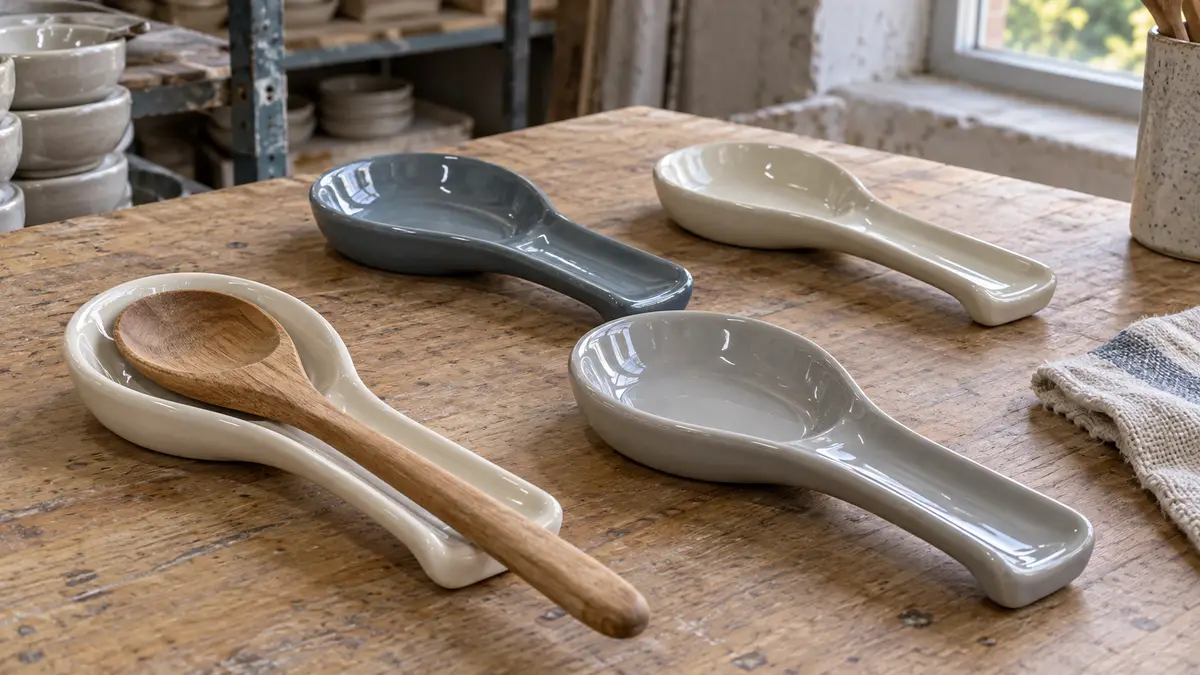
Specify the ceramic body, overall dimensions, usable bowl area, handle notch, rim height and base finish. Try the sample with the serving spoons and spatulas your customers use. Check that drips remain inside the bowl and that a long handle does not tip the rest.
Agree glaze colour, gloss, decoration position and acceptable variation against approved samples. For food-contact ceramic articles in England, confirm applicable requirements with the relevant authority, including lead and cadmium migration limits, a written declaration of compliance and test documentation. Ask for evidence matching the finished glaze and decoration, rather than an unrelated plain sample. For related serving ware, see our porcelain sauce boat sourcing guide.
Agree checks for any dishwasher claim and packing that separates rims and protects projecting handles. Use testing and certification support to define the evidence needed before production.
Worked duty example
Illustrative example, not a quote: Illustrative order: 2,000 stoneware spoon rests; anti-dumping duty must also be checked under 6912 00 23 10, invoiced at £7,000 free on board, with £600 of freight and insurance to the UK. The customs value is £7,600. Duty at 4% is £304. Import VAT at 20% is charged on the customs value plus duty, £7,904, so it is £1,580.80. Import taxes total £1,884.80; a VAT-registered importer can usually reclaim the VAT, so the lasting cost is the £304 of duty. The import duty and VAT guide explains each step.
Inspection checklist
Surface: check the bowl and rim for chips, cracks, glaze crazing, pinholes and sharp decoration edges.
Stability: place sampled rests on a flat worktop, check rocking and try the intended utensils in the notch.
Evidence: match the supplied declaration and test documents to the ceramic body, glaze, decoration and product identity.
Packing: open arrival cartons, check separators and cushioning, and record damage around rims and handle ends.
Working out your own order? Send us the product on WhatsApp and we reply the same working day: WhatsApp us
What goes wrong
A shallow bowl lets sauce escape, a narrow notch leaves utensils unstable, and a warped base rocks on the counter. Rough unglazed feet can scratch surfaces. Glaze colour or decoration may differ from the approved sample, while poorly separated pieces arrive chipped.
Approve the finished decorated sample and its packing together. Keep the material and finish description consistent across the purchase order, test documents and customs paperwork. Arrange quality inspection before dispatch and repeat the arrival checks before releasing stock.
Cambridge China Bridge sources these products for UK businesses, checking the factory and the documents before shipment. See factory verification. For own-brand ranges, see sourcing for brands. For trade in the other direction, see exporting UK ceramic ware to China.
Frequently asked questions
What is the UK import duty on ceramic spoon rests from China?
Ordinary duty is 4% to 8% on the selected non-porcelain kitchenware lines, plus anti-dumping duty with a residual rate of 36.10%. Confirm the ceramic body and exporter rate.
Do ceramic spoon rests need food-contact testing?
For food-contact ceramic articles in England, confirm applicable lead and cadmium migration requirements and whether a written declaration of compliance and test documentation are required with the relevant authority. Ask for evidence covering the finished decoration.
Can I use a test report for a different glaze?
Ask the laboratory whether its evidence covers your exact glaze and decoration. Do not accept a report for an unrelated plain product as evidence for a decorated spoon rest.
How do I check that a spoon rest works?
Try the approved sample with your intended spoons and spatulas. Check stability, handle clearance, drip retention and whether the base rocks or scratches the worktop.