Sourcing carbonless base paper from China
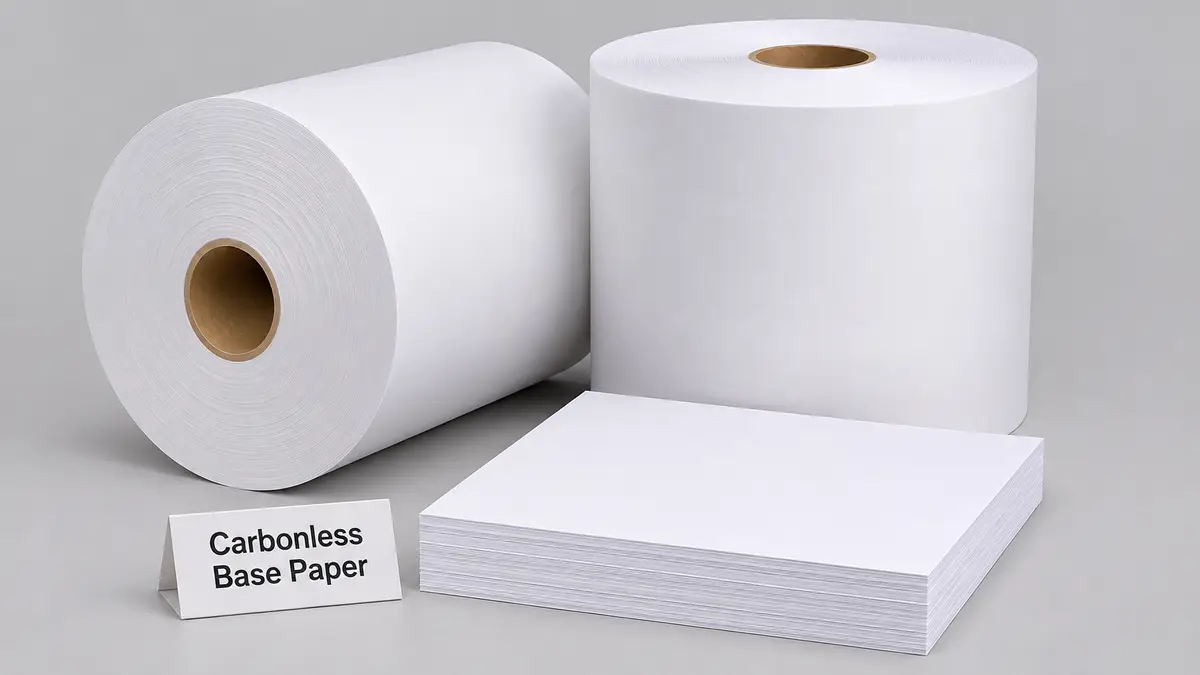
Uncoated carbonless base paper from China carries 0% UK duty across the relevant lines of heading 4802. For virgin wood fibre, confirm timber due-diligence responsibilities before placing it on the Great Britain market with the relevant authority. Specify the base sheet for your coating process. Cambridge China Bridge sources uncoated carbonless base paper.
Buying from China for a business? How our UK China sourcing agent service works · China sourcing agent for small orders and first imports
UK duty on uncoated carbonless base paper
Heading 4802 covers uncoated paper for writing, printing and other graphic purposes. This guide concerns the base sheet bought for subsequent carbonless coating. The selected lines cover paper with no mechanical or chemi-mechanical fibres, or with those fibres making up no more than 10% of total fibre weight. For the wider product family, see carbonless and self-copy paper.
Read from the UK Trade Tariff on 1 October 2026, the selected lines carry 0% duty on goods from China. The supplied record lists no anti-dumping or countervailing duty, suspensions or attached import controls for these lines. This does not remove the separate timber due diligence obligations for paper made from virgin wood fibre.
Confirm the commodity code using the mill's fibre composition, grammage and supply format. The table describes possible lines, not a single dedicated carbonless-base-paper code. Give your customs broker the technical specification and confirm whether the shipment is uncoated base paper or already coated copying paper.
| Goods | Commodity code | Duty | Anti-dumping or countervailing duty on China |
|---|---|---|---|
| Uncoated base paper rolls, 40 to under 60 g/m², low mechanical fibre | 4802 55 15 90 | 0% | None |
| Uncoated base paper rolls, 60 to under 75 g/m², low mechanical fibre | 4802 55 25 90 | 0% | None |
| Uncoated base paper rolls, 75 to under 80 g/m², low mechanical fibre | 4802 55 30 90 | 0% | None |
| Other uncoated base paper, 40 to 150 g/m², low mechanical fibre | 4802 57 00 00 | 0% | None |
Specify the base sheet for your coating line
State explicitly that you want uncoated carbonless base paper. Specify fibre furnish, grammage and tolerance, thickness, opacity, shade, moisture, surface smoothness, absorbency and tensile strength. Agree reel width, diameter, core dimensions, winding direction and how splices are marked. Identify the intended coating formulation and drying conditions.
Run a coating trial on mill samples before approving production. Check coating holdout, penetration, adhesion, drying curl and web breaks. Evaluate copy development after applying your intended coatings and assembling the finished form. A writing test on the uncoated sheet alone does not establish finished copying performance.
UK timber rules cover pulp and paper. For virgin wood fibre placed on the Great Britain market, confirm the importer's fibre-source due-diligence responsibilities with the relevant authority. Ask for the species, country of harvest and supply-chain documents before shipment, and assess legality rather than relying on a mill's general assurance.
Worked duty example
Illustrative example, not a quote: Illustrative order: 10 tonnes of uncoated carbonless base paper in reels under 4802 55 15 90, invoiced at £5,200 free on board, with £3,000 of freight and insurance to the UK. The customs value is £8,200. Duty at 0% is £0. Import VAT at 20% is charged on the customs value plus duty, £8,200, so it is £1,640. With no duty, the only import tax is the VAT, which a VAT-registered importer can usually reclaim. The import duty and VAT guide explains each step.
Inspection checklist
Sheet properties: compare conditioned samples from each batch with agreed grammage, thickness, moisture, opacity, shade and absorbency tolerances.
Coating suitability: repeat the agreed coating trial and check uneven uptake, pinholes, adhesion, curl and copying performance after conversion.
Reels: check width, diameter, core fit, winding firmness, marked splices, damaged edges and crushed cores against the purchase specification.
Arrival and records: inspect wrapping for wet patches and torn protection, retain batch labels and compare arrival samples with approved samples. Use the quality inspection guide to prepare the inspection brief.
Working out your own order? Send us the product on WhatsApp and we reply the same working day: WhatsApp us
What goes wrong
A supplier substitutes ordinary printing paper that matches grammage but absorbs the coating differently. Excessive penetration can leave too little coating at the surface, while uneven uptake produces patchy results. Moisture variation causes curl during drying, and weak or dusty edges cause web breaks and coating defects.
Reels can arrive with crushed cores, loose winding or moisture damage hidden beneath the wrapper. Record damage before converting the paper, retain affected samples and trace them to the mill batch. Agree measurable acceptance criteria and a coating trial so that a dispute is based on the ordered specification.
Cambridge China Bridge sources these products for UK businesses, checking the factory and the documents before shipment. See factory verification. For repeat volumes, see container programmes.
Frequently asked questions
What is the UK import duty on carbonless base paper from China?
The relevant uncoated-paper lines of heading 4802 carry 0% duty in the supplied tariff record. No anti-dumping or countervailing duty is listed.
Is carbonless base paper already self-copying?
This guide covers the uncoated sheet bought for subsequent coating. Confirm the coating status with the mill and assess copying performance after your intended conversion.
Does virgin-fibre carbonless base paper need timber due diligence?
Confirm with the relevant authority whether the importer first placing virgin wood-fibre paper on the Great Britain market must carry out timber due diligence. Obtain species, harvest-country and supply-chain evidence.
What should I test before ordering carbonless base paper?
Check grammage, moisture, smoothness, absorbency, strength and reel dimensions. Run your intended coating and drying process, then assess the finished copying result.