Sourcing candied lotus seeds from China
Candied lotus seeds under the other plant-parts lines attract 20% UK duty, rising to 20% plus £20 per 100 kg when sugar exceeds 13% by weight. Confirm the formulation and tested sugar content before choosing the code. Confirm sulphite allergen-labelling requirements with the relevant food authority. Cambridge China Bridge sources candied lotus seeds.
Buying from China for a business? How our UK China sourcing agent service works · China sourcing agent for small orders and first imports
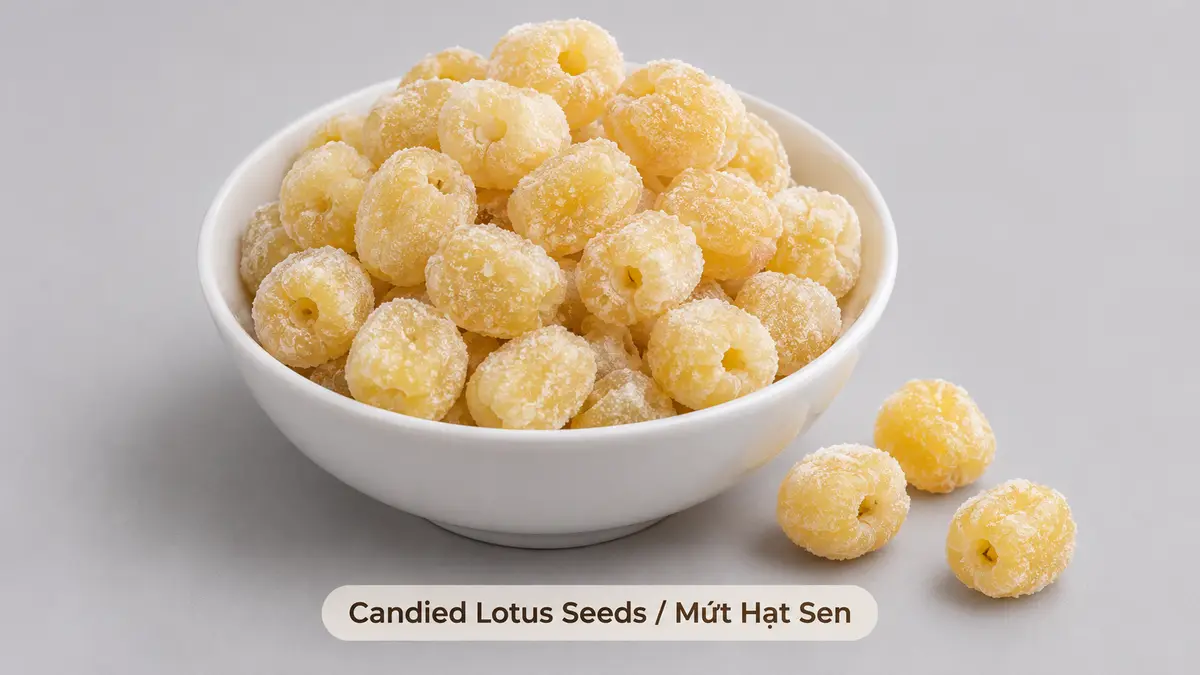
Sugar content determines the lotus-seed duty
Read from the UK Trade Tariff on 30 September 2026, heading 2006 covers plant parts preserved by sugar, drained, glacé or crystallised. For candied lotus seeds, check the other plant-parts lines against the actual preparation. These carry 20% for sugar content of 13% or less, or 20% plus £20 per 100 kg above 13%. The supplied data records no anti-dumping or countervailing duty and no suspension on these lines.
The tariff attaches an organic-products import control. Organic consignments from China into Great Britain need a Certificate of Inspection, issued by the exporter's control body. Confirm certification and clearance arrangements with your customs broker before shipment. This guide concerns lotus seeds preserved with sugar; confectionery from China containing milk is not permitted.
Give your broker the recipe, preservation process and tested sugar percentage, then confirm the commodity code. The table repeats the low-sugar code for different product forms; these are not separate tariff lines. See the wider candied fruit and ginger guide for the rest of the heading.
| Goods | Commodity code | Duty | Anti-dumping or countervailing duty on China |
|---|---|---|---|
| Candied lotus seeds, sugar above 13% but below 70% | 2006 00 38 81 | 20% + £20.00 per 100 kg | None |
| Candied lotus seeds, sugar 70% or above | 2006 00 38 89 | 20% + £20.00 per 100 kg | None |
| Drained sugar-preserved lotus seeds, sugar 13% or less | 2006 00 99 99 | 20% | None |
Specify the seed, centre and sugar coating
Specify whole or split lotus seeds, peeled appearance, removal of the bitter green centre, seed size and permitted broken pieces. Agree whether the finish is drained, glacé or crystallised, and approve a sample for bite, sweetness and coating adhesion. Write down sugar content, moisture, water activity, packaging and storage conditions.
Get the complete formulation, including colours, preservatives and processing ingredients. Confirm with the relevant food authority which additives are permitted for the relevant food category. Ask that authority to confirm the retail-label requirements for the food name, ingredients, allergens, net quantity, date mark, storage conditions and UK business name and address, including sulphite allergen declarations.
Worked duty example
Illustrative example, not a quote: Illustrative order: 100 kg of drained sugar-preserved lotus seeds, tested sugar content 13% or less; illustrative FOB and freight values under 2006 00 99 99, invoiced at £1,200 free on board, with £1,000 of freight and insurance to the UK. The customs value is £2,200. Duty at 20% is £440. Import VAT at 20% is charged on the customs value plus duty, £2,640, so it is £528. Import taxes total £968; a VAT-registered importer can usually reclaim the VAT, so the lasting cost is the £440 of duty. The import duty and VAT guide explains each step. This assumes the goods are standard-rated for VAT. Most food for human consumption is zero-rated, and animal feed can be too, in which case no import VAT is due, so check the rate for your product in HMRC's VAT Notice 701/14.
Inspection checklist
Seeds: compare whole and broken pieces, centre removal, colour and foreign matter with the approved sample.
Texture: open packs and check hardness, bitter centres, sticky clumps and loose sugar coating.
Laboratory: check batch sugar content, moisture, sulphite residue, declared colours, yeasts and moulds against the agreed specification.
Packaging: check seals, moisture damage, batch identification and label agreement with the recipe and test results. Use the quality inspection guide to define the checks.
Working out your own order? Send us the product on WhatsApp and we reply the same working day: WhatsApp us
What goes wrong
Retained green centres make otherwise acceptable seeds bitter. Uneven cooking leaves hard centres, while excessive handling produces broken pieces and loose coating. Moisture entering the pack can cause clumping or mould. Compare opened arrival samples with the approved product rather than judging only the sealed pouch.
A supplier's sugar figure may describe the syrup rather than the finished seeds. Ask for a finished-product result before declaring the tariff line. Undeclared preservatives or a changed recipe can also leave labels inaccurate. Resolve discrepancies before releasing the batch for sale.
Cambridge China Bridge sources these products for UK businesses, checking the factory and the documents before shipment. See factory verification. For repeat volumes, see container programmes.
Frequently asked questions
What is the UK import duty on candied lotus seeds from China?
Under the other plant-parts lines, duty is 20% at sugar content of 13% or less, or 20% plus £20 per 100 kg above 13%. Confirm the preparation and finished-product sugar content before declaring the code.
Can I import organic candied lotus seeds from China?
Organic consignments into Great Britain need a Certificate of Inspection issued by the exporter's control body. Confirm certification and clearance arrangements before shipment.
Do candied lotus seeds need a sulphite warning?
Obtain a batch result and match the ingredient list and allergen declaration to the actual formulation.
What should I check in a candied lotus seed sample?
Check bitter green centres, hardness, broken seeds, coating adhesion and clumping. Agree the finished-product sugar content, moisture specification and pack seals before approving production.