Sourcing candied winter melon from China
Candied winter melon from China carries 20% UK duty, plus £20 per 100 kg when sugar exceeds 13% by weight. Confirm sugar content and classification before ordering. Ask the relevant food authority to confirm which additives are permitted for the food category and the applicable sulphite allergen labelling requirements. Cambridge China Bridge sources candied winter melon.
Buying from China for a business? How our UK China sourcing agent service works · China sourcing agent for small orders and first imports
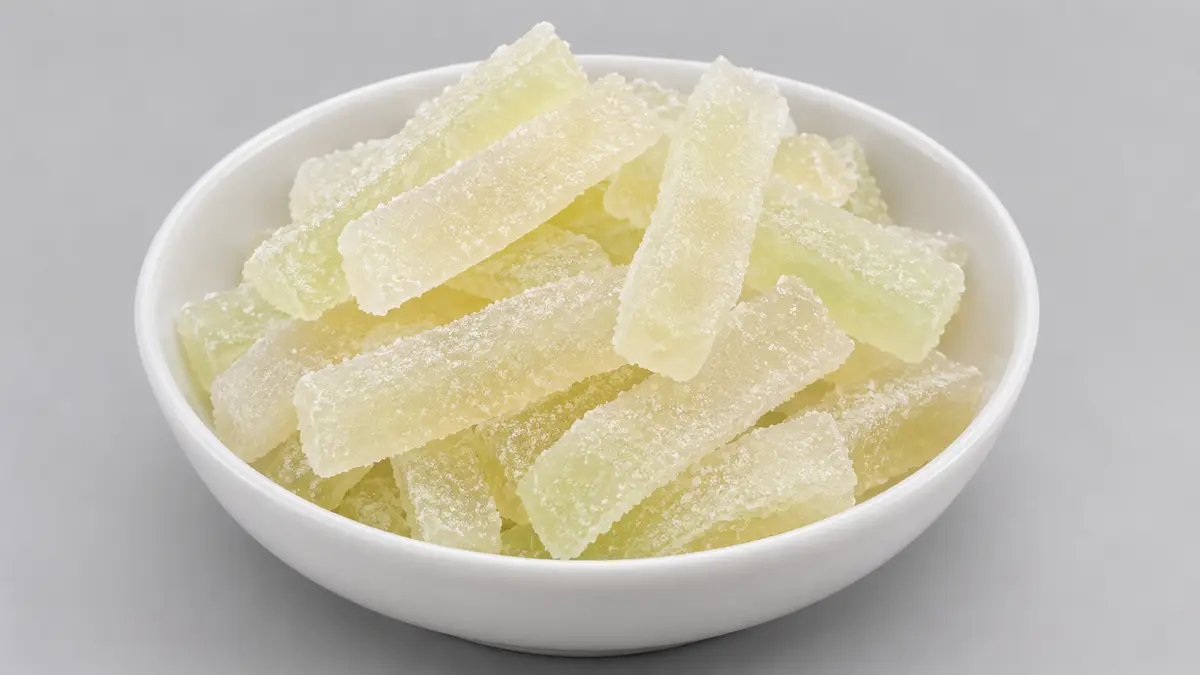
Sugar content decides the winter melon duty line
Read from the UK Trade Tariff on 30 September 2026, heading 2006 covers plant products preserved by sugar, whether drained, glacé or crystallised. For winter melon in the other-products lines, sugar above 13% attracts 20% plus £20 per 100 kg; sugar at 13% or less attracts 20%. The higher-sugar lines also distinguish sugar below 70% from other products. The table repeats a code for strips and dice because cut alone does not create a separate listed line.
The supplied tariff facts show no anti-dumping or countervailing duty and no suspension. They attach an organic import control. Organic winter melon from China entering Great Britain needs a certificate of inspection. An approved UK organic control body must certify the food and business; recognised countries, territories and control bodies determine eligible organic imports. Have your control body confirm the exporter's recognition before ordering.
Send the broker the recipe, measured sugar content and preservation process to confirm the commodity code. The plain-percentage illustration applies only if the lower-sugar product qualifies for the stated line; it is not a typical crystallised winter melon assumption. See the wider candied fruit and ginger guide for other products.
| Goods | Commodity code | Duty | Anti-dumping or countervailing duty on China |
|---|---|---|---|
| Candied winter melon strips,sugar over 13% but under 70% | 2006 00 38 81 | 20% + £20.00 per 100 kg | None |
| Candied winter melon,sugar 70% or more | 2006 00 38 89 | 20% + £20.00 per 100 kg | None |
| Sugar-preserved winter melon,sugar 13% or less,subject to classification | 2006 00 99 99 | 20% | None |
Specify the winter melon flesh, cut and sugar coating
Specify winter melon flesh with peel and seeds removed, strips or dice, piece-size tolerance, firmness and the acceptable amount of broken pieces. Agree whether the surface should have dry sugar crystals or a smooth glaze. Keep an approved sample for comparison and trial the product in your intended bakery filling or serving application.
Record total sugar content, moisture, water activity, ingredients, preservatives, colours, sulphite residue, pack size, storage conditions and shelf life. Agree laboratory checks with the supplier before approving production.
Worked duty example
Illustrative example, not a quote: Illustrative: 5 tonnes of sugar-preserved winter melon, conditional on tested sugar of 13% or less and confirmed classification under 2006 00 99 99, invoiced at £15,000 free on board, with £1,200 of freight and insurance to the UK. The customs value is £16,200. Duty at 20% is £3,240. Import VAT at 20% is charged on the customs value plus duty, £19,440, so it is £3,888. Import taxes total £7,128; a VAT-registered importer can usually reclaim the VAT, so the lasting cost is the £3,240 of duty. The import duty and VAT guide explains each step. This assumes the goods are standard-rated for VAT. Most food for human consumption is zero-rated, and animal feed can be too, in which case no import VAT is due, so check the rate for your product in HMRC's VAT Notice 701/14.
Inspection checklist
Flesh and cut: compare opened packs with the approved sample for firm pieces, uniform cuts, hard rind, seeds, discolouration and foreign matter.
Coating and texture: check loose sugar, clumping, syrup leakage and wet or excessively hard centres; trial the pieces in the intended recipe.
Laboratory: check batch results for sugar content, sulphites, declared colours, moisture, yeasts and moulds against the agreed specification.
Packs and labels: inspect seals and damp cartons. Ask the relevant food authority to confirm retail label requirements for the food name, ingredients, allergens, net quantity, date mark, storage conditions and UK business name and address.
Working out your own order? Send us the product on WhatsApp and we reply the same working day: WhatsApp us
What goes wrong
Watch for rind left on the flesh, uneven cuts, excessive fragments and a sample that differs from the shipped batch. Moisture variation can leave pieces sticky, clumped or wet inside. Warm, damp storage can expose spoilage problems. Check opened packs on arrival before using the lot in production.
A recipe change can alter sugar classification or leave sulphites and colours inconsistent with the label. Agree the formulation in writing, match laboratory reports to the shipped batch and review label artwork before printing. Plan the checks using our quality inspection guide.
Cambridge China Bridge sources these products for UK businesses, checking the factory and the documents before shipment. See factory verification. For repeat volumes, see container programmes.
Frequently asked questions
What is the UK import duty on candied winter melon from China?
For the relevant other-products lines, duty is 20% plus £20 per 100 kg when sugar exceeds 13% by weight, or 20% at 13% or less. Confirm the product's classification.
Does candied winter melon need sulphite allergen labelling?
Ask the relevant food authority to confirm the applicable sulphite allergen labelling requirements. Check the batch result against the ingredient list and allergen declaration before approving the label.
Can I import organic candied winter melon from China?
For Great Britain, confirm the recognised organic certification route before ordering. The food and business need approved UK control-body certification, and the import needs a certificate of inspection.
What should I check before buying winter melon for bakery fillings?
Approve the cut, firmness, coating and sweetness, then trial it in your recipe. Check for rind, seeds, fragments, clumping and moisture variation, and obtain batch laboratory results.