Sourcing black soya beans from China
Black soya beans from China carry 0% UK duty for both food or feed and sowing, with no anti-dumping or countervailing duty listed. Confirm the applicable GM authorisation rules and pesticide residue limits for food and feed with the relevant authorities before ordering. Organic consignments entering Great Britain need a certificate of inspection. Cambridge China Bridge sources black soya beans.
Buying from China for a business? How our UK China sourcing agent service works · China sourcing agent for small orders and first imports
0% duty on black soya beans
Read from the UK Trade Tariff on 7 November 2026, heading 1201 covers soya beans, whether or not broken. Black soya beans use the same lines as other soya beans: seed for sowing and other uses, including food and feed. Both carry 0% duty from China. No anti-dumping or countervailing duty or suspension is listed. The supplied tariff facts contain only these commodity lines.
The tariff attaches an organic import control to both lines. For organic food from China entering Great Britain, obtain a Great Britain certificate of inspection for each consignment and check the exporter’s certification against the recognised organic registers. Your importing company must be based and certified in the UK. Confirm the paperwork with your organic control body before shipment.
Specify whether the beans are for eating, processing, feed or sowing, and confirm the commodity code. Do not classify goods by the description “black beans” alone. See the wider soya bean guide for the heading’s other uses. This guide’s import-control advice concerns Great Britain.
| Goods | Commodity code | Duty | Anti-dumping or countervailing duty on China |
|---|---|---|---|
| Black soya beans, whole or broken, for food or feed | 1201 90 00 00 | 0% | None |
| Black soya beans for sowing | 1201 10 00 00 | 0% | None |
Specify the black soya variety and cooking result
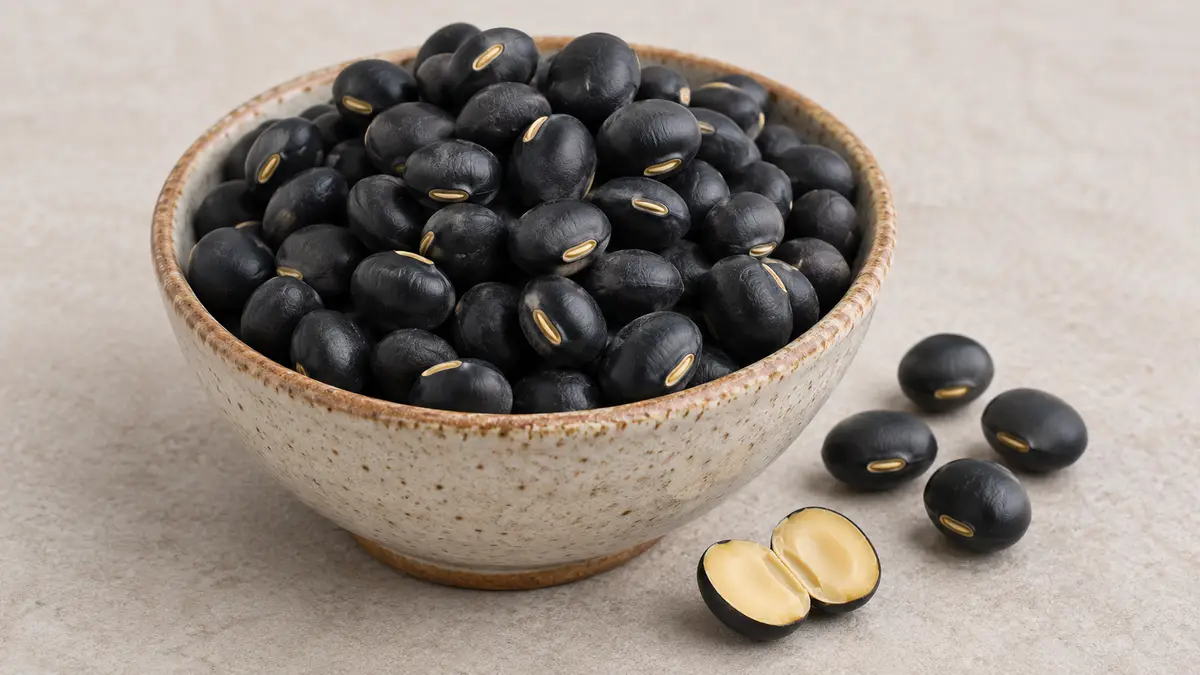
Ask for the botanical identity, variety, black seed-coat colour, colour inside the bean and hilum colour. Agree bean size, acceptable colour variation, split and damaged beans, foreign matter, moisture and packing. Keep an approved sample and trial the beans in your intended recipe, checking soaking behaviour, cooking texture and colour.
For food and feed, confirm the applicable Great Britain GM authorisation, traceability and labelling rules and pesticide maximum residue levels with the relevant authorities before ordering. For a non-GM specification, ask for segregated supply-chain records and batch test results. Agree residue and mycotoxin testing with your laboratory before ordering.
Check the proposed food label before printing. Where an ingredients list is used, soya must be emphasised each time it appears in that list. Use a clear product description that identifies the beans as soya.
Worked duty example
Illustrative example, not a quote: Illustrative order: 25 tonnes of food-grade black soya beans under 1201 90 00 00, invoiced at £14,000 free on board, with £2,500 of freight and insurance to the UK. The customs value is £16,500. Duty at 0% is £0. Import VAT at 20% is charged on the customs value plus duty, £16,500, so it is £3,300. With no duty, the only import tax is the VAT, which a VAT-registered importer can usually reclaim. The import duty and VAT guide explains each step. This assumes the goods are standard-rated for VAT. Most food for human consumption is zero-rated, and animal feed can be too, in which case no import VAT is due, so check the rate for your product in HMRC's VAT Notice 701/14.
Inspection checklist
Identity: compare the variety, seed coat, interior colour, hilum, size and cooking result with the approved sample.
Condition: sample across bags for moisture, stones, other seeds, split beans, insect damage, mould and unusual odours.
Records: match batch identifiers to non-GM evidence and laboratory reports; for organic orders, check the certificate of inspection and certification details.
Packing: inspect liners, seams, wet staining and container condensation; check that bag labels match the ordered product and batch. Use the quality inspection guide to agree the inspection brief.
Working out your own order? Send us the product on WhatsApp and we reply the same working day: WhatsApp us
What goes wrong
An order described only as “black beans” can leave the bean identity or processing state unclear. An attractive sample can also hide mixed varieties, inconsistent cooking texture or excessive damaged beans in the shipment. Write the identity and end use into the order, then compare shipment samples with the approved sample.
Mixing during storage can undermine a non-GM specification. Damp bags and container condensation can leave beans mouldy, while a generic laboratory report may not cover the delivered batch. Link reports to the lot, inspect packing before dispatch and hold suspect stock apart while investigating.
Cambridge China Bridge sources these products for UK businesses, checking the factory and the documents before shipment. See factory verification. For repeat volumes, see container programmes.
Frequently asked questions
What is the UK import duty on black soya beans from China?
Both 1201 90 00 00 for other uses and 1201 10 00 00 for sowing carry 0% duty from China in the supplied tariff facts. No anti-dumping or countervailing duty is listed.
Are black beans and black soya beans the same product?
Do not assume so from the name. Ask for botanical identity, variety and a sample, and state whether you want raw whole beans, broken beans or a processed product.
What paperwork do organic black soya beans need?
For organic food entering Great Britain from China, obtain a certificate of inspection for each consignment and check recognised certification. The importing company must be based and certified in the UK.
Does a black seed coat prove the beans are non-GM?
Do not use colour as evidence of GM status. Request segregated supply-chain records and batch test results. Confirm with the relevant authorities whether the identified GM events are authorised for the intended food or feed use in Great Britain.