Sourcing automotive catalyst monoliths from China
Automotive catalytic converter catalyst monoliths from China normally carry 6% UK duty; qualifying listed catalysts may receive 0% relief under authorised use. Match the coated core to the tariff description and check the finished converter's approval route before ordering. Cambridge China Bridge sources automotive catalytic converter catalyst monoliths.
Buying from China for a business? How our UK China sourcing agent service works · China sourcing agent for small orders and first imports
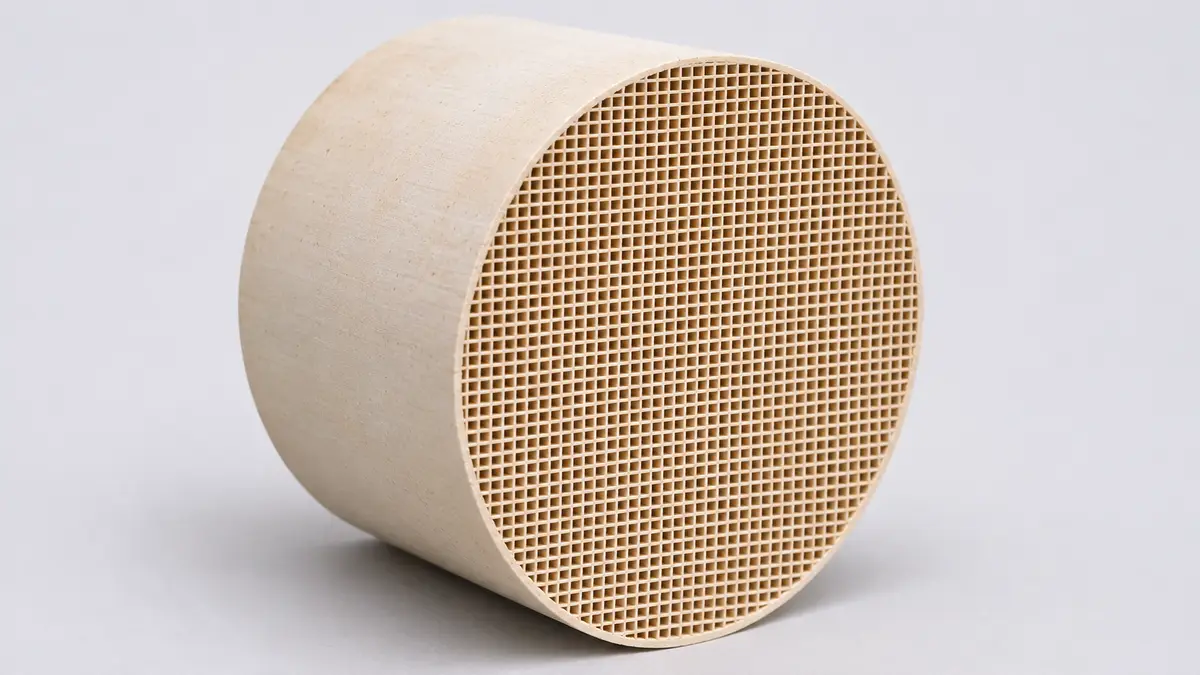
Duty on coated automotive catalyst cores
Read from the UK Trade Tariff on 6 November 2026, heading 3815 covers reaction initiators, reaction accelerators and catalytic preparations, not elsewhere specified or included. This guide concerns coated automotive catalyst monoliths. Precious-metal supported catalysts classified under 3815 12 00 90 have a 6% base duty from China, with no anti-dumping or countervailing duty recorded. The table shows product variants sharing that commodity line.
The line carries 0% suspensions for specified catalysts, including an authorised-use entry describing precious metals deposited on a ceramic honeycomb. This is conditional relief: confirm the complete description and customs supervision requirements before claiming it. Authorised use allows reduced or zero duty for goods used for a specific purpose within a specified period. The tariff also attaches import and export waste controls; confirm their application with your customs broker if buying spent or recovered cores.
Give your broker the active-metal composition, support material, coating details, condition and intended use to confirm the commodity code. Finished vehicle catalytic converters belong to heading 8421, as explained in our wider catalysts guide. Keep bare carriers, coated monoliths and complete converter assemblies separately described.
| Goods | Commodity code | Duty | Anti-dumping or countervailing duty on China |
|---|---|---|---|
| Precious-metal catalyst monoliths on ceramic supports | 3815 12 00 90 | 6% | None |
Specify the monolith and its converter application
Specify ceramic or metallic support, outer profile, length, channel geometry, wall thickness, coating distribution and active-metal loading. Identify the exhaust application, operating temperature range, agreed pressure drop and the converter assembly into which the core will be fitted. Agree sampling, independent metal assay and performance testing on the assembled converter.
For the finished replacement converter, supplying a converter without type approval for vehicles registered after 1 March 2001 is illegal. Ask the assembly supplier for approval evidence covering the intended application; a core assay alone does not demonstrate finished-converter performance. Use testing and certification support to define the evidence needed.
Worked duty example
Illustrative example, not a quote: Illustrative order: 600 new precious-metal catalyst monoliths, without suspension relief under 3815 12 00 90, invoiced at £30,000 free on board, with £3,000 of freight and insurance to the UK. The customs value is £33,000. Duty at 6% is £1,980. Import VAT at 20% is charged on the customs value plus duty, £34,980, so it is £6,996. Import taxes total £8,976; a VAT-registered importer can usually reclaim the VAT, so the lasting cost is the £1,980 of duty. The import duty and VAT guide explains each step.
Inspection checklist
Geometry: check the delivered cores against the approved drawing, including outer profile, length, channel alignment and fit in the intended housing.
Integrity: inspect for cracks, chipped edges, blocked channels, loose coating and movement inside protective packaging.
Chemistry: compare an independently sampled precious-metal assay and coating checks with the agreed specification and batch certificate.
Traceability: match batch identities to test reports and retain samples; compare pressure drop and conversion performance with agreed acceptance criteria. See quality inspection explained.
Working out your own order? Send us the product on WhatsApp and we reply the same working day: WhatsApp us
What goes wrong
A core can fit the housing yet fail because its metal loading, coating distribution or exhaust performance differs from the approved sample. Transport damage can crack the honeycomb or obstruct channels. Agree rejection criteria before production and inspect arrival stock before canning or resale.
Keep spent cores separate from new-product purchases. Waste shipment controls apply only to waste. For imports into England under notification controls, the exporter applies through the dispatch-country authority, and shipment starts only after the relevant authorities consent. For China-origin spent cores, confirm the applicable control with your broker and the Environment Agency before shipment.
Cambridge China Bridge sources these products for UK businesses, checking the factory and the documents before shipment. See factory verification. For repeat volumes, see container programmes.
Frequently asked questions
What is the UK import duty on automotive catalyst monoliths from China?
Precious-metal supported catalyst monoliths under 3815 12 00 90 carry 6% base duty. Listed qualifying catalysts may receive 0% relief, including under authorised use; eligibility must be checked.
Does every ceramic catalyst monolith qualify for zero duty?
No blanket relief is shown. Match the complete suspension description and authorised-use conditions. Ceramic construction alone is insufficient evidence of eligibility.
Is a coated monolith the same tariff product as a complete converter?
Keep them separately described. This guide covers coated catalyst cores; the site's wider guide classifies finished vehicle catalytic converters under heading 8421.
What should I test before accepting catalyst cores?
Check dimensions, cracks, channel blockage, coating integrity and precious-metal assay. Test pressure drop and conversion performance in the intended converter assembly against agreed criteria.