Sourcing 2,4,6-Trichlorophenol from China
2,4,6-Trichlorophenol from China has a 4% UK duty rate under the residual halogenated-phenol line. The named-substance suspension does not include it. Check UK REACH coverage and ensure correct labelling and packaging before supplying the GB market. Cambridge China Bridge sources 2,4,6-trichlorophenol.
Buying from China for a business? How our UK China sourcing agent service works · China sourcing agent for small orders and first imports
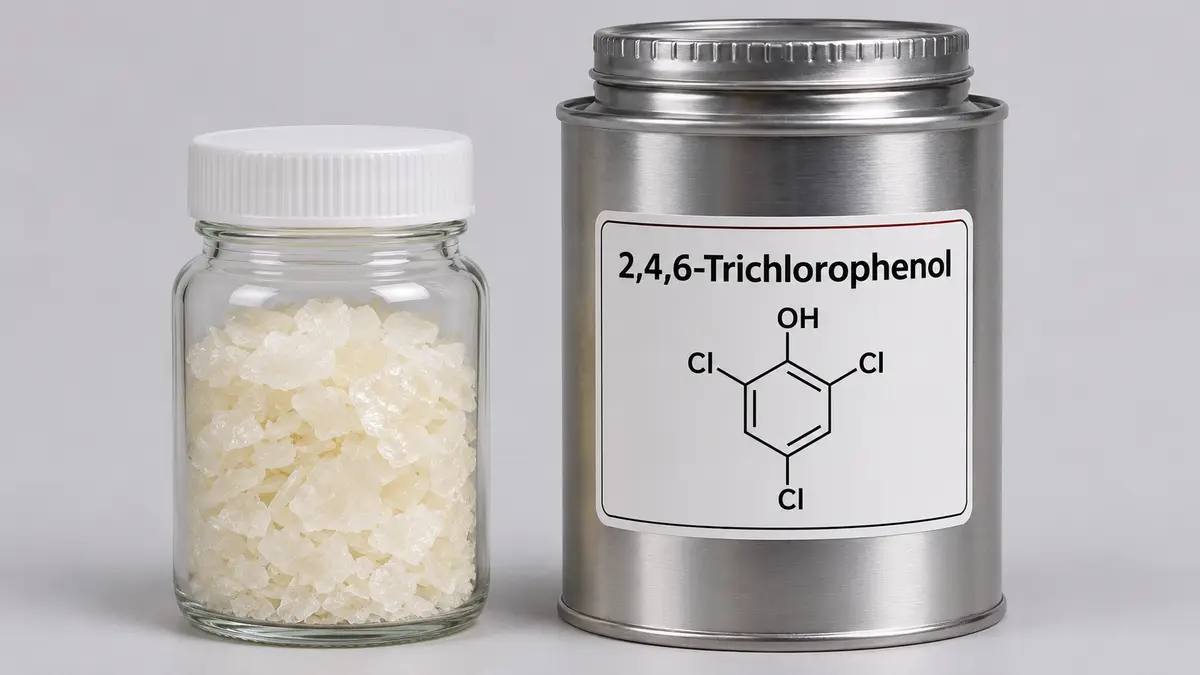
Duty on 2,4,6-trichlorophenol
Read from the UK Trade Tariff on 2 October 2026, heading 2908 covers halogenated, sulphonated, nitrated or nitrosated derivatives of phenols or phenol-alcohols. For separately supplied 2,4,6-trichlorophenol, the relevant residual halogenated-derivative line is 2908 19 00 90. The table shows supply specifications sharing this line, rather than separate customs subheadings.
The supplied tariff data records 4% duty for goods from China, with no anti-dumping or countervailing measure recorded. The line also has a 0.00 % suspension restricted to named substances; 2,4,6-trichlorophenol is not named. Do not apply that suspension simply because the commodity code matches. For wider heading coverage, see the dichlorophenol guide.
The UK Trade Tariff attaches export controls on dangerous chemicals and waste to this line. Ask your customs broker to confirm their relevance to the proposed movement, especially any subsequent return shipment. HSE states that there are no prior informed consent notification obligations for imports. Confirm the exact composition and commodity code before shipment; a formulated product needs its own classification check.
| Goods | Commodity code | Duty | Anti-dumping or countervailing duty on China |
|---|---|---|---|
| 2,4,6-Trichlorophenol, technical grade | 2908 19 00 90 | 4% | None |
Specify the isomer and impurity profile
Name 2,4,6-trichlorophenol explicitly rather than accepting a description of trichlorophenol alone. Agree identity testing, assay and its reporting basis, water content, melting range, colour, particle form and limits for other chlorophenols, including pentachlorophenol. Request the test methods and a certificate of analysis tied to the production batch. Have an independent laboratory check the supplier sample against the agreed specification.
For imports into Great Britain, ask HSE to confirm the applicable UK REACH registration requirements, any exemption and whether an only representative covers the importer. Confirm the route before ordering. Ask HSE to confirm whether a safety data sheet is required and when it should be supplied or updated. Chemicals must be correctly labelled and packaged before being placed on the GB market.
Worked duty example
Illustrative example, not a quote: Illustrative trial order: 20 kg of purified 2,4,6-trichlorophenol in sealed containers under 2908 19 00 90, invoiced at £3,000 free on board, with £980 of freight and insurance to the UK. The customs value is £3,980. Duty at 4% is £159.20. Import VAT at 20% is charged on the customs value plus duty, £4,139.20, so it is £827.84. Import taxes total £987.04; a VAT-registered importer can usually reclaim the VAT, so the lasting cost is the £159.20 of duty. The import duty and VAT guide explains each step.
Inspection checklist
Identity: check that the container labels, purchase specification and batch analysis identify the same isomer.
Analysis: compare independently measured assay, water, melting range and chlorophenol impurities with the agreed acceptance limits.
Packing: check seals, closures, container damage, leakage and batch markings; review the chemical labels against the supply documentation.
Traceability: match the delivered batch to its analysis certificate and retained sample. Arrange testing and certification around the agreed impurity panel.
Working out your own order? Send us the product on WhatsApp and we reply the same working day: WhatsApp us
What goes wrong
A certificate reporting total trichlorophenol can leave the isomer composition unclear. Other failure points include chlorophenol impurities, disagreement over assay reporting basis and powder that arrives caked or in damaged containers. Write the analytical methods and acceptance criteria into the order, then compare an independently tested arrival sample with the approved supplier sample.
Another error is claiming the suspension attached to the residual tariff line without checking its named substances. Resolve the tariff basis before clearance and hold any batch that misses the agreed specification while you investigate. The quality inspection guide explains how to organise acceptance checks.
Cambridge China Bridge sources these products for UK businesses, checking the factory and the documents before shipment. See factory verification. For repeat volumes, see container programmes.
Frequently asked questions
What is the UK import duty on 2,4,6-trichlorophenol from China?
The supplied tariff data shows 4% under 2908 19 00 90, with no trade remedy recorded. The named-substance suspension on that line does not include 2,4,6-trichlorophenol.
Do I need UK REACH registration?
For Great Britain, ask HSE to confirm whether registration is required, whether an exemption applies or whether an only representative covers your imports. Confirm your coverage before ordering.
What should the supplier's analysis certificate show?
The specified isomer, production batch, assay and reporting basis, water, melting range and agreed chlorophenol impurities. Ask for the methods and verify a sample independently.
Does the dangerous-chemicals export control mean I need an import notification?
Ask your broker to confirm the attached export controls and any requirements relevant to your shipment.