Imported cosmetic labels: containers and cartons
Prepare separate container and retail-carton proofs using the approved formula, Responsible Person details, origin and durability evidence. Check which information belongs on both surfaces and document any small-pack exception before printing. Factory artwork and pack checks can be coordinated by Cambridge China Bridge.
Start with a label brief for Great Britain
This guide covers Great Britain. Treat Northern Ireland as a separate compliance brief. For the safety assessment, product information file and notification work behind the artwork, use our beauty sourcing guide. Ask the Responsible Person to approve the label text before sending it to the printer.
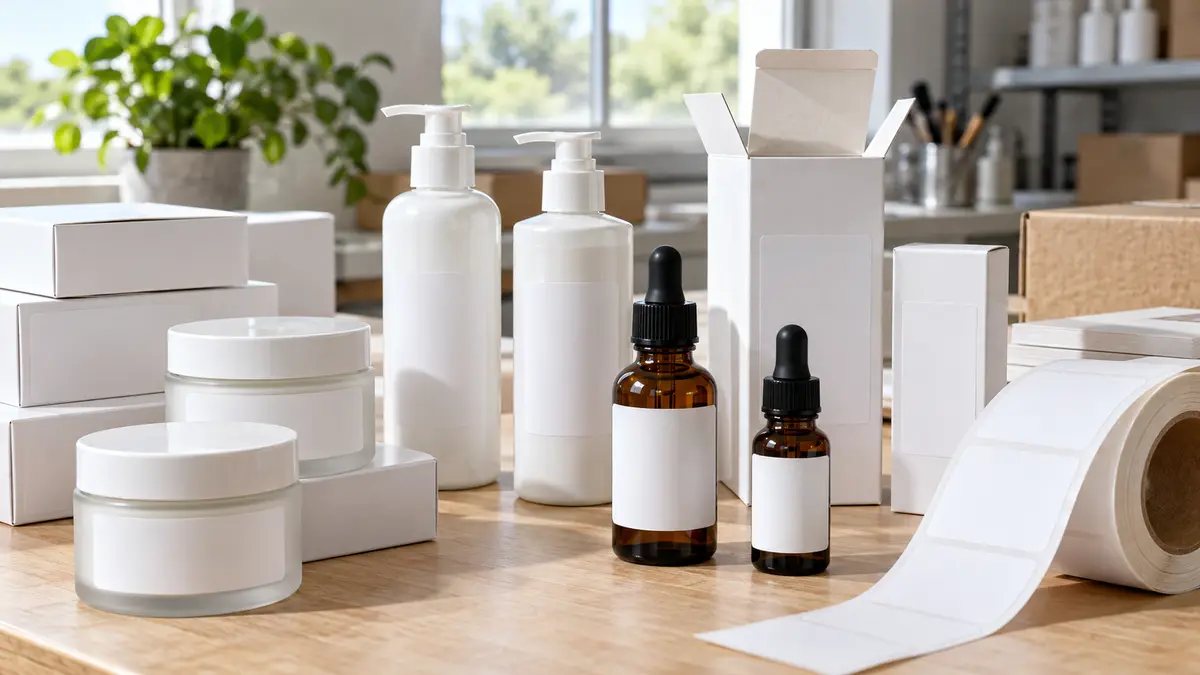
Prepare proofs for the bottle, jar or tube and its retail carton. Required markings must be clearly and indelibly marked, subject to specific exceptions. Confirm with OPSS which nominal contents, durability information, precautions, batch identification and product-function information your product needs. Check the actual printed pack rather than relying on an enlarged screen image.
Confirm identity and origin
For a new China-sourced range, put the UK Responsible Person's name and identifiable address on both the container and carton. A mail-forwarding or PO box address is not a UK established address for this role. If several addresses appear, highlight the address where the product information file is readily accessible.
Imported cosmetics must state their country of origin. Confirm the finished product's origin with the supplier rather than inferring it from the packaging factory's location. Current guidance allows transitional use of qualifying EU/EEA Responsible Person details until 31 December 2027. For new artwork, agree the UK details now and have any reliance on that transition checked.
Build the ingredient list from the formula
Use common ingredient names from the applicable glossary; where no common name exists, use an accepted nomenclature term. The list must be headed or preceded by 'ingredients'. Ingredients are normally listed in descending weight order when added to the product. Ask the reviewer to settle applicable exceptions, fragrance declarations and nanomaterial marking rather than translating the factory's sales description.
The ingredient list may appear on the retail carton alone. If there is no outer packaging, it belongs on the primary container. Match the approved list to the actual formula and product variant, then freeze the text with the artwork revision. Our label checks before printing guide helps organise the approval handover.
Choose durability marking from product evidence
For minimum durability up to and including 30 months, use a minimum durability date on the container and carton, with the prescribed wording or hourglass symbol. For durability exceeding 30 months, an open-jar symbol and the period after opening are normally required on both. The opening-period marking is unnecessary where opening-related deterioration cannot cause harm, including relevant single-use or unopened-system products.
Ask the safety assessor and Responsible Person to confirm the marking, period and any storage conditions against the finished formula and pack. Do not copy a date or open-jar period from a similar product. Keep variable date and batch print areas in the proof, and check that production printing remains legible.
Working out your own order? Send us the product on WhatsApp and we reply the same working day: WhatsApp us
Apply small-pack exceptions field by field
The nominal-content exemption covers packs containing less than five grams or five millilitres, free samples and single-application packs. It does not itself remove durability requirements. If size makes batch marking on the container impossible, the batch code may appear on the outer packaging alone. Free samples still need to meet the other applicable cosmetics requirements.
Where practical impossibility prevents printing precautions or ingredients in their usual positions, use an enclosed or attached leaflet, label, tag, tape or card, with the appropriate referral wording or hand-and-book symbol. Document the reason for the exception. Approve a complete assembled sample, including any insert, and add its presence and label revision to the inspection plan.
Frequently asked questions
Can cosmetic ingredients go only on the carton?
Yes, the ingredient list may appear on the retail carton alone. Without outer packaging, it belongs on the primary container, subject to the practical-impossibility provisions.
Do small cosmetic samples need a durability label?
Small size or free-sample status does not itself waive durability marking. Check minimum durability and whether a period after opening is relevant to the product.
Can I use a PO box for the Responsible Person?
No. OPSS says a UK established address for the Responsible Person does not include mail-forwarding or PO box addresses.
Can a tiny bottle carry its batch code only on the box?
Yes, where marking both is impossible because of size. Record why the exception applies and check the batch code on the actual outer packaging.