Can I import potting soil from China?
Do not assume Chinese potting soil is permitted for garden use. Soil needs authorisation, and organic growing media face prohibitions; pure mineral substrates need a separate assessment. Establish the ingredients and destination before ordering. Factory information can be gathered by Cambridge China Bridge.
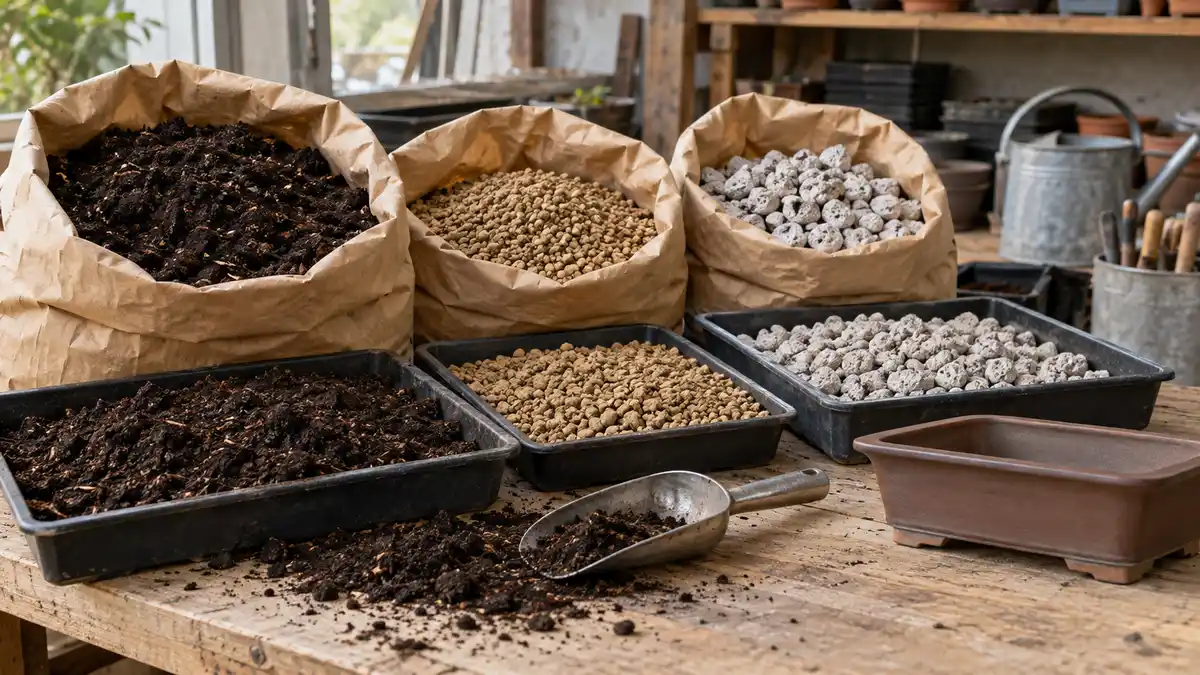
Identify the contents behind the product name
Ask for the complete composition, ingredient origins, photographs and manufacturing process. Record whether the material has previously grown plants or been used in agriculture, whether it contains roots or plant debris, and whether it travels loose or with a living plant. Names such as potting soil, bonsai substrate and growing medium do not describe these facts adequately.
For mineral granules, ask whether they are pure clay, rock or volcanic pumice, or a blend containing compost, bark, moss or other organic ingredients. For peat and coconut fibre, ask whether they are pure and unused. Obtain treatment records if the supplier claims sterilisation. Use our commodity code guide for customs classification, alongside the material assessment.
Check the material-specific plant-health restriction
For England and Wales, official guidance requires authorisation to import, move or keep soil from China. Defra also states that artificial growing media containing organic matter are prohibited, while distinguishing material composed entirely of unused peat. Identify the actual composition before treating a product as soil, an organic blend or a different material.
For a pure mineral substrate or coconut fibre, ask the authority to confirm the position against the specification. Do not infer permission from a soil-free label, sealed packaging or a treatment claim. Our import licence guide covers the broader permission checks; this guide adds the questions specific to soil and growing media.
Resolve whether authorisation fits your intended use
Scientific authorisations permit specified material to be imported, kept and moved between quarantine stations or confinement facilities in England and Wales. APHA issues them subject to detailed quarantine conditions. The practical implication is that you should not treat scientific authorisation as permission to empty imported soil into an ordinary garden.
Send APHA the composition, origin, intended use, quantity, processing records and proposed receiving location. Explain plainly whether the purpose is garden use, resale or research. Ask whether that activity is eligible, which application route applies and what facilities and documents would be needed. If garden use cannot be supported, consider buying the growing medium in the UK instead.
Ask for an answer covering the actual shipment
State whether delivery is to England, Wales, Scotland or Northern Ireland. Keep the England and Wales guidance within its stated scope, and seek destination-specific advice for the other destinations. Describe any living plant travelling with the substrate and ask for the plant and its attached growing medium to be assessed together.
Ask whether import is permitted, whether phytosanitary certification is required, and what notification, inspection or entry arrangements apply. Request an answer that identifies the material and intended use. Keep the enquiry open if the response only discusses a generic product name or does not address the organic ingredients.
Working out your own order? Send us the product on WhatsApp and we reply the same working day: WhatsApp us
Make the result a dispatch checkpoint
Agree that the supplier waits for your written shipment approval. Compare the authority response and any issued permission with the final composition, batch description, destination and receiving location. Ask your customs agent to check the shipment file. Reopen the enquiry if ingredients, processing, packaging or the presence of a living plant changes.
Keep specifications, treatment records, authority correspondence and supporting documents with the order. Use our customs clearance documents guide for the general paperwork. Cambridge China Bridge’s own staff in China can obtain factory information and compare the packed goods with the agreed specification before you approve dispatch.
Frequently asked questions
Can I import Chinese potting soil for my garden?
Do not order it on the assumption that garden use is permitted. Soil from China needs authorisation in England and Wales. Ask APHA about the exact material and use before dispatch.
Is bonsai substrate the same as soil?
The name is insufficient. Obtain the ingredients and establish whether it is pure mineral material, an organic blend or material accompanying a living plant.
Does sterilising growing media make import legal?
Do not rely on that claim alone. Send the composition and treatment records to the authority and ask whether the actual product and intended use are permitted.
Can a scientific authorisation cover garden use?
Do not assume it can. The route involves quarantine stations or confinement facilities and detailed conditions. Ask APHA whether your intended activity is eligible before applying.