Disability equipment imports: VAT and duty relief
Yes, qualifying personal imports may get VAT relief, duty relief or both, including imports by a nominated carer. Check the product and claimant separately, arrange any required approval and give the carrier written instructions before dispatch. Cambridge China Bridge can help collect factory specifications and coordinate shipping paperwork.
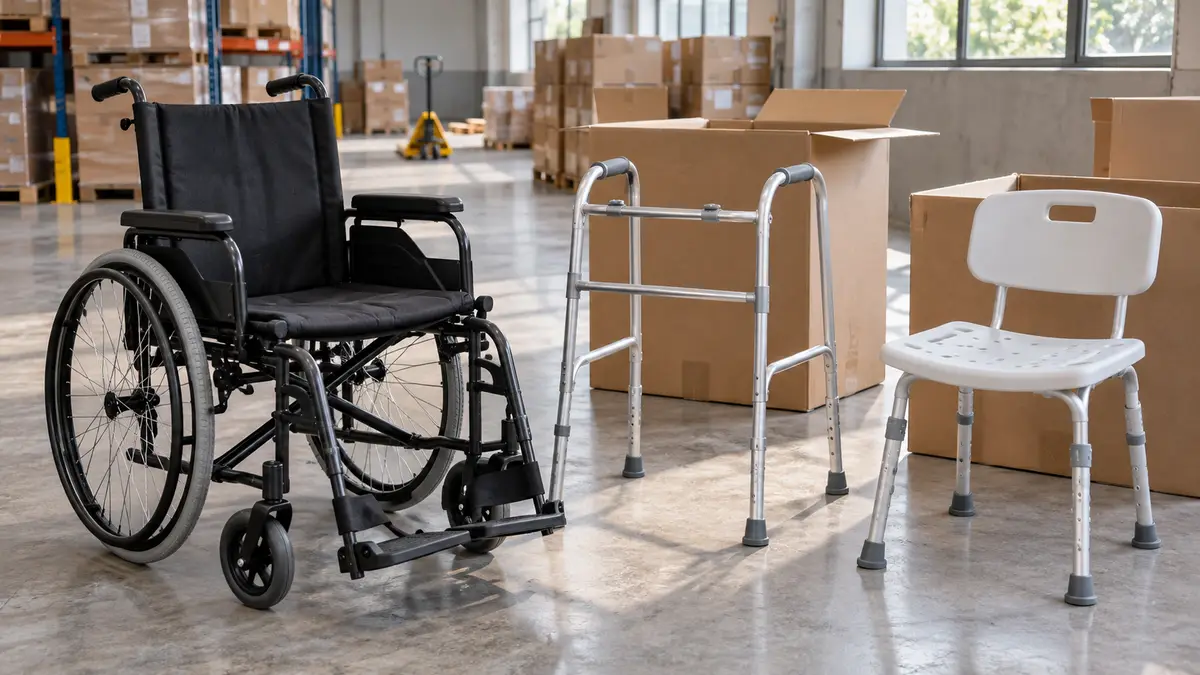
Confirm who is importing and who will use it
VAT relief requires eligible goods for the personal or domestic use of someone who is chronically sick or disabled. HMRC includes long-term impairments that substantially affect everyday activities and conditions medically treated as chronic sickness. Age alone or temporary incapacity does not qualify. You do not need to be registered disabled or receive disability benefits.
A nominated carer can import qualifying equipment on the disabled person's behalf. Agree whose name will appear as importer and relief claimant before ordering. A supplier importing its own stock cannot claim this personal import VAT relief merely because the eventual customer is disabled. Our guide to the importer of record explains the different shipment roles.
Check VAT and duty separately for the exact model
Equipment being useful to a disabled person does not establish VAT eligibility. Ask the factory for the exact model specification, intended users and disability-specific design features. General-purpose reclining chairs, for example, do not qualify simply because a disabled person uses them. Match the specification to the relevant HMRC product category before accepting a tax-free quotation.
Duty relief has separate exclusions: HMRC lists standard generic wheelchairs and mobility light vehicles as excluded from this relief. That does not establish whether the tariff itself charges duty or whether VAT relief applies. Check the commodity code separately. Any adaptation relied on for disability duty relief must be completed before import, so approve photographs and specifications before dispatch.
Arrange approval and eligibility evidence
For HMRC's disability customs-relief procedure, individuals and nominated carers importing by freight or post need approval from the National Imports Reliefs Unit before importation. Contact the unit for its application form while the goods are still in China. A nominated carer must provide an official medical professional's letter confirming their role. Successful applicants receive a certificate to use with the import declaration.
For personal import VAT relief, the eligible customer's declaration must be lodged with the customs import entry before importation. Prepare the claimant's details, qualifying condition, intended personal use and precise equipment description. Keep factory specifications alongside it. A declaration does not establish that the equipment itself qualifies. Ask the carrier which documents it needs, and distinguish the VAT declaration from any customs-relief approval certificate.
Give the carrier written instructions before dispatch
When someone declares the goods for you under the customs-relief procedure, HMRC requires clear written instructions, identification of the approval holder and the approval certificate where required. Send the carrier the certificate and any carer support letter. Ask it to confirm the applicable duty and VAT relief codes and where it will enter the certificate number. Check that the invoice and packing list describe the same model; see customs clearance documents.
For postal imports under this relief, ask the sender to write ‘goods for people with a disability: relief claimed’ clearly on both the package and accompanying customs declaration. For a courier shipment, ask whether it uses a postal or freight declaration and agree the corresponding instructions. Request photographs of postal markings and written acknowledgement from the party actually making the customs entry.
Working out your own order? Send us the product on WhatsApp and we reply the same working day: WhatsApp us
Release the shipment with a complete evidence pack
Before authorising dispatch, put the approval, eligibility declaration, medical support letter where applicable, model evidence and carrier acknowledgement in the shipment file. Ask the carrier to resolve any missing evidence first. Keep tax treatment separate from equipment suitability: have the intended user or their adviser review fit, operation, installation and support arrangements.
Claim customs relief at import rather than assuming a later refund. HMRC may accept late claims subject to conditions. Keep the relief records for a minimum of 4 years, including approval documents and purchase evidence. Tell the National Imports Reliefs Unit before disposing of or transferring equipment imported under this relief, and check whether duty becomes payable.
Frequently asked questions
Can I import disability equipment for a relative?
A nominated carer can import qualifying goods on the disabled person's behalf. For freight or postal imports under the customs-relief procedure, arrange prior approval and an official medical letter confirming your carer role.
Are all imported wheelchairs duty free?
No. HMRC excludes standard generic wheelchairs from disability duty relief. Check whether the tariff itself is duty free and assess VAT eligibility separately.
Do I need to be registered disabled for VAT relief?
No. Registration and disability benefits are not prerequisites. The person, equipment and personal or domestic use must still qualify.
Can I reclaim tax already charged?
A late claim for border charges may be accepted subject to conditions; see personal parcel refunds. For VAT incorrectly charged on a UK sale, ask the supplier for a refund.