Turn a Chinese factory recipe into a UK food label
Start with a signed recipe, full supplier ingredient specifications and finished-product yield records. Build the ingredients list and quantity declarations, retain the nutrition calculation evidence, then review the artwork for its destination before printing. Cambridge China Bridge can coordinate the factory information through its staff in China.
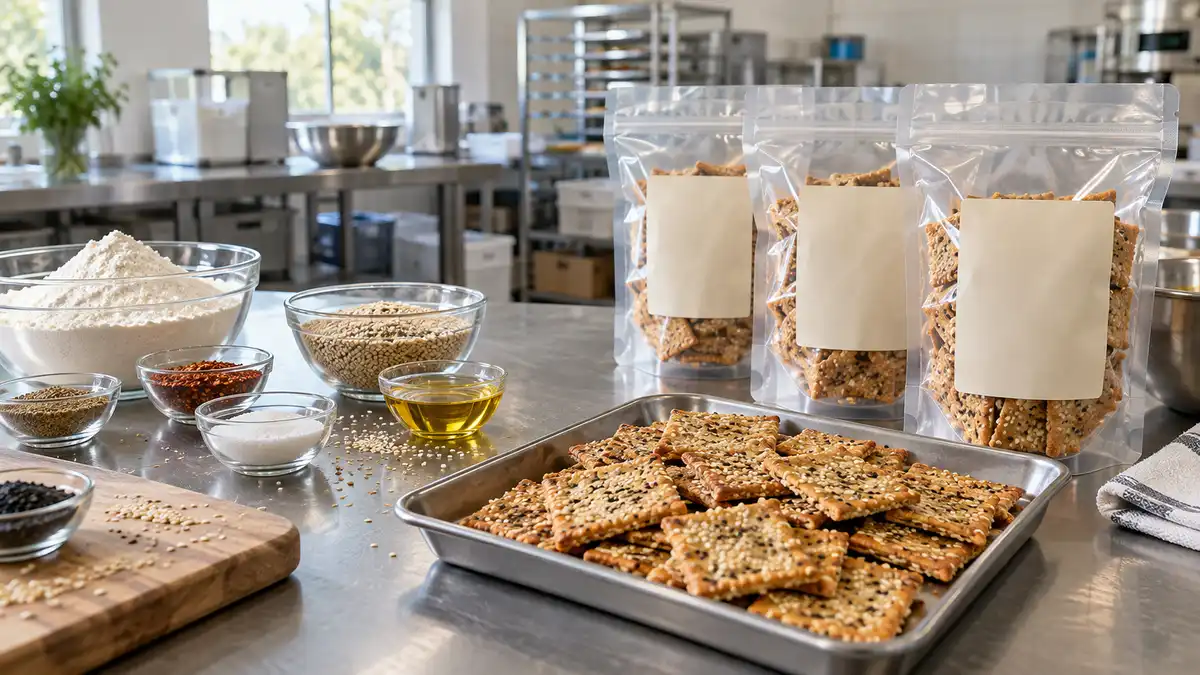
Collect a recipe pack before translating
Ask the factory for the current recipe by weight, including added water, additives, coatings, fillings and processing inputs. Request ingredient supplier specifications, manufacturing steps, finished batch yield and any existing nutrition reports. Give the recipe and supporting documents matching version references. A photograph of a Chinese retail label is a useful comparison, but a poor starting point for calculation.
Record the intended sales destination, product format and preparation instructions. This guide concerns ordinary prepacked food. Nutrition labelling applies to most prepacked foods, with exemptions to check for the particular product. Keep the wider purchasing work in the food preparations sourcing guide.
Unpack compound ingredients and allergens
For every bought-in sauce, seasoning, coating or filling, ask for its constituent ingredients and their weights or proportions. Repeat the request for nested mixtures. Keep the original specification beside the translation, and resolve vague descriptions such as vegetable oil or flavouring with the supplier. Ask your label reviewer to confirm the declaration format and any proposed omission before artwork approval.
Ingredients must be listed in descending weight order using their weights at manufacture. The heading must contain the word ‘ingredients’. Allergens must appear in the ingredients list and be highlighted using a different font, style or background colour. Check allergen information within compound ingredients rather than relying on the factory’s top-level recipe.
Separate recipe weights from label quantities
Review the product name, pictures and descriptive wording for ingredients that need a percentage declaration. The official guidance identifies ingredients named in the food, normally associated with its name, emphasised on the label or characterising the product, and also describes exceptions. Record your reviewer’s decision against each relevant ingredient rather than adding percentages indiscriminately.
Keep the calculation worksheet tied to the approved recipe. For an ingredient within a filling, work from its share of that filling and the filling’s contribution to the product. Record moisture loss and finished yield where cooking or drying changes the product weight, and have the reviewer confirm the applicable quantity calculation. Treat net pack weight as a separate artwork check.
Keep nutrition values traceable
Declared nutrition values must be averages based on manufacturer analysis, calculation from known or actual average ingredient values, or generally established and accepted data. Keep supplier nutrient specifications, laboratory reports or database references beside the worksheet. Weight each ingredient’s nutrient contribution, total the contributions and relate them to the finished-product yield. Investigate missing data instead of treating a blank as an absence.
For the mandatory declaration, present energy, fat, saturates, carbohydrate, sugars, protein and salt in that order. Include the mandatory per 100g or per 100ml information. Salt is calculated from total sodium multiplied by 2.5, so added salt alone is insufficient. Values normally relate to food as sold; prepared-food values are permitted with sufficiently detailed preparation instructions. Ask the reviewer to check units, energy conversion, rounding and whether testing would resolve uncertain calculations.
Working out your own order? Send us the product on WhatsApp and we reply the same working day: WhatsApp us
Approve the destination and the printing file
For GB sales, prepacked food must carry a UK food business operator address, or a UK importer address where the operator is outside the UK. The general Northern Ireland guidance requires a Northern Ireland or EU operator address, or an importer address there. Identify the route before choosing artwork: eligible GB-to-Northern Ireland movements under the Northern Ireland Retail Movement Scheme use UK consumer protection standards, including labelling, and have additional scheme labelling requirements. Do not assume a direct China-to-Northern Ireland shipment uses that scheme.
Have the buyer’s nominated reviewer sign off the recipe version, ingredient wording, allergen emphasis, quantity decisions, nutrition worksheet and destination-specific artwork together. ‘Approval-ready’ here means ready for that review. Use the factory artwork approval guide for print control and the factory substitution guide when an ingredient changes. Cambridge China Bridge can collect factory records and track corrections through its staff in China; agree who authorises the final label before printing.
Frequently asked questions
Can I translate the factory’s Chinese food label?
Use it for comparison, then rebuild the draft from the recipe and supplier specifications. Translation alone does not establish ingredient weights, compound composition or the basis of nutrition values.
What if the factory will not disclose a sauce recipe?
Ask for confidential disclosure to your nominated reviewer and usable supplier specifications. Hold label approval while constituent ingredients, allergens or calculation inputs remain unresolved.
Do UK nutrition labels always need laboratory testing?
No. Official guidance permits average values from manufacturer analysis, ingredient calculations or generally established and accepted data. Retain the inputs and method; use testing to resolve uncertainty.
Can I use the same food label in GB and Northern Ireland?
Do not assume so. Check the business address and supply route. Eligible movements under the Northern Ireland Retail Movement Scheme have a distinct standards and labelling route.