Sourcing women's woven faux-fur coats from China
Women's woven faux-fur coats from China carry 12% UK duty across the selected heading 6202 lines, with no anti-dumping or countervailing duty shown. Fibre composition must be labelled; confirm that the pile is textile rather than substituted animal fur. Cambridge China Bridge sources women's woven faux-fur coats.
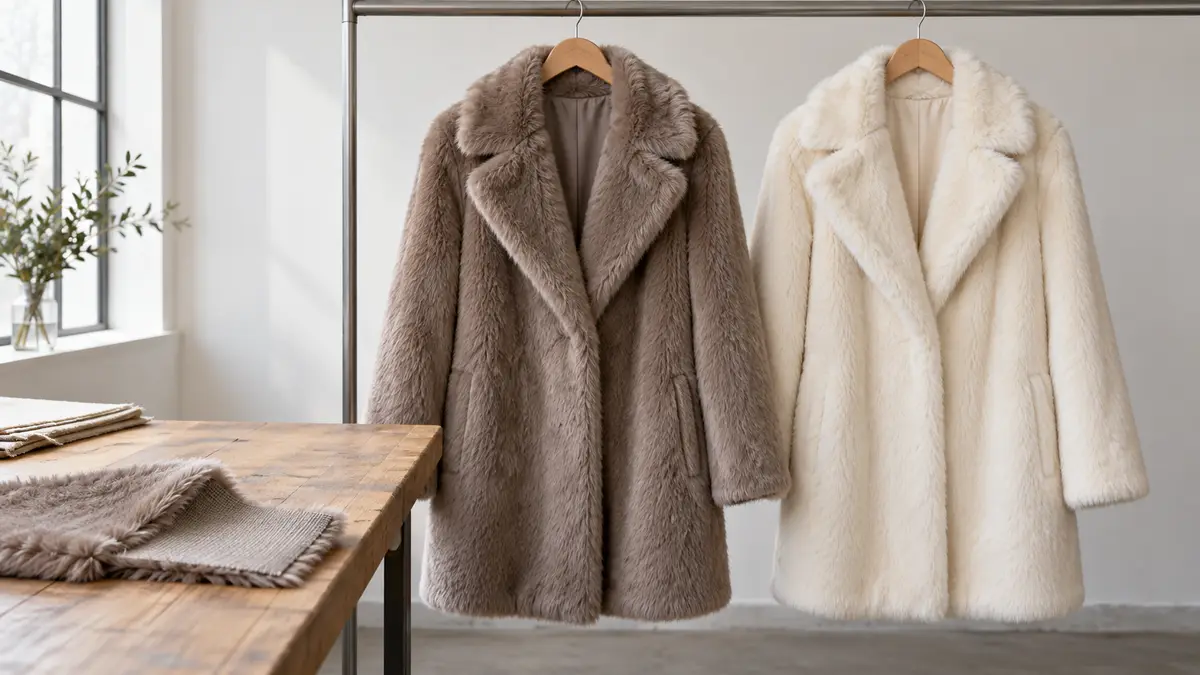
Duty on woven faux-fur coats
Read from the UK Trade Tariff on 11 October 2026, heading 6202 covers women's and girls' overcoats and similar outerwear. This guide focuses on women's woven faux-fur coats. The selected cotton and man-made fibre lines carry 12% duty for goods from China, with no anti-dumping or countervailing duty and no suspension shown. For duffle coat sourcing, see women's woven duffle coats.
The tariff attaches import controls on cat and dog fur and seal products, plus an export control on cat and dog fur. Imports and exports of cat and dog fur, including products made from it, are banned. Seal products are subject to an import ban with exceptions; confirm any applicable exception and documentary requirement with your customs broker before accepting animal material in an order.
The table offers candidate lines according to fibre and finished garment weight, not a dedicated faux-fur code. Confirm the actual fabric construction, composition and garment weight with your broker using finding your commodity code. See coats, parkas and jackets for the wider heading. For wool cape sourcing, see women's woven wool capes. For ski outerwear sourcing, see our women's woven ski jackets guide.
| Goods | Commodity code | Duty | Anti-dumping or countervailing duty on China |
|---|---|---|---|
| Women's man-made fibre woven faux-fur overcoats, not exceeding 1 kg | 6202 40 10 19 | 12% | None |
| Women's man-made fibre woven faux-fur overcoats, exceeding 1 kg | 6202 40 90 19 | 12% | None |
| Women's cotton woven faux-fur overcoats, not exceeding 1 kg | 6202 30 10 19 | 12% | None |
| Women's cotton woven faux-fur overcoats, exceeding 1 kg | 6202 30 90 19 | 12% | None |
Specify the woven pile and backing
Specify the pile fibre, backing fibre, woven construction, pile length, density, direction and colour against an approved swatch. Agree the lining, collar shape, pocket construction, fastening, seam finish and size chart with tolerances. Require written approval before changing the fabric or adding animal-derived trims.
For sale in Great Britain, the fibre content must be labelled. Use a durable, legible fibre-composition label, and confirm with the relevant authority how any non-textile parts of animal origin should be declared. Products should only be sold once compliance with product safety regulations has been demonstrated appropriately.
Agree practical tests for shedding, rubbing, seam strength and appearance after the proposed cleaning method. Keep an approved finished coat as the comparison sample, including its labels and packaging.
Worked duty example
Illustrative example, not a quote: Illustrative order: 500 women's woven faux-fur coats of man-made fibres under 6202 40 10 19, invoiced at £6,000 free on board, with £800 of freight and insurance to the UK. The customs value is £6,800. Duty at 12% is £816. Import VAT at 20% is charged on the customs value plus duty, £7,616, so it is £1,523.20. Import taxes total £2,339.20; a VAT-registered importer can usually reclaim the VAT, so the lasting cost is the £816 of duty. The import duty and VAT guide explains each step.
Inspection checklist
Pile and backing: compare production coats with the approved swatch for density, colour and pile direction; inspect the backing and investigate any suspected animal fur through material identification.
Seams and fastenings: check for trapped pile, exposed backing, seam opening and weak pocket attachments; operate hooks, buttons and zips on finished coats.
Fit and labels: measure each ordered size against the agreed chart, weigh finished garments, and compare fibre labels with the material records.
Arrival condition: unpack coats to check compression marks, uneven brushing, shedding, colour transfer, damp and distorted collars. Record defects before releasing stock; use the quality inspection guide to define the inspection brief.
Working out your own order? Send us the product on WhatsApp and we reply the same working day: WhatsApp us
What goes wrong
A softer sample can be replaced by sparse or coarse production pile. Panels cut against the agreed pile direction look like different colours, seams trap the pile, and the backing shows when the coat bends. Tight packing can leave lasting creases or flattened collars.
Real fur substituted for faux fur changes the material and control assessment. Hold suspect stock for identification and broker review. For textile faults, compare retained swatches and finished samples, document the affected sizes and colours, and agree corrective work before accepting replacements.
Cambridge China Bridge sources these products for UK businesses, checking the factory and the documents before shipment. See factory verification. For own-brand ranges, see sourcing for brands.
Frequently asked questions
What is the UK import duty on women's woven faux-fur coats from China?
The selected heading 6202 lines carry 12% duty for goods from China. No anti-dumping or countervailing duty or suspension is shown in the supplied tariff data.
Does a heavy faux-fur coat need a different commodity code?
Yes. The cotton and man-made fibre lines distinguish garments not exceeding 1 kg from those exceeding 1 kg. Weigh a finished production sample; the selected lines all carry 12%.
What labels do woven faux-fur coats need?
For Great Britain, use a durable, legible fibre-composition label. Where non-textile animal parts are present, confirm the required declaration and wording with the relevant authority.
How do I check that faux fur is not real fur?
Inspect the backing and compare it with the approved material. If the material is uncertain, hold the stock and arrange laboratory identification rather than relying on the supplier's description.