Sourcing women's knitted rugby shirts from China
Women's knitted rugby shirts classified under heading 6106 carry a flat 12% UK duty from China. Fibre composition must be labelled for sale in Great Britain. Confirm the code from the garment's construction and check CITES requirements for listed animal materials. Cambridge China Bridge sources women's knitted rugby shirts.
Buying from China for a business? How our UK China sourcing agent service works · China sourcing agent for small orders and first imports
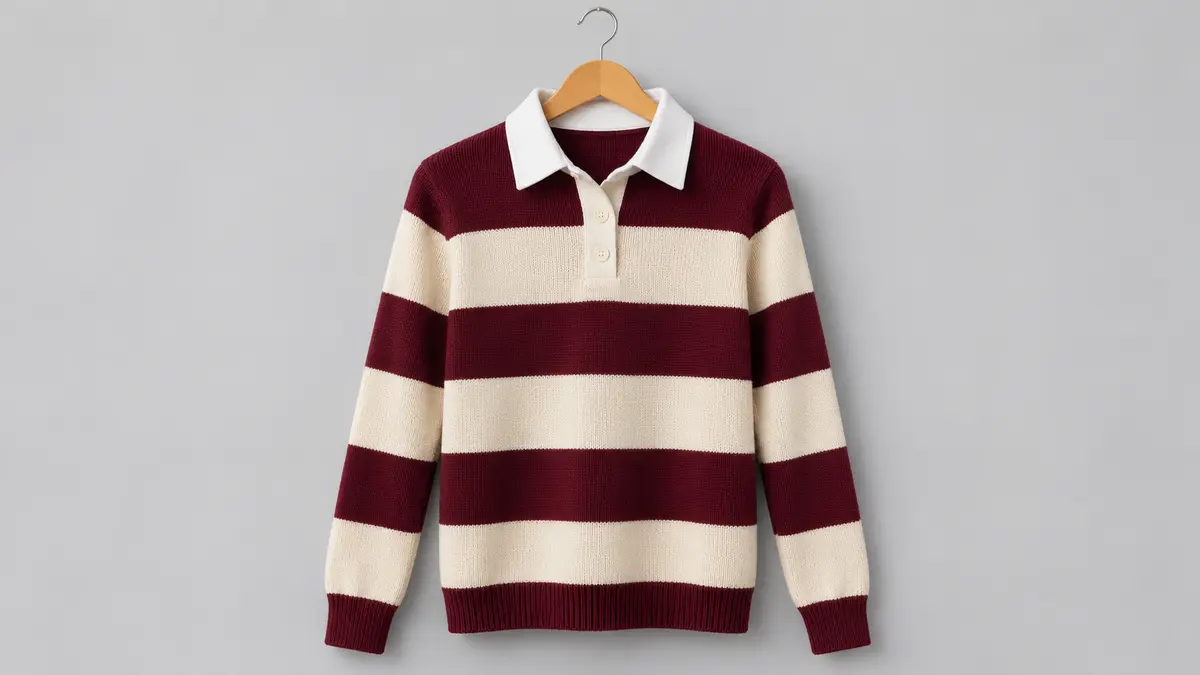
UK duty on women's knitted rugby shirts
Read from the UK Trade Tariff on 6 October 2026, heading 6106 covers women's or girls' knitted or crocheted blouses, shirts and shirt-blouses. Women's knitted rugby shirts falling within this heading carry 12% duty from China across all supplied fibre lines. The supplied data records no anti-dumping or countervailing duty and no suspensions.
The tariff attaches CITES import and export controls to 6106 90 10 00 and 6106 90 90 00. A permit is required for species listed in CITES annexes A, B or C. For animal-derived materials from China, confirm the species and exact import and export documentation with your customs broker before ordering.
Confirm the commodity code from the finished sample, fibre composition and shirt construction. Ask the broker to assess the collar, neck opening, pockets and hem rather than relying on the name 'rugby shirt'. For the related men's product family, see men's knitted rugby shirts.
| Goods | Commodity code | Duty | Anti-dumping or countervailing duty on China |
|---|---|---|---|
| Women's knitted rugby shirts of cotton | 6106 10 00 00 | 12% | None |
| Women's knitted rugby shirts of man-made fibres | 6106 20 00 00 | 12% | None |
| Women's knitted rugby shirts of wool or fine animal hair | 6106 90 10 00 | 12% | None |
| Women's knitted rugby shirts of other textile materials | 6106 90 90 00 | 12% | None |
Specify the women's fit, stripes and placket
State whether the shirt is for casual wear or playing rugby. Specify fibre composition, knitted fabric structure, fabric weight, stripe width and repeat, collar material, placket depth, fastening type and reinforcement. Approve stripe matching at side seams and the placket, plus embroidery size, position and backing.
Use a women's graded measurement chart covering bust, waist, hip, shoulder, sleeve and body length. Specify the intended fit and movement allowance; approve the fit on a wearer rather than accepting a shortened men's pattern. Agree washing, shrinkage, twisting, pilling and colour-transfer acceptance criteria before production.
For sale in Great Britain, labels must show fibre content, including fur and other animal parts. Confirm the permitted fibre names with the relevant authority and approve wording against composition evidence. Importers and sellers are responsible for consumer product safety. Include fastening security and seam checks in the specification, and plan inspection around the approved sample.
Worked duty example
Illustrative example, not a quote: Illustrative order: 500 women's cotton knitted rugby shirts; FOB value and freight are illustrative, not a quotation. under 6106 10 00 00, invoiced at £7,000 free on board, with £700 of freight and insurance to the UK. The customs value is £7,700. Duty at 12% is £924. Import VAT at 20% is charged on the customs value plus duty, £8,624, so it is £1,724.80. Import taxes total £2,648.80; a VAT-registered importer can usually reclaim the VAT, so the lasting cost is the £924 of duty. The import duty and VAT guide explains each step.
Inspection checklist
Fit: measure garments from each ordered size against the approved chart; check bust and hip ease, sleeve movement and placket gaping.
Stripes and shade: compare stripe repeats and seam matching with the approved sample; check colour consistency across cartons and transfer onto a pale collar.
Construction: inspect collar attachment, placket reinforcement, underarm seams, side vents, button security and embroidery backing.
Wash and labels: wash production samples using the agreed care method; remeasure and check twisting, collar distortion and colour bleeding. Compare fibre labels, size labels and carton contents with the order.
Working out your own order? Send us the product on WhatsApp and we reply the same working day: WhatsApp us
What goes wrong
A men's pattern altered only in length can leave the bust tight and shoulders too wide. Stripe matching may look correct on the approval sample but drift in bulk cutting. A stiff collar or poorly reinforced placket can distort the knitted body, while dark stripes can stain a pale collar during washing.
Keep approved washed and unwashed samples, record the fit and stripe tolerances, and inspect production garments before shipment. Repeat measurements and wash checks on arrival before releasing stock. Check the landed-cost calculation using the UK import duty and VAT guide.
Cambridge China Bridge sources these products for UK businesses, checking the factory and the documents before shipment. See factory verification. For own-brand ranges, see sourcing for brands.
Frequently asked questions
What is the UK import duty on women's knitted rugby shirts from China?
The supplied heading 6106 lines carry 12% duty from China, with no anti-dumping or countervailing duty and no suspensions recorded.
Can I use a men's rugby shirt pattern for a women's range?
Approve a women's measurement chart and a wearer fit sample. Simply shortening a men's pattern can leave the bust tight, shoulders wide and hip allowance unsuitable.
Do women's knitted rugby shirts need fibre labels?
Confirm the permitted fibre names with the relevant authority and check the wording against composition evidence.
How do I check whether the stripes will bleed?
Wash production samples using the agreed care method and check colour transfer onto the collar and pale stripes. Agree colour-fastness acceptance criteria for each colourway before ordering.