Sourcing Wicker Fishing Creels from China
Willow and rattan fishing creels from China carry 2% UK duty across the relevant lines, with no listed trade remedies. Creels sold to consumers in Great Britain must be safe; specify secure straps, smooth weave ends and suitable liners for edible fish. Cambridge China Bridge sources wicker fishing creels.
Buying from China for a business? How our UK China sourcing agent service works · China sourcing agent for small orders and first imports
UK duty on wicker fishing creels
Heading 4602 covers basketwork and wickerwork made directly to shape from plaiting materials or assembled from goods of heading 4601. For fishing creels, distinguish willow from rattan and hand-made production from other production. The wider basket family is covered in our wicker picnic basket guide.
Read from the UK Trade Tariff on 1 October 2026, the relevant willow and rattan lines carried 2% duty for goods from China. The supplied tariff record lists no anti-dumping or countervailing duties, suspensions or attached import controls for these lines. Import VAT is normally 20%; see UK import duty and VAT.
Confirm the material, construction and manufacturing method before choosing the commodity code. Ask the supplier to identify the basket material separately from straps, buckles and any removable liner, and provide photographs of the finished creel.
| Goods | Commodity code | Duty | Anti-dumping or countervailing duty on China |
|---|---|---|---|
| Hand-made willow fishing creels | 4602 19 90 10 | 2% | None |
| Other willow fishing creels | 4602 19 90 90 | 2% | None |
| Hand-made rattan fishing creels | 4602 12 00 10 | 2% | None |
| Other rattan fishing creels | 4602 12 00 90 | 2% | None |
Specify the creel body, lid and carrying system
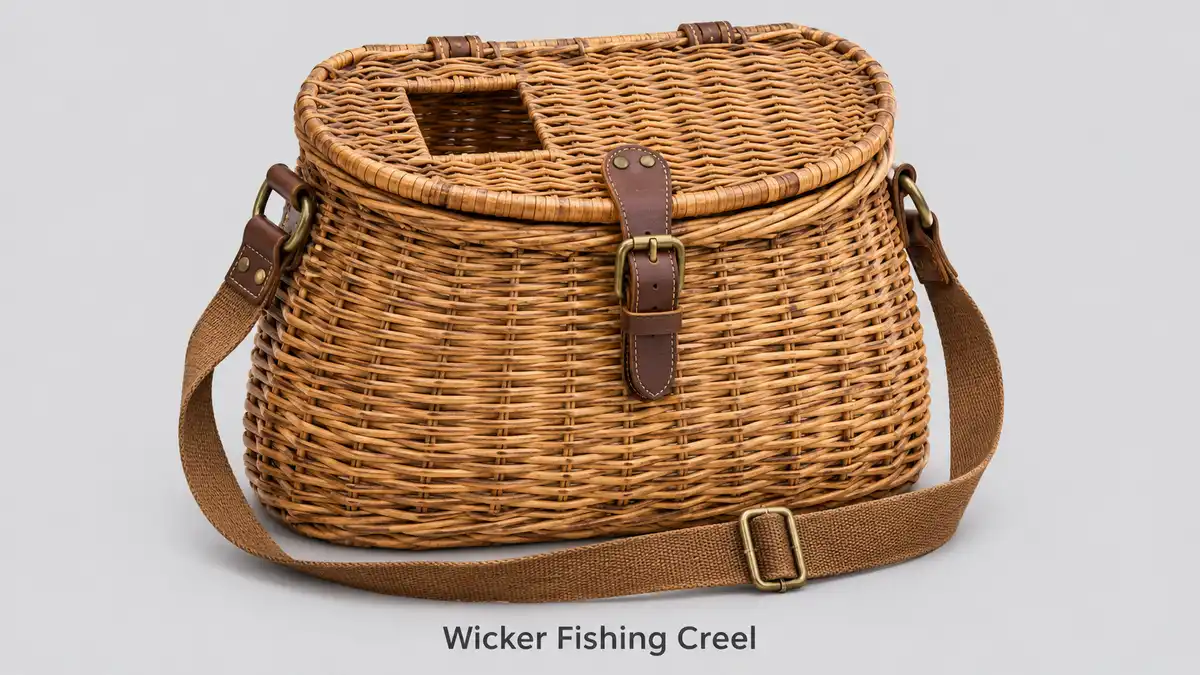
Specify the plant material, external dimensions, usable internal space, back profile and lid opening. Agree the weave density, rim binding, colour and surface finish against a physical sample. State whether the creel is for carrying retained fish, carrying tackle or display, rather than letting the factory choose its construction.
Define strap material, adjustment range, attachment position, buckle design and the intended carrying load. Check that the loaded creel sits against the wearer without tilting and that the lid can be opened while worn. Approve the fish-entry opening and closure together with the strap assembly.
Consumer creels in Great Britain fall within the scope of the General Product Safety Regulations and must be safe in normal or reasonably foreseeable use. Where the basket or liner will directly touch fish intended for eating, ask for evidence that the contact material is suitable for food use. Specify a removable, cleanable liner and assess it together with the finished creel.
Worked duty example
Illustrative example, not a quote: Illustrative batch of hand-made willow fishing creels under 4602 19 90 10, invoiced at £8,000 free on board, with £1,200 of freight and insurance to the UK. The customs value is £9,200. Duty at 2% is £184. Import VAT at 20% is charged on the customs value plus duty, £9,384, so it is £1,876.80. Import taxes total £2,060.80; a VAT-registered importer can usually reclaim the VAT, so the lasting cost is the £184 of duty. The import duty and VAT guide explains each step.
Inspection checklist
Body and edges: measure the body and opening against the approved sample; inspect the rim, cut ends and internal weave for splinters, loose bindings and snagging points.
Straps and lid: load the creel to the agreed carrying load, check attachment movement and buckle slip, and operate the hinge and closure while wearing it.
Moisture and packing: check for mould, musty smells and damp material before packing and on arrival; inspect for crushing and lid distortion after unpacking.
Liner and finish: check liner fit, removal and cleaning access, and look for flaking coating or colour transfer during the agreed wet-use trial. Record findings through quality inspection.
Working out your own order? Send us the product on WhatsApp and we reply the same working day: WhatsApp us
What goes wrong
A creel can match its external dimensions yet have too little usable space because the back curves inward or the lid opening is narrow. Weak strap anchors can pull through the weave, a loaded body can tilt, and a closure that works on the bench can be awkward when worn. Approve a loaded, worn sample before bulk production.
Damp wicker can arrive mouldy, and tight packing can distort the lid or crush the rim. A fixed liner can hide moisture and make cleaning difficult. Agree drying, packing and cleaning instructions with the supplier, then examine unpacked arrival samples before releasing the batch for sale.
Cambridge China Bridge sources these products for UK businesses, checking the factory and the documents before shipment. See factory verification. For repeat volumes, see container programmes.
Frequently asked questions
What is the UK import duty on wicker fishing creels from China?
The relevant willow and rattan creel lines carry 2% duty in the supplied tariff record, with no listed anti-dumping or countervailing duty.
Which commodity code applies to a willow fishing creel?
Hand-made willow creels are candidates for 4602 19 90 10; other willow creels for 4602 19 90 90. Confirm the material and manufacturing method before declaring the code.
What should I check on a fishing creel sample?
Check usable space, the lid opening, sharp weave ends, strap anchors and buckle slip. Wear the sample with the agreed load and operate the closure in that position.
Does a fishing creel liner need to be suitable for food contact?
Yes, if it directly touches fish intended for eating. Ask for evidence covering the actual liner material and intended use, and check that it can be removed and cleaned.