Sourcing welded wedge-wire panels from China
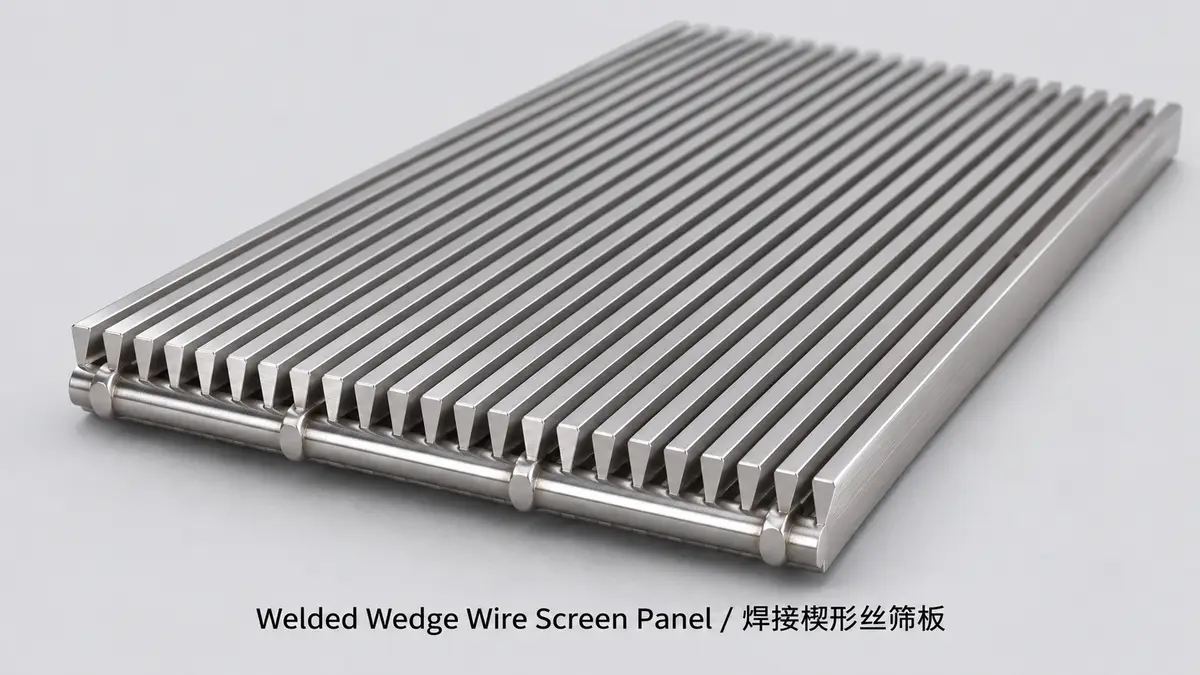
Welded wedge-wire screen panels from China classified in heading 7314 carry 0% UK duty across the supplied tariff lines. Confirm the code against the welded construction, wire dimensions and openings, rather than the supplier's product name. Cambridge China Bridge sources welded wedge-wire screen panels.
Buying from China for a business? How our UK China sourcing agent service works · China sourcing agent for small orders and first imports
Duty and classification for welded screens
Heading 7314 covers iron or steel wire cloth, grill, netting and fencing, plus expanded metal. This guide concerns wedge-shaped profile wires welded to support bars to form screen panels. Compare the welded branches against the actual construction. Stainless steel alone does not make a welded panel woven cloth.
Read from the UK Trade Tariff on 1 October 2026, every supplied line carried 0% duty for goods from China. The supplied record lists no anti-dumping or countervailing duty, steel measure, suspension or attached import control. These are heading-level tariff findings, not confirmation that a particular panel meets the rules for its intended use.
The table compares tariff descriptions rather than interchangeable screen specifications. The larger-opening welded branch requires both a maximum wire cross-sectional dimension of at least 3 mm and mesh size of at least 100 cm². The residual row is included for classification comparison. Give your broker the drawing, wire profile, opening dimensions and coating details, and confirm the commodity code. Include that code on the import declaration. For wider heading coverage, see stainless steel woven filter mesh.
| Goods | Commodity code | Duty | Anti-dumping or countervailing duty on China |
|---|---|---|---|
| Other welded grill and netting, not zinc-coated | 7314 39 00 00 | 0% | None |
| Non-ribbed welded grill: wire at least 3 mm, mesh at least 100 cm² | 7314 20 90 00 | 0% | None |
| Other welded grill and netting, zinc-coated | 7314 31 00 00 | 0% | None |
| Other steel-wire cloth, grill and netting: residual comparison | 7314 49 00 00 | 0% | None |
Specify the slots, support bars and mounting
Specify the stainless steel grade or other steel material, profile-wire shape, slot width and tolerance, slot direction, support-bar section and spacing, panel dimensions, flatness and mounting details. Mark the working face and flow direction on the drawing. Agree the operating load, support arrangement and cleaning method with the equipment owner before approving a sample.
For replacement panels, supply a checked drawing of the seat, fixing holes, frame and sealing surfaces. Agree how slot width will be measured across the panel, including near edges and welds. For food-processing use, ask for material and suitability evidence covering the intended food, temperature and cleaning conditions.
Before sale in Great Britain, check whether sector-specific product rules require CE or UKCA marking. Conformity marking is only necessary where those rules require it; not every product needs a mark. Agree the applicable route before accepting a supplier's certificate.
Worked duty example
Illustrative example, not a quote: Illustrative order of 60 replacement welded wedge-wire screen panels under 7314 39 00 00, invoiced at £9,000 free on board, with £4,000 of freight and insurance to the UK. The customs value is £13,000. Duty at 0% is £0. Import VAT at 20% is charged on the customs value plus duty, £13,000, so it is £2,600. With no duty, the only import tax is the VAT, which a VAT-registered importer can usually reclaim. The import duty and VAT guide explains each step.
Inspection checklist
Slots: measure openings across the working face and around the edges against the agreed tolerance; check for blocked slots, displaced profile wires and the correct flow orientation.
Welds and supports: check for detached wires, cracks and distortion; verify support-bar dimensions and spacing, and carry out the strength check agreed for the application.
Fit and flatness: measure the panel, diagonals, fixing holes and seating surfaces; trial-fit a sample against the approved fixture or equipment drawing.
Material and packing: match material certificates and panel identification to the order; inspect for burrs, residue and corrosion, and check that packing prevents bent edges and contact damage.
Working out your own order? Send us the product on WhatsApp and we reply the same working day: WhatsApp us
What goes wrong
An average slot measurement can hide locally oversized gaps that let retained material pass. Weld distortion can close neighbouring slots or bend the panel. A reversed working face, incorrect support spacing or misplaced fixing holes can make a replacement unusable even when its overall dimensions look correct.
Record local slot measurements and fitting checks before dispatch, then repeat agreed checks on arrival. Keep non-conforming panels separate while the supplier reviews the evidence. Use testing and certification support to agree the evidence needed for the intended application.
Cambridge China Bridge sources these products for UK businesses, checking the factory and the documents before shipment. See factory verification. For repeat volumes, see container programmes.
Frequently asked questions
What is the UK import duty on wedge-wire screen panels from China?
The supplied heading 7314 tariff lines all carry 0% duty. The record lists no anti-dumping or countervailing duty. Confirm the panel's classification before declaring it.
Which commodity code covers welded wedge-wire panels?
Compare 7314 39 00 00 for other non-zinc-coated welded grill and netting with the other branches. Ask your broker to assess the drawing, wire dimensions, openings and coating before confirming the code.
What should I specify for a replacement screen panel?
Specify material, wire profile, slot width and tolerance, flow direction, supports, flatness, frame, fixing holes and sealing surfaces. Approve the fit against the actual equipment drawing.
Do wedge-wire screen panels need CE or UKCA marking?
Check the sector-specific rules for the product and intended use.