Sourcing waffle mixes from China
Waffle mixes from China classified under 1901 20 00 00 pay 6% UK duty, with no duty variation within that line and no listed trade remedy or suspension. Mixes containing milk or egg need animal-product eligibility and document checks before shipment. Cambridge China Bridge sources waffle mixes.
Buying from China for a business? How our UK China sourcing agent service works · China sourcing agent for small orders and first imports
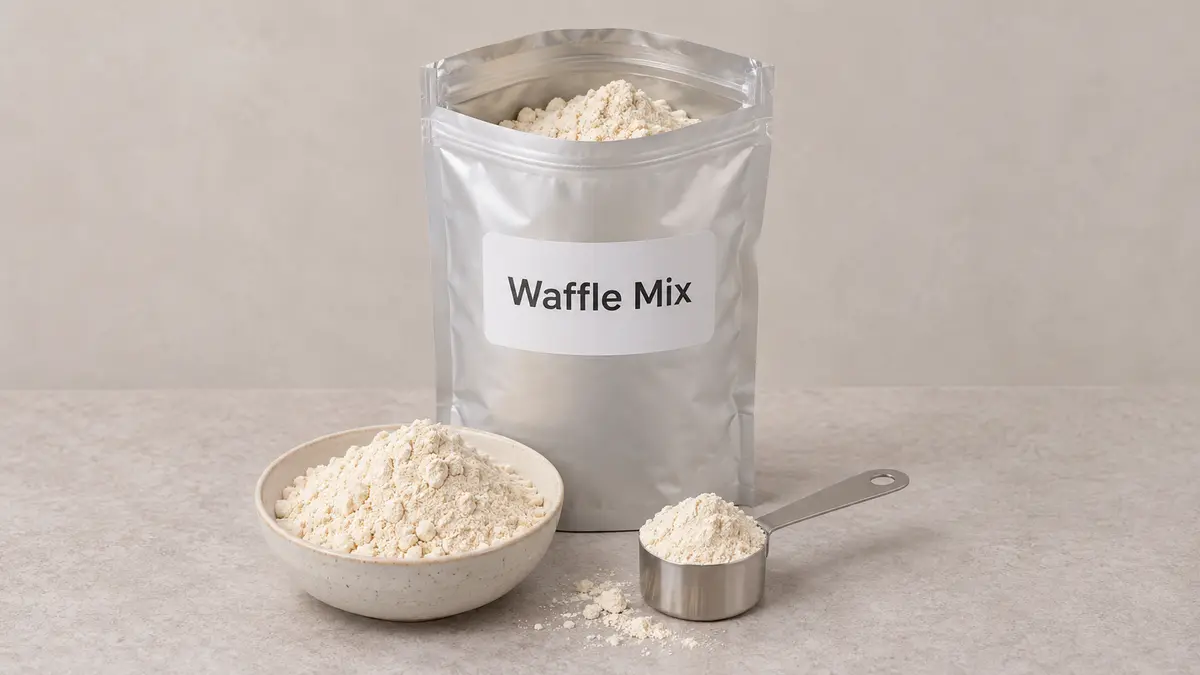
Waffle mixes: 6% duty
Read from the UK Trade Tariff on 29 September 2026, heading 1901 includes mixes and doughs for preparing bakers’ wares of heading 1905. Waffle mixes fall within the bakers’ mixes line, 1901 20 00 00, subject to confirmation from the full recipe. The table shows recipe variants under the same tariff line, rather than separate commodity codes.
The supplied tariff record gives 6% duty for Chinese-origin goods on this line, with no anti-dumping or countervailing measure and no suspension. It attaches veterinary and organic import controls. Milk or egg ingredients can bring composite-product rules: approved-country and applicable establishment checks, certification and border procedures depend on ingredients and processing. Ask your customs broker to confirm the requirements for the specific Chinese product. For organic mixes, confirm the inspection certificate requirement; the exporter’s control body issues that certificate.
Give the broker the complete ingredient breakdown, animal-ingredient origins, processing details and intended use when confirming the commodity code. Do not assume a dry mix qualifies for an exemption because finished waffles may qualify. Exempt composite products must still travel with an exporter’s commercial document. See the pancake mixes guide for the wider heading.
| Goods | Commodity code | Duty | Anti-dumping or countervailing duty on China |
|---|---|---|---|
| Dry waffle mix without milk or egg ingredients | 1901 20 00 00 | 6% | None |
Specify the batter and cooked waffle
Agree flour type, sugar, raising agents, fat, flavourings and whether the customer adds water, milk, egg or oil. Request the complete recipe, including carriers in flavourings and compound ingredients. Record the origins and processing of milk and egg ingredients before approving the formula.
Test samples in the waffle irons your customers use. Agree mixing instructions, batter thickness, standing behaviour, plate release, browning, crispness and texture after holding. Set acceptance criteria for moisture, caking, odour, packaging and remaining shelf life. Arrange testing and certification against the approved recipe and intended sale.
Worked duty example
Illustrative example, not a quote: Illustrative order: 12 tonnes of dry waffle mix for a catering distributor under 1901 20 00 00, invoiced at £14,000 free on board, with £2,000 of freight and insurance to the UK. The customs value is £16,000. Duty at 6% is £960. Import VAT at 20% is charged on the customs value plus duty, £16,960, so it is £3,392. Import taxes total £4,352; a VAT-registered importer can usually reclaim the VAT, so the lasting cost is the £960 of duty. The import duty and VAT guide explains each step. This assumes the goods are standard-rated for VAT. Most food for human consumption is zero-rated, and animal feed can be too, in which case no import VAT is due, so check the rate for your product in HMRC's VAT Notice 701/14.
Inspection checklist
Recipe: compare production records and ingredient declarations with the approved formula, including milk, egg, wheat and soya where present.
Cooking: prepare a production sample using the agreed instructions and waffle iron; check rise, release, colour, centre texture and crispness after holding.
Powder and packs: check for damp clumps, unusual odour, insects and foreign matter; inspect seals and weigh packs against the agreed quantity.
Labels: check the English food name, ingredient list with allergens emphasised, net quantity, date, storage instructions and UK address against the approved artwork.
Working out your own order? Send us the product on WhatsApp and we reply the same working day: WhatsApp us
What goes wrong
A formula substitution can change batter flow, browning and release from the plates. Milk powder or a flavouring carrier can also change the allergen declaration and import assessment. Require approval before substitutions, then repeat the cooking trial and document check.
Moisture entering through weak seals can cause caking; fat-containing mixes can develop an unwanted odour during storage. Compare arrival samples with the approved sample and retain batch records. Ask the relevant food authority to confirm whether and when you must register as a food business, and settle the English label before placing the production order.
Cambridge China Bridge sources these products for UK businesses, checking the factory and the documents before shipment. See factory verification. For repeat volumes, see container programmes.
Frequently asked questions
What is the UK import duty on waffle mix from China?
The supplied tariff record gives 6% for waffle mixes under 1901 20 00 00, with no listed anti-dumping or countervailing duty and no suspension on that line.
Can I import waffle mix containing milk or egg from China?
Eligibility depends on the ingredients, their origins and processing. Ask your broker to confirm approved-country and applicable establishment requirements and the documents before ordering.
Does dry waffle mix automatically avoid veterinary controls?
No. The tariff attaches veterinary control. Ask your broker to assess the recipe and processing; dryness alone does not establish an exemption.
How should I test a Chinese waffle mix sample?
Use your intended waffle iron and agreed mixing instructions. Check batter flow, plate release, rise, browning, cooked centre and crispness after holding, then repeat with a production sample.