Sourcing vehicle jump leads from China
Ordinary vehicle jump leads from China generally attract 2% UK duty; the relevant candidate lines are all 2%, although heading 8544 also contains 0% lines for other products. Assess low-voltage leads for safety in their intended use and confirm the applicable requirements with the relevant authority. Cambridge China Bridge sources vehicle jump leads.
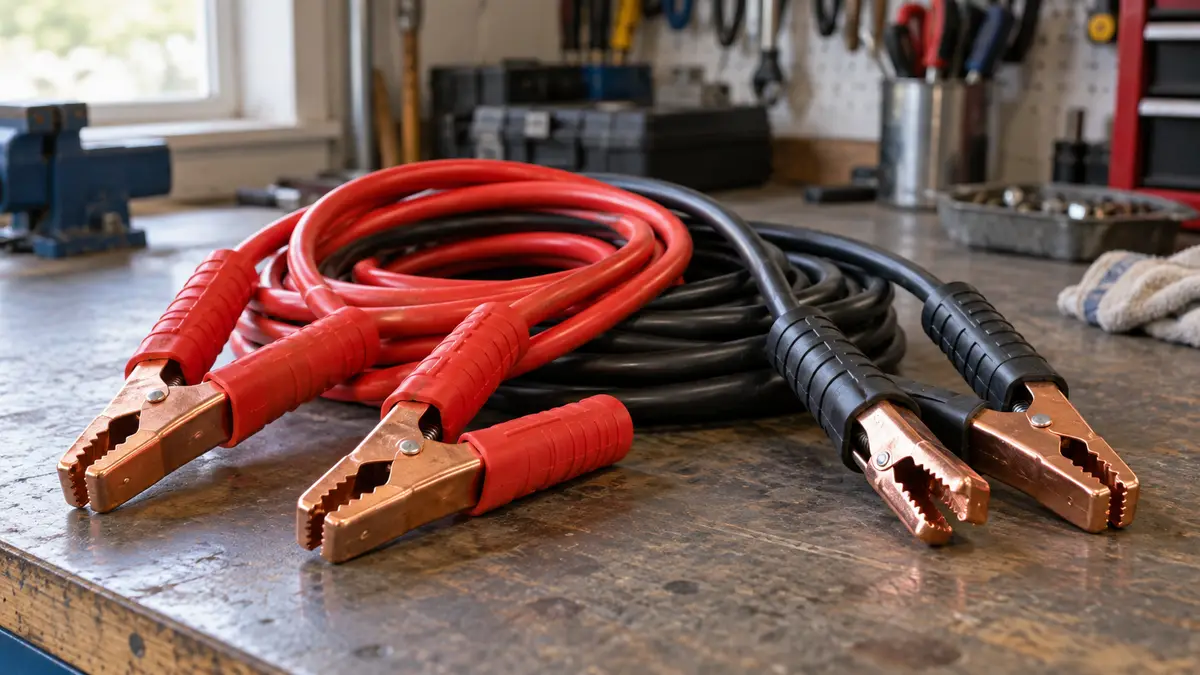
Jump-lead duty and classification
Read from the UK Trade Tariff on 8 October 2026, heading 8544 covers insulated electric conductors, including those fitted with connectors. For clamp-ended jump leads, check 8544 42 90 90 against the vehicle wiring-set alternative 8544 30 00 89. The unassembled cable rows are relevant when buying cable for local assembly, rather than finished sets.
The selected lines carry 2% duty for goods from China, with no anti-dumping or countervailing duty and no attached import controls recorded in the supplied extract. Suspensions on the connector and vehicle wiring-set lines concern specified products or authorised manufacturing uses; do not assume ordinary jump leads qualify. The selected loose-cable lines have no suspension.
Confirm the commodity code using the assembly drawing, rated voltage, conductor construction and clamp details before ordering. The electrical cable and wire harness guide covers the wider heading. The table gives classification candidates and assembly inputs, rather than interchangeable codes for a finished set.
| Goods | Commodity code | Duty | Anti-dumping or countervailing duty on China |
|---|---|---|---|
| Other insulated conductors with connectors, including candidate jump-lead assemblies | 8544 42 90 90 | 2% | None |
| Other vehicle wiring sets, a classification alternative to check | 8544 30 00 89 | 2% | None |
| Other cable without connectors, up to 80 V, for jump-lead manufacture | 8544 49 93 90 | 2% | None |
| Cable without connectors, individual conductor wires over 0.51 mm | 8544 49 91 00 | 2% | None |
Specify the conductor and the complete current path
Specify conductor material and cross-section, strand construction, usable lead length, insulation material, flexibility and storage conditions. State whether copper-clad aluminium is acceptable. Define clamp opening, spring grip, contact material, insulation coverage and the cable-to-clamp joint. Agree a complete-assembly load test with current, duration, voltage drop and temperature-rise acceptance criteria instead of accepting an unexplained peak-current label.
For consumer jump leads sold in Great Britain, general product safety rules cover intended or reasonably foreseeable consumer use. Confirm with the relevant authority how the electrical equipment safety voltage thresholds and general product safety obligations apply to the exact low-voltage cable assembly. Approve instructions for the intended vehicles, connection sequence and warnings against short circuits, using the approved sample as the production reference.
Worked duty example
Illustrative example, not a quote: 1,100 vehicle jump-lead sets; illustrative order only under 8544 42 90 90, invoiced at £16,000 free on board, with £1,100 of freight and insurance to the UK. The customs value is £17,100. Duty at 2% is £342. Import VAT at 20% is charged on the customs value plus duty, £17,442, so it is £3,488.40. Import taxes total £3,830.40; a VAT-registered importer can usually reclaim the VAT, so the lasting cost is the £342 of duty. The import duty and VAT guide explains each step.
Inspection checklist
Conductor: strip and inspect a sample, measure the strands and cross-section, and compare the material and measured-length weight with the approved specification.
Clamps: check jaw contact, spring grip, insulation coverage and the cable joint. Pull-test the joint against the agreed acceptance criteria and inspect for loose strands.
Electrical performance: check continuity, then measure voltage drop and heating under the agreed load on the complete assembly. A continuity result alone does not verify starting performance.
Arrival condition: check lead length, flexibility, cracked insulation, clamp corrosion, instructions, product identification and packing damage. Use the same checklist before shipment and on receipt; quality inspection explains the inspection stages.
Working out your own order? Send us the product on WhatsApp and we reply the same working day: WhatsApp us
What goes wrong
A thick outer sheath can conceal an undersized conductor or copper-clad aluminium supplied in place of specified copper. Weak clamp contact and poorly secured joints can produce excessive voltage drop and local heating even when the cable passes continuity testing.
Reject unexplained changes to conductor material, clamp construction or the claimed current rating. Keep the approved sample, assembly drawing and load-test records together so a later batch can be checked against the same requirements.
Cambridge China Bridge sources these products for UK businesses, checking the factory and the documents before shipment. See factory verification. For components and parts, see sourcing for manufacturers.
Frequently asked questions
What is the UK import duty on jump leads from China?
The selected candidate lines carry 2% duty, with no anti-dumping or countervailing duty in the supplied tariff extract. Confirm the finished assembly's code; specified suspensions do not automatically cover ordinary jump leads.
Do vehicle jump leads need CE or UKCA marking?
For low-voltage leads, confirm with the relevant authority whether the electrical equipment safety voltage thresholds exclude the exact product and which product safety obligations apply. Assess the actual design before deciding which marking rules apply.
How do I check whether jump leads are copper?
Strip and scrape a sample, inspect the conductor through its cross-section, measure the strands and compare measured-length weight with the specified construction. Use material testing if visual checks leave doubt.
Is a continuity test enough for jump leads?
No. Also test the complete lead and clamp assembly under an agreed load, measuring voltage drop and heating. Inspect clamp grip and pull-test the cable joint against your specification.