Sourcing UV laser sources from China
UV laser sources other than laser diodes, and qualifying dedicated parts, carry 0% UK duty from China across the relevant lines. Employers must protect workers' eyes and skin from hazardous optical radiation. Specify the source and its intended enclosure before ordering. Cambridge China Bridge sources UV laser sources.
Buying from China for a business? How our UK China sourcing agent service works · China sourcing agent for small orders and first imports
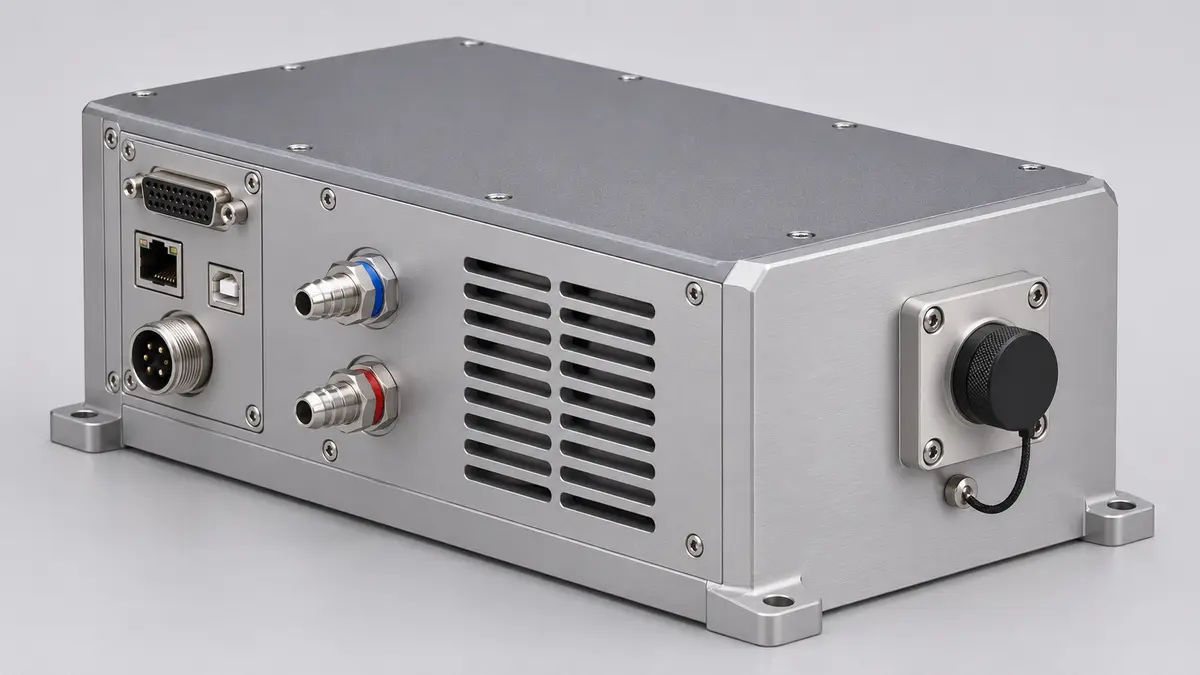
0% duty on UV laser sources
Heading 9013 covers lasers other than laser diodes, other optical appliances and instruments, and their parts. This guide concerns UV laser sources supplied for integration or laboratory use. The table repeats the laser commodity line for different source configurations because the tariff file does not distinguish them by UV wavelength or operating mode.
Read from the UK Trade Tariff on 1 October 2026, the relevant laser and other-parts lines carried 0% duty for goods from China. The supplied tariff data lists no anti-dumping or countervailing duty, suspension or attached import control for these lines. Import VAT is normally 20%.
Confirm the commodity code from the actual goods supplied, particularly for separate power supplies, cooling equipment and optical components. A complete marking machine needs its own classification check. For the wider source family, see Q-switched solid-state laser sources.
| Goods | Commodity code | Duty | Anti-dumping or countervailing duty on China |
|---|---|---|---|
| Pulsed UV solid-state laser sources, other than laser diodes | 9013 20 00 00 | 0% | None |
| Dedicated UV laser parts and accessories, subject to classification | 9013 90 80 00 | 0% | None |
Specify UV output and the integration boundary
State the wavelength, average output at the agreed pulse repetition setting, pulse duration, pulse energy, beam diameter, divergence and stability after warm-up. Define where output is measured and record the cooling conditions. Specify controller connections, mounting dimensions, cooling connections, software access and the supplied accessories. Ask for a marking trial on your own material using the intended optics.
Employers must protect workers' eyes and skin from hazardous artificial optical radiation. Request the source classification, warning labels, emission-control interface and integration instructions. Agree how the enclosure and interlocks will work, including during servicing. Have a competent specialist assess the assembled installation before operating the source.
Check the electromagnetic compatibility and electrical safety scope for the supplied configuration, including its power supply. Check hazardous-substance compliance scope separately; in-scope products must show the importer's name or trademark and contactable address on the product or packaging. If your business is an electrical equipment producer, annual registration is required. Arrange testing and certification around the actual model supplied.
Worked duty example
Illustrative example, not a quote: Illustrative batch of pulsed UV laser sources for a small marking business under 9013 20 00 00, invoiced at £24,000 free on board, with £1,200 of freight and insurance to the UK. The customs value is £25,200. Duty at 0% is £0. Import VAT at 20% is charged on the customs value plus duty, £25,200, so it is £5,040. With no duty, the only import tax is the VAT, which a VAT-registered importer can usually reclaim. The import duty and VAT guide explains each step.
Inspection checklist
Output: have a specialist measure wavelength and delivered power with suitable calibrated instruments, then compare pulse performance and stability with the agreed settings and cooling conditions.
Beam and process: check beam position, profile and pointing stability after warm-up, and repeat the agreed marking trial on retained material samples.
Cooling and interfaces: inspect coolant connections for leaks, check alarms and shutdown behaviour, and test controller communication against the approved wiring and interface documents.
Identity and condition: match serial numbers, labels and model documents to the delivered units; inspect the exit window, mounts and connectors for contamination or transport damage.
Working out your own order? Send us the product on WhatsApp and we reply the same working day: WhatsApp us
What goes wrong
A power figure without the pulse setting, cooling conditions and measurement position makes quotations difficult to compare. The delivered source may meet an average-power claim yet produce different marks because pulse duration, beam profile or stability differs. Treat these as acceptance criteria rather than relying on a demonstration video.
Other rejection points include a contaminated exit window, beam movement after warm-up, leaking cooling connections and an incompatible controller interface. A source label does not describe the performance of your assembled machine. Record incoming checks against the approved sample and keep failed units out of production pending investigation.
Cambridge China Bridge sources these products for UK businesses, checking the factory and the documents before shipment. See factory verification. For components and parts, see sourcing for manufacturers.
Frequently asked questions
What is the UK import duty on UV laser sources from China?
The supplied tariff reading shows 0% duty for lasers other than laser diodes under 9013 20 00 00 and qualifying other parts under 9013 90 80 00, with no listed trade remedy.
What should I put in a UV laser source specification?
Include wavelength, output at the agreed pulse setting, pulse duration, beam quality, stability, cooling conditions, controller interface and a marking trial on your material.
Can I test a UV laser source on an open bench?
Have a competent specialist plan the test and protective measures. Employers must protect workers' eyes and skin from hazardous optical radiation; an open-bench demonstration is no substitute for that.
Does the source commodity code cover a complete marking machine?
Confirm the complete machine's classification separately. Describe what is shipped, including the source, motion system, controller, enclosure and accessories, rather than copying the source code.
Sources
- UK Trade Tariff — commodity codes and duty
- HSE guidance for employers on artificial optical radiation
- Electromagnetic Compatibility Regulations: Great Britain guidance
- Electrical Equipment Safety Regulations: Great Britain guidance
- Restriction of hazardous substances: compliance guidance
- Electrical and electronic equipment: producer responsibilities