Sourcing synthetic football boots from China
Synthetic-upper football boots with rubber or plastic uppers and outer soles carry 16% UK duty from China across the relevant lines, with no recorded trade remedy. Confirm footwear composition-labelling requirements with Trading Standards, and consumer boots sold in Great Britain must be safe in foreseeable use. Cambridge China Bridge sources synthetic-upper football boots.
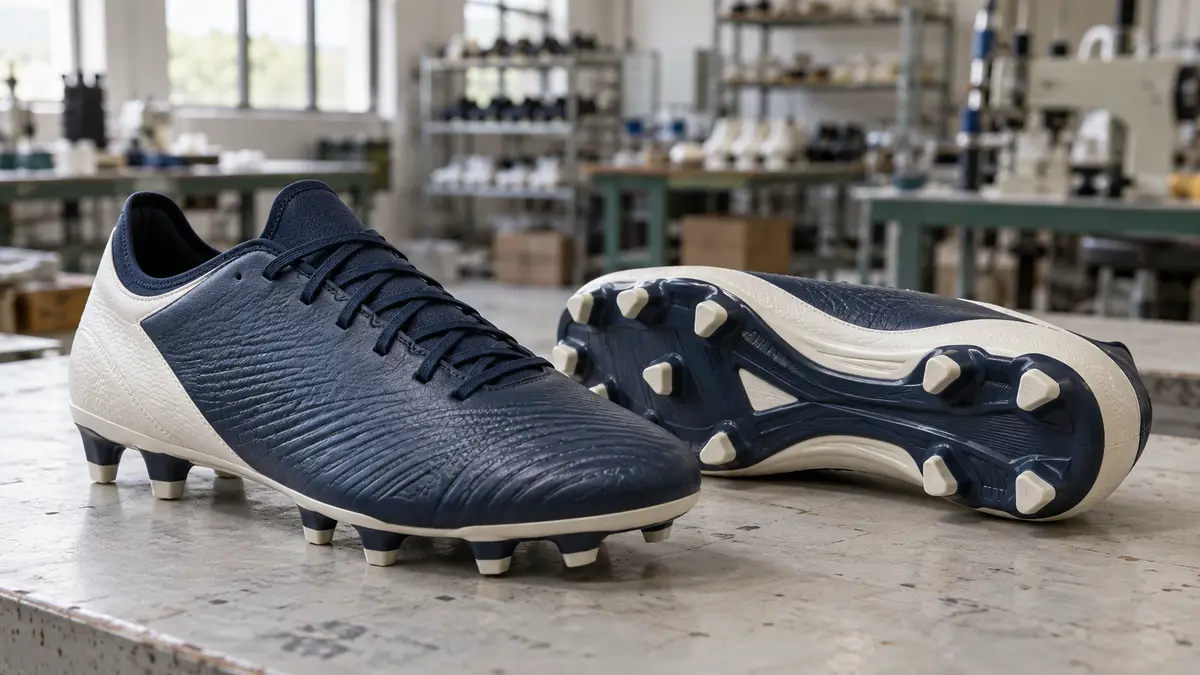
Duty and classification for synthetic football boots
Heading 6402 covers other footwear with rubber or plastic outer soles and uppers. Read from the UK Trade Tariff on 30 September 2026, all supplied lines carried 16% duty from China, with no recorded anti-dumping or countervailing duty or suspension. The table separates sports footwear from conditional non-sports alternatives; these are not interchangeable codes. For tennis footwear classification, see our synthetic-upper tennis shoes guide. For basketball styles, see our synthetic-upper basketball shoe sourcing guide. For ski footwear, see plastic-shell ski boot sourcing.
The sports line carries an import control for fluorinated greenhouse gases. Products containing banned fluorinated gases must not be placed on the Great Britain market. Ask the factory about any gas-filled components and have your customs broker confirm the control and declaration requirement for goods from China. The supplied ankle-covering lines also attach cat and dog fur controls; imports of that fur and products made from it are banned.
For mixed-material uppers, HMRC uses the greatest external surface area to determine the upper material. Give your broker a finished sample, material breakdown, sole photographs and ankle coverage details before confirming the commodity code. A synthetic textile upper needs separate assessment. See the wider footwear guide for other constructions.
| Goods | Commodity code | Duty | Anti-dumping or countervailing duty on China |
|---|---|---|---|
| Rubber or plastic-upper sports footwear, including qualifying football boots | 6402 19 00 00 | 16% | None |
| Non-sports plastic-upper variants, below ankle, insoles under 24 cm | 6402 99 91 00 | 16% | None |
| Men's non-sports plastic-upper variants, below ankle, insoles at least 24 cm | 6402 99 96 00 | 16% | None |
| Women's non-sports plastic-upper variants, below ankle, insoles at least 24 cm | 6402 99 98 00 | 16% | None |
Specify the upper, stud layout and fit
Describe the actual upper construction rather than accepting 'synthetic' as the specification. Agree the coating, backing, lining, sole material and attachment method. Identify the intended playing surface, stud shape and layout, moulded or removable studs, and any supplied stud tool. Approve a physical sole sample alongside the artwork.
Agree the UK size run, internal fit, toe room, heel hold and quantities by size. Wear-test samples on the intended surface and agree production checks for sole bonding, flexing and stud attachment. Consumer products sold in Great Britain must be safe in normal or reasonably foreseeable use.
Confirm footwear composition-labelling requirements with Trading Standards, including how to identify the upper, lining and sock, and outer sole materials, whether to use pictograms or words, and how the 80% rule and main-material provisions apply. Match the label artwork to the approved materials before production.
Worked duty example
Illustrative example, not a quote: Illustrative mixed-size batch of synthetic-upper football boots under 6402 19 00 00, invoiced at £32,000 free on board, with £3,000 of freight and insurance to the UK. The customs value is £35,000. Duty at 16% is £5,600. Import VAT at 20% is charged on the customs value plus duty, £40,600, so it is £8,120. Import taxes total £13,720; a VAT-registered importer can usually reclaim the VAT, so the lasting cost is the £5,600 of duty. The import duty and VAT guide explains each step.
Inspection checklist
Fit and pairing: compare production pairs with approved fitting samples; check size markings, left and right matching, heel hold and carton size assortments.
Sole and studs: check the approved stud layout, secure attachments, clean moulding and agreed bond and flex results; look for lifting around the toe and heel.
Upper and finish: check coating adhesion, stitching, lace attachments, exposed edges, glue marks and colour consistency.
Labels and packing: check composition artwork against the material specification, pair and box identification, dry cartons and signs of mould on arrival.
Working out your own order? Send us the product on WhatsApp and we reply the same working day: WhatsApp us
What goes wrong
A factory can retain the upper artwork while changing the sole plate, stud layout or last. The boots then fit differently or behave differently on the intended surface. Treat changes to the sole, upper materials and sizing as sample-approval decisions, and compare production against the retained sample.
Toe-area sole separation, cracked coatings, loose removable studs and mixed-size pairs can turn apparently acceptable stock into returns. Record defects by style and size, isolate affected stock and agree corrective work before repeat production. A visual check should be accompanied by the agreed functional checks.
Cambridge China Bridge sources these products for UK businesses, checking the factory and the documents before shipment. See factory verification. For own-brand ranges, see sourcing for brands.
Frequently asked questions
What is the UK import duty on synthetic football boots from China?
The supplied tariff lines carry 16% duty from China, with no recorded anti-dumping or countervailing duty or suspension. Confirm the code for the actual upper and sole construction.
Which commodity code covers synthetic football boots?
6402 19 00 00 is the sports-footwear line for rubber or plastic uppers and soles. Have your broker assess the finished construction; textile uppers and non-sports variants need separate classification.
Do football boots need composition labels?
Confirm with Trading Standards whether composition labels are required and how the upper, lining and sock, and outer sole materials should be shown using pictograms or words. Agree the artwork against the actual material specification.
What should I check before approving production?
Approve fit across the size run, the sole plate and stud layout, upper materials and composition artwork. Agree bond, flex and stud-attachment checks using production pairs.