Sourcing spun PTFE staple yarn from China
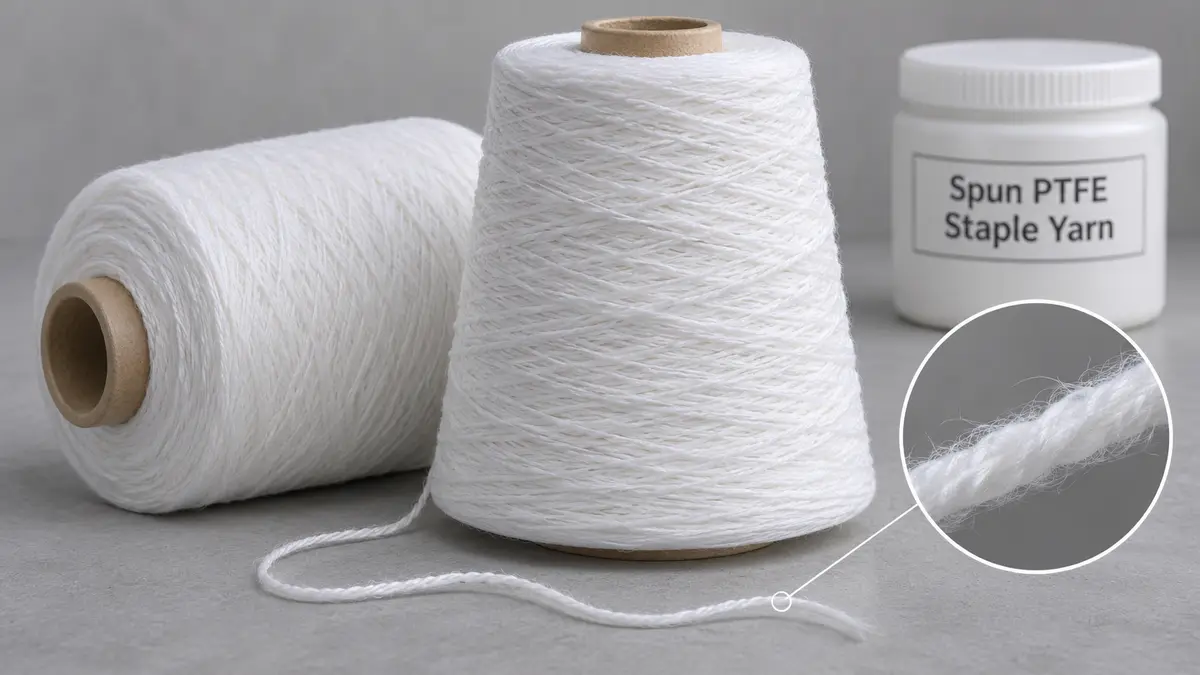
Spun PTFE staple yarn from China within heading 5509 pays a flat 4% UK duty, with no anti-dumping or countervailing duty recorded. The heading excludes sewing thread and retail-packed yarn; confirm staple construction, fibre composition and whether the yarn is single or folded. Cambridge China Bridge sources spun PTFE staple yarn.
Buying from China for a business? How our UK China sourcing agent service works · China sourcing agent for small orders and first imports
Duty and classification for PTFE staple yarn
Read from the UK Trade Tariff on 4 October 2026, heading 5509 covers synthetic staple-fibre yarn other than sewing thread, not put up for retail sale. For PTFE staple yarn, the other-synthetic-fibre single and folded lines are candidates where synthetic staple content is at least 85% by weight. Lower-content blends require classification from their full composition.
All supplied lines carry 4% duty for goods from China, with no anti-dumping or countervailing measures or suspensions recorded. No import controls are recorded on the selected lines. The heading's wool and fine-animal-hair blend lines carry CITES import and export controls. If an animal-fibre blend is proposed, identify the species and confirm permit requirements with your customs broker; CITES-listed species may require permits.
Give your broker the fibre breakdown by weight, staple construction, single or folded structure, intended use and packaging to confirm the commodity code. Do not choose a code from the PTFE trade name alone. For wider heading coverage, see spun polyphenylene sulphide yarn.
| Goods | Commodity code | Duty | Anti-dumping or countervailing duty on China |
|---|---|---|---|
| PTFE staple single yarn, synthetic staple content at least 85% | 5509 41 00 00 | 4% | None |
| PTFE staple folded or cabled yarn, synthetic staple content at least 85% | 5509 42 00 00 | 4% | None |
| Other PTFE staple yarn mixed mainly or solely with cotton | 5509 92 00 00 | 4% | None |
| Other PTFE staple yarn blends, not covered by the preceding lines | 5509 99 00 00 | 4% | None |
Specify the PTFE fibre and yarn construction
Specify spun staple yarn explicitly, rather than continuous filament or slit-film yarn. State PTFE content, every blending fibre, staple length, yarn count, twist direction, twist level, folded construction, breaking force and elongation. Agree test methods and tolerances with the mill and retain an approved cone.
Describe the intended weaving, knitting or packing process. Agree cone dimensions, net yarn weight, winding tension, permitted joins and any processing finish. Ask for batch-specific evidence supporting heat and chemical resistance claims under your actual operating conditions, rather than accepting a resin datasheet as yarn performance evidence.
Agree fibre-composition labelling before resale: textile labels must show fibre content. Match the declared blend to laboratory results and batch records. Arrange testing and certification around the intended use and agreed specification.
Worked duty example
Illustrative example, not a quote: 18 kilograms of single spun PTFE staple yarn on cones, illustrative order under 5509 41 00 00, invoiced at £2,400 free on board, with £1,200 of freight and insurance to the UK. The customs value is £3,600. Duty at 4% is £144. Import VAT at 20% is charged on the customs value plus duty, £3,744, so it is £748.80. Import taxes total £892.80; a VAT-registered importer can usually reclaim the VAT, so the lasting cost is the £144 of duty. The import duty and VAT guide explains each step.
Inspection checklist
Composition: check fibre identity and blend against the order, laboratory report and cone markings; confirm that the supplied construction is spun staple yarn.
Yarn properties: sample cones across cartons and compare count, twist, breaking force, elongation, evenness and hairiness with the approved specification.
Winding: check net yarn weight, cone fit, package damage, joins and unwinding behaviour on the buyer's equipment.
Process trial: weave, knit or process a sample before releasing the batch; assess shedding, breaks and finished performance under the intended conditions.
Working out your own order? Send us the product on WhatsApp and we reply the same working day: WhatsApp us
What goes wrong
A supplier may offer filament yarn against a staple-yarn enquiry, or substitute a blend without updating the description. Count and twist variations can change fabric construction and cause breaks; uneven winding and excessive joins can interrupt production. Compare incoming cones with the approved sample before bulk use.
Heat or chemical resistance claims can describe the polymer rather than the delivered yarn, its blending fibres or finish. Agree acceptance tests for the actual application. Keep batch identities separate and retain samples so that a failed production trial can be traced to the relevant delivery.
Cambridge China Bridge sources these products for UK businesses, checking the factory and the documents before shipment. See factory verification. For repeat volumes, see container programmes.
Frequently asked questions
What is the UK import duty on spun PTFE staple yarn from China?
The supplied tariff data, read on 4 October 2026, shows 4% duty on all heading 5509 lines, with no anti-dumping or countervailing duty recorded.
Is PTFE filament yarn covered by this guide?
No. This guide covers yarn spun from PTFE staple fibres. Confirm the construction before ordering; a PTFE material description alone does not identify the commodity code.
What should I test before accepting PTFE staple yarn?
Check fibre identity, blend, count, twist, strength, elongation and winding. Run a sample on your equipment and verify performance claims under the intended operating conditions.
Does spun PTFE yarn need fibre-content labelling?
Textile labels must show fibre content. Agree the composition declaration before resale and check it against the supplied yarn and laboratory results.