Sourcing silver conductive fabric from China
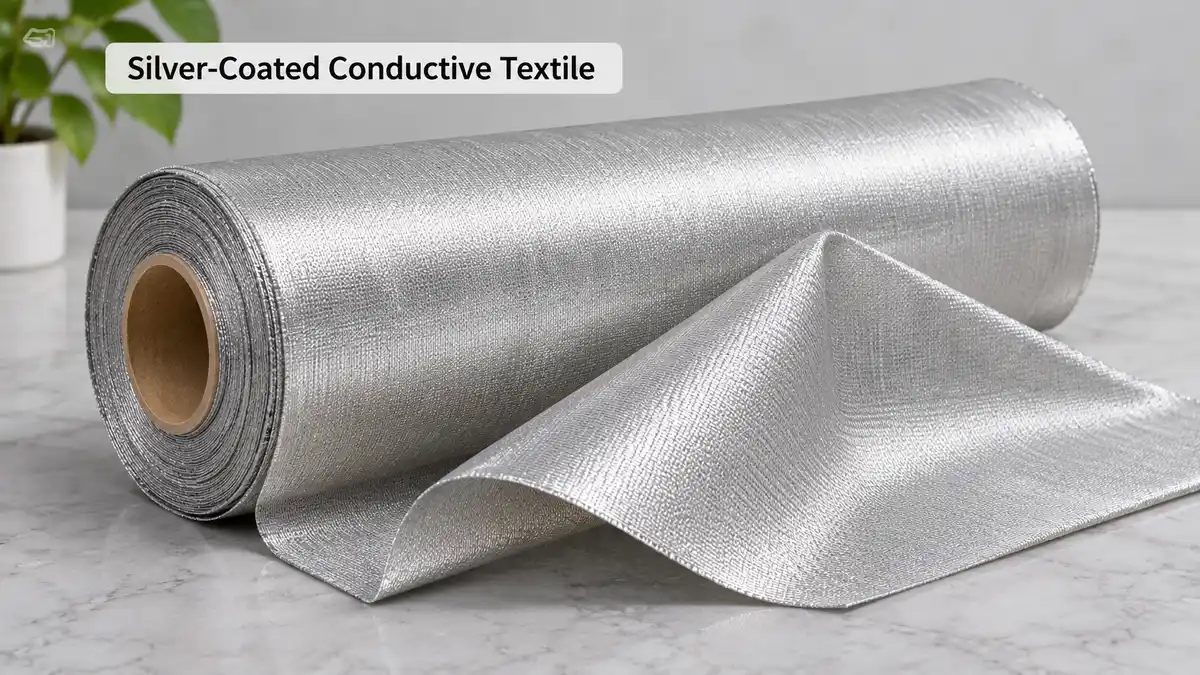
Silver-coated conductive textile fabric classified under 5907 00 00 90 pays a flat 4% UK duty from China. Check fibre labelling and applicable UK REACH restrictions, and agree resistance tests for the supplied grade. Cambridge China Bridge sources silver-coated conductive textile fabric.
Buying from China for a business? How our UK China sourcing agent service works · China sourcing agent for small orders and first imports
A flat 4% for the other coated fabrics line
Read from the UK Trade Tariff on 1 October 2026, heading 5907 covers textile fabrics otherwise impregnated, coated or covered, and painted scenery canvas. For silver-coated conductive textile fabric within this heading, the relevant candidate is 5907 00 00 90, the other fabrics line. Confirm the actual construction before declaring it.
The supplied tariff record gives this line 4% duty for goods from China, with no listed anti-dumping or countervailing measure, suspension or attached import control. The heading's separate 0.00 % suspension concerns adhesive-coated fabric with embedded spheres not exceeding 150 µm. A silver coating alone does not match that description.
Give your broker the fibre composition, coating process, any backing or laminate, intended use and a sample to confirm the commodity code. The table contains the relevant line available in the supplied record. For wider heading coverage, see aluminised textile fabric.
| Goods | Commodity code | Duty | Anti-dumping or countervailing duty on China |
|---|---|---|---|
| Silver-coated conductive textile fabric, subject to classification | 5907 00 00 90 | 4% | None |
Specify the silver layer and electrical performance
Specify the base fibre and construction, usable width, mass, stretch direction, silver content and coating coverage. State whether the fabric will form a contact, shield or garment panel. Agree the resistance limit, electrode arrangement, contact pressure, sample conditioning and measurement direction. For shielding applications, agree a separate shielding test over the intended frequency range.
For products subject to textile labelling rules, the label must show fibre content. Ask for the base-fibre composition separately from the silver coating specification. UK REACH restrictions can limit, ban or condition the use of substances; obtain a statement covering the supplied coating and finishes, with testing agreed for applicable restrictions.
If the supplier also proposes antibacterial use, establish the intended function before accepting that description. A treated article with a primary biocidal function is considered a biocidal product. Keep the electrical specification separate from any proposed antibacterial performance.
Worked duty example
Illustrative example, not a quote: An illustrative order of silver-coated conductive fabric rolls under 5907 00 00 90, invoiced at £14,000 free on board, with £1,200 of freight and insurance to the UK. The customs value is £15,200. Duty at 4% is £608. Import VAT at 20% is charged on the customs value plus duty, £15,808, so it is £3,161.60. Import taxes total £3,769.60; a VAT-registered importer can usually reclaim the VAT, so the lasting cost is the £608 of duty. The import duty and VAT guide explains each step.
Inspection checklist
Resistance: measure across the width and along sampled roll lengths using the agreed contact arrangement; compare both fabric directions and retain the readings against each roll identity.
Coating durability: inspect for bare patches, shedding and transfer during rubbing; repeat resistance measurements after the agreed bending, stretching and washing treatment.
Construction: check fibre identity, usable width, mass and stretch recovery against the approved sample; inspect creases, holes, selvedges and joins.
Traceability and packing: match roll labels and test reports to the supplied grade and batch; inspect wrapping for moisture damage and surfaces for discolouration before cutting.
Working out your own order? Send us the product on WhatsApp and we reply the same working day: WhatsApp us
What goes wrong
A sample can conduct well while bulk fabric has uneven coating or poorly conducting patches. Resistance can increase after stretching, rubbing or washing. A visually similar fabric may have a different base fibre, silver loading or protective finish. Check these failure modes on bulk samples using the same method used to approve the original sample.
Good surface resistance does not by itself establish shielding performance in your finished assembly. Seams, overlaps and electrical contacts need checking in the intended design. Approve a trial assembly and retain an unprocessed batch sample before committing the fabric to production.
Cambridge China Bridge sources these products for UK businesses, checking the factory and the documents before shipment. See factory verification. For own-brand ranges, see sourcing for brands.
Frequently asked questions
What is the UK import duty on silver-coated conductive fabric from China?
The supplied tariff record gives 5907 00 00 90 a flat 4% duty from China, with no listed trade remedy or suspension. Confirm that your fabric belongs in this line.
Which commodity code should I use for silver-coated fabric?
5907 00 00 90 is the candidate within this heading. Send the fibre composition, coating process, backing details and a sample to your broker; a conductive description alone does not settle classification.
How should I compare conductive fabric samples?
Use the same electrode arrangement, contact pressure, conditioning and measurement direction. Compare resistance before and after the agreed stretching, abrasion and washing treatment.
Can I sell silver-coated conductive fabric as antibacterial?
Assess that intended function separately. Electrical resistance results do not demonstrate antibacterial performance.