Sourcing silk waste and silk noil from China
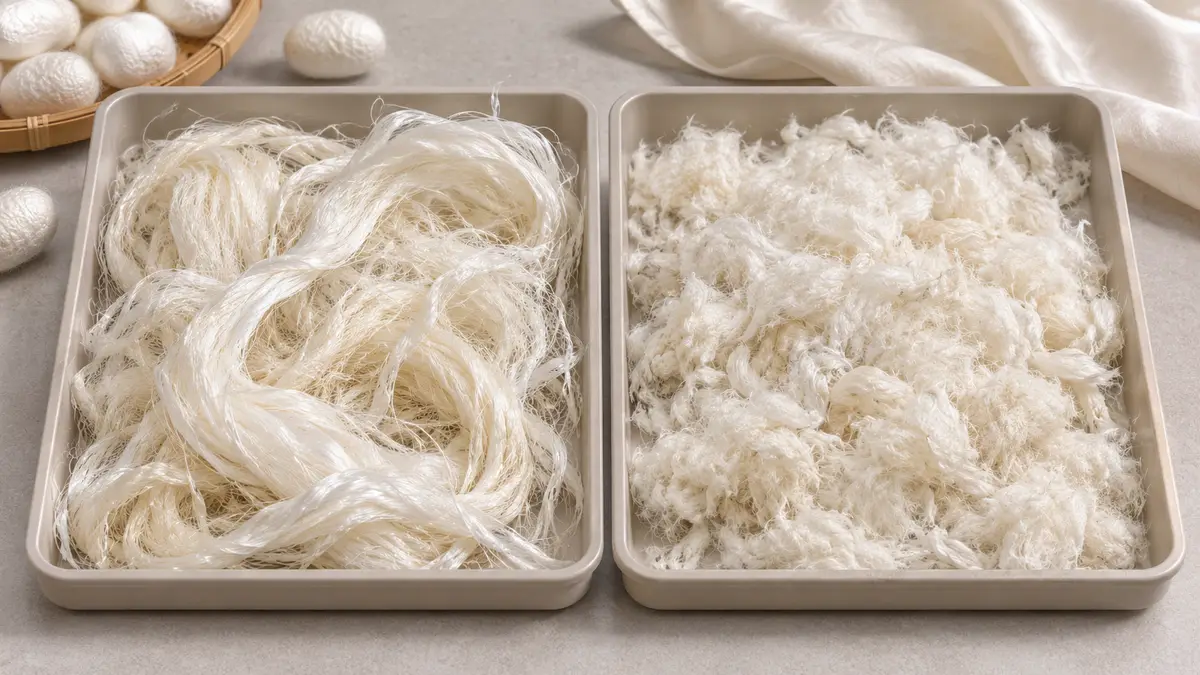
Silk waste from China, including cocoons unsuitable for reeling, yarn waste, noil and carded or combed silk, pays 0% UK duty on both lines of heading 5003, with no anti-dumping duty. Spinners, felt makers and craft suppliers buy on degumming, fibre length, colour, cleanliness and moisture, and products made from it for consumers need fibre labels.
Buying from China for a business? How our UK China sourcing agent service works · China sourcing agent for small orders and first imports
0% duty
Read from the UK Trade Tariff on 17 November 2026, heading 5003 covers silk waste, including cocoons unsuitable for reeling, yarn waste and garnetted stock. Both lines, not carded or combed and other, carried 0% on goods from China, with no anti-dumping measure.
Raw silk is heading 5002, silk yarn 5004 to 5006 and silk fabric 5007, covered in our silk fabrics guide; confirm the commodity code.
| Goods | Commodity code | Duty | Anti-dumping duty on China |
|---|---|---|---|
| Silk waste, not carded or combed | 5003 00 00 10 | 0% | None |
| Silk waste, other (carded or combed) | 5003 00 00 90 | 0% | None |
Labels on finished products
Silk waste consisting of textile fibres can itself be a textile product requiring fibre composition information; when supplied to businesses within the supply chain, accompanying commercial documents may replace labels or markings. Yarn, roving or fabric made from it and sold to consumers is a textile product and needs fibre composition labelling under the Textile Products (Labelling and Fibre Composition) Regulations 2012. Noil sold as silk must be silk; blends must say so.
Specifying silk waste
Specify the type (noil, tops, carded waste, cocoon waste), whether it is degummed and the residual gum, fibre length, colour and whiteness, neps and impurities, moisture, and packing in bales with lot marks.
Worked duty example
Illustrative example, not a quote: 2 tonnes of degummed silk noil for spinning under 5003 00 00 90, invoiced at £18,000 free on board, with £700 of freight and insurance to the UK. The customs value is £18,700. Duty at 0% is £0. Import VAT at 20% is charged on the customs value plus duty, £18,700, so it is £3,740. With no duty, the only import tax is the VAT, which a VAT-registered importer can usually reclaim. The import duty and VAT guide explains each step.
Inspection checklist
Quality: check fibre length, degumming, colour and neps on samples from several bales against the approved sample.
Cleanliness: check for foreign fibres, dust and pupae remains, and measure moisture.
Packing: check bales are marked by lot and wrapped against damp. See our quality inspection guide.
Working out your own order? Send us the product on WhatsApp and we reply the same working day: WhatsApp us
What goes wrong
Silk waste orders fail on grade and contamination. Fibre is shorter than agreed, degumming is incomplete so the fibre is harsh, lots are mixed with foreign fibres, and damp bales yellow or smell.
Cambridge China Bridge sources silk noil and waste for UK spinners and craft suppliers from small lots; see small orders.
Frequently asked questions
What is the UK import duty on silk waste from China?
Read from the UK Trade Tariff on 17 November 2026, both lines of heading 5003 carried 0% from China.
What is silk noil?
The short fibres left from combing silk, sold for spinning into textured yarns and fabrics.
Does silk waste need a fibre label?
Raw silk fibre products can also require fibre composition information, although accompanying commercial documents may replace labels for supply-chain transactions. Yarn or fabric made from them and sold to consumers needs fibre composition labelling.
What should I check on silk waste?
Fibre length, degumming, colour, neps, contamination and moisture against the approved sample.