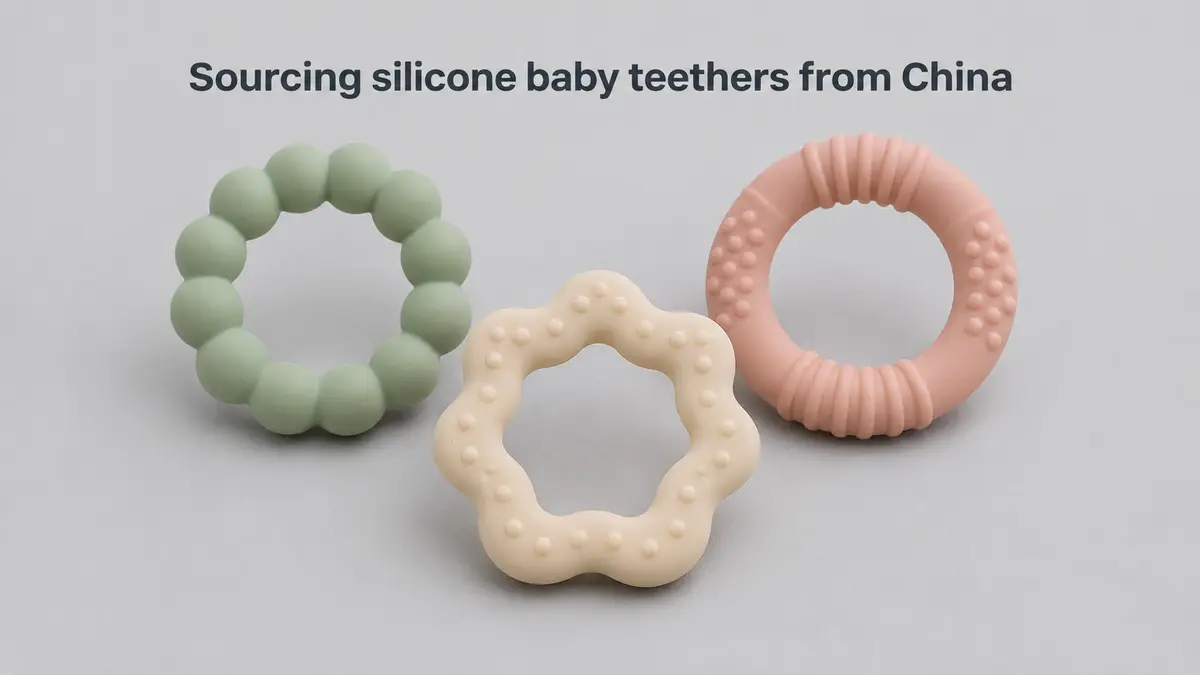
Sourcing silicone baby teethers from China
Silicone baby teethers within heading 4014 carry 0% UK duty from China, with no variation in the relevant line. Importers must ensure consumer safety; teethers intended for play also fall under toy safety rules in Great Britain. Confirm the material, design and supporting documents before ordering. Cambridge China Bridge sources silicone baby teethers.
Buying from China for a business? How our UK China sourcing agent service works · China sourcing agent for small orders and first imports
UK duty on silicone baby teethers
Heading 4014 covers hygienic or pharmaceutical articles of vulcanised rubber other than hard rubber, including teats. This guide concerns silicone baby teethers whose material and construction fit the heading's Other line. The table shows purchasing variants sharing the same commodity code, rather than separate tariff subdivisions. See the wider rubber articles guide for the broader heading.
Read from the UK Trade Tariff on 4 December 2026, the supplied record gives 0% duty for goods from China under 4014 90 00 00. It lists no anti-dumping or countervailing duty, suspensions or attached import controls for that line.
Give your customs broker the silicone composition, curing process, photographs, intended use and details of any other materials to confirm the commodity code. Do not assume every product sold as a silicone teether belongs in this heading, particularly combined rattles or products with separate components.
| Goods | Commodity code | Duty | Anti-dumping or countervailing duty on China |
|---|---|---|---|
| Vulcanised silicone rubber textured teething rings | 4014 90 00 00 | 0% | None |
Specify the silicone, shape and intended use
Agree the silicone compound, curing process, pigments, hardness, dimensions, grip openings and surface texture. Specify whether the teether is solid and moulded as an integral piece. Keep an approved sample and drawing, including thin projections and the junction between the chewing surface and handle. Require supplier approval requests before changes to the compound, pigment or mould.
Ask a testing provider to assess the finished design for mouth entry, tearing, detachable parts and chemical exposure during mouthing. Agree checks after repeated cleaning using the proposed instructions. Request reports identifying the actual model, compound and colours. Use testing and certification support to organise the evidence review.
For Great Britain, general product safety rules provide a baseline where specific safety provisions do not cover the product. Only safe products may be placed on the market. Check whether the teether is also intended for play, which brings it within the toy definition; toy safety includes the chemicals contained in the product.
For toy teethers, verify the declaration of conformity, technical documentation and applicable CE or UKCA marking before supply. Agree the market route before approving packaging.
Worked duty example
Illustrative example, not a quote: Illustrative order of 2,000 textured silicone teething rings under 4014 90 00 00, invoiced at £6,500 free on board, with £2,500 of freight and insurance to the UK. The customs value is £9,000. Duty at 0% is £0. Import VAT at 20% is charged on the customs value plus duty, £9,000, so it is £1,800. With no duty, the only import tax is the VAT, which a VAT-registered importer can usually reclaim. The import duty and VAT guide explains each step. This assumes the goods are standard-rated for VAT. Contraceptive products sold other than on prescription take the reduced rate of VAT under HMRC's VAT Notice 701/57, so check the rate for your product.
Inspection checklist
Shape: compare dimensions, grip openings, projections and thin sections with the approved drawing and sample; investigate changes that could alter how the teether enters the mouth.
Moulding: inspect for flash, rough joins, cracks, trapped debris, tackiness and colour transfer; compare flexibility and recovery with the approved sample.
Durability: perform the agreed pulling, twisting and cleaning checks on samples; look for tearing around handles, textured areas and component junctions.
Packs and records: match the model, compound, colour and batch references to the approved documents; compare English instructions and any applicable conformity marking with the agreed artwork.
Working out your own order? Send us the product on WhatsApp and we reply the same working day: WhatsApp us
What goes wrong
Thin decorative projections can tear, moulding flash can remain on chewing surfaces, and a replacement compound can change stiffness or cleaning performance. Compare production samples with the retained sample after the agreed cleaning checks. Keep suspect batches separate while investigating defects.
A report for silicone kitchenware or another teether shape leaves questions about the ordered design. Ask the testing provider to explain the report's coverage rather than accepting a generic food-grade description. Resolve differences between the report photographs, material specification, delivered product and packaging before releasing stock.
Cambridge China Bridge sources these products for UK businesses, checking the factory and the documents before shipment. See factory verification. For repeat volumes, see container programmes.
Frequently asked questions
What is the UK import duty on silicone baby teethers from China?
The supplied record shows 0% under 4014 90 00 00, with no listed trade remedies, suspensions or attached import controls. Confirm that the actual material and design fit the code.
Do silicone baby teethers need CE or UKCA marking?
For teethers that qualify as toys in Great Britain, check the applicable CE or UKCA route, declaration of conformity and technical documentation before supply.
Is a food-grade silicone certificate enough?
Ask for evidence covering the finished teether's shape, compound, pigments and intended use. Have a testing provider check what the certificate covers and identify gaps in mechanical or chemical assessment.
What should I check when silicone teethers arrive?
Check shape, thin projections, moulding flash, tears, tackiness and colour transfer. Repeat the agreed durability and cleaning checks, then match the product and packaging to the approved records.