Sourcing wafer cleaning machines from China
Semiconductor wafer cleaning machines correctly classified under heading 8486 pay 0% UK duty from China. New machines supplied in Great Britain need machinery safety compliance, UKCA or CE marking and a declaration of conformity. Check cleaning results on your wafers before shipment. Cambridge China Bridge sources semiconductor wafer cleaning machines.
Buying from China for a business? How our UK China sourcing agent service works · China sourcing agent for small orders and first imports
Duty and classification for wafer cleaners
Heading 8486 covers machinery used solely or principally for semiconductor and display manufacture, specified associated machinery, and parts. For a wafer cleaner, identify whether its function belongs to wafer manufacture or device manufacture. The associated-machinery row is relevant only where that equipment meets the heading's chapter note; it is not a general cleaning-machine category.
Read from the UK Trade Tariff on 1 October 2026, all supplied lines carried 0% duty for goods from China. The supplied data lists no anti-dumping or countervailing duty, suspensions or attached import controls. Import VAT is separate from customs duty.
Confirm the commodity code using the process description, equipment drawings and intended manufacturing stage. For wider heading context, see wafer polishing machines.
| Goods | Commodity code | Duty | Anti-dumping or countervailing duty on China |
|---|---|---|---|
| Wafer manufacture machinery, including cleaners where classified here | 8486 10 00 00 | 0% | None |
| Device or integrated circuit manufacture machinery, including relevant cleaners | 8486 20 00 00 | 0% | None |
| Associated machinery meeting chapter note 11(C), subject to classification | 8486 40 00 00 | 0% | None |
| Parts and accessories for machinery of this heading | 8486 90 00 00 | 0% | None |
Specify the cleaning process and site interfaces
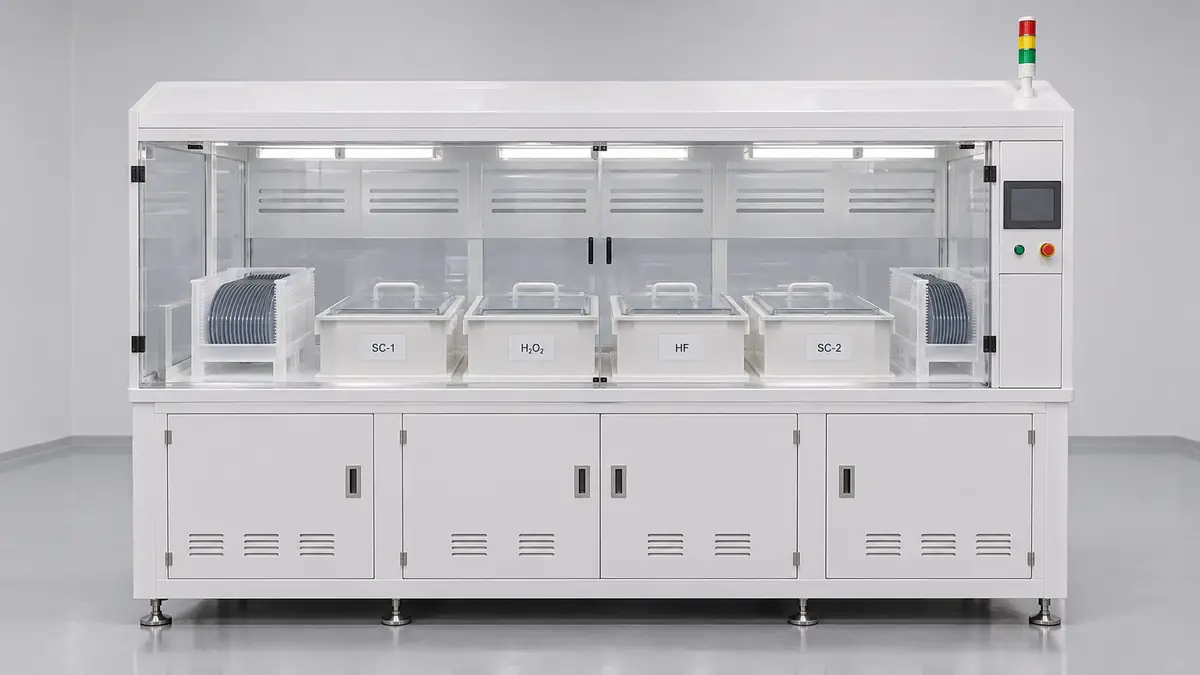
Define wafer material, diameter, thickness, surface coatings and incoming contamination. Specify batch or individual-wafer processing, cleaning chemistry, rinsing and drying method. Agree how particle removal, residue, water marks, scratches and wafer breakage will be assessed using your samples. Describe the measurement method and acceptance criteria rather than accepting an unsupported claim of cleanroom suitability.
Match wetted materials, seals, filters and pipework to the intended chemicals. Agree power, purified water, exhaust, drainage and gas connections against your site drawings. Include recipe access, software licences, spare parts, installation and training in the purchase specification.
Check these against the actual machine and configuration before shipment. Production equipment also needs the applicable conformity assessment; confirm the technical file requirements with the relevant product safety authority when using the site's existing semiconductor equipment guide.
Worked duty example
Illustrative example, not a quote: A laboratory wafer cleaning machine, illustratively classified here under 8486 10 00 00, invoiced at £28,000 free on board, with £4,000 of freight and insurance to the UK. The customs value is £32,000. Duty at 0% is £0. Import VAT at 20% is charged on the customs value plus duty, £32,000, so it is £6,400. With no duty, the only import tax is the VAT, which a VAT-registered importer can usually reclaim. The import duty and VAT guide explains each step.
Inspection checklist
Cleaning results: run agreed samples through cleaning, rinsing and drying; compare contamination and surface condition before and after the process.
Chemical circuit: inspect wetted components, seals and filters against the specification; test for leaks and check drainage, exhaust connections and protective interlocks.
Handling and controls: check wafer loading, alignment and unloading for chips or scratches; demonstrate recipe access, alarms and recovery after an interrupted cycle.
Arrival and documents: inspect tanks, pipework and wafer handlers for transport damage; match the identification plate, declaration and English instructions, then repeat agreed acceptance checks at your site. See quality inspection.
Working out your own order? Send us the product on WhatsApp and we reply the same working day: WhatsApp us
What goes wrong
A demonstration on the supplier's wafers can hide poor results on your coatings or contamination. Incompatible seals can leak, rinsing can leave residue, drying can leave water marks, and handling can chip wafer edges. Require recorded results from your samples and identify the consumables used during the test.
A machine can pass a factory test yet fail after installation because water quality, exhaust or drainage differs from the test setup. Agree site acceptance conditions and responsibility for corrective work before ordering. For refurbished equipment, record the replaced components, remaining wear and software access.
Cambridge China Bridge sources these products for UK businesses, checking the factory and the documents before shipment. See factory verification. For machinery and equipment, see machinery imports.
Frequently asked questions
What is the UK import duty on wafer cleaning machines from China?
The supplied tariff data gives 0% duty for every line of heading 8486, with no listed anti-dumping or countervailing duty. Confirm that your cleaner belongs in this heading.
Which commodity code covers a wafer cleaning machine?
It depends on the manufacturing stage and function. Compare wafer manufacture with semiconductor device manufacture, and have your broker confirm the code from the specification.
Do wafer cleaning machines need CE or UKCA marking?
New machinery placed on the Great Britain market must have UKCA or CE marking, a declaration of conformity and instructions in English.
How do I check wafer cleaning performance before buying?
Use your own wafers and representative contamination. Agree the measurement method, then check particle removal, residue, drying marks, surface damage and repeatability.