Sourcing rough walnut logs from China
Rough walnut logs from China carry 0% UK duty across the relevant untreated and preservative-treated categories. Before placing them on the Great Britain market, confirm timber legality due diligence requirements with the relevant authority; plant health clearance also needs checking. Cambridge China Bridge sources rough walnut logs.
Buying from China for a business? How our UK China sourcing agent service works · China sourcing agent for small orders and first imports
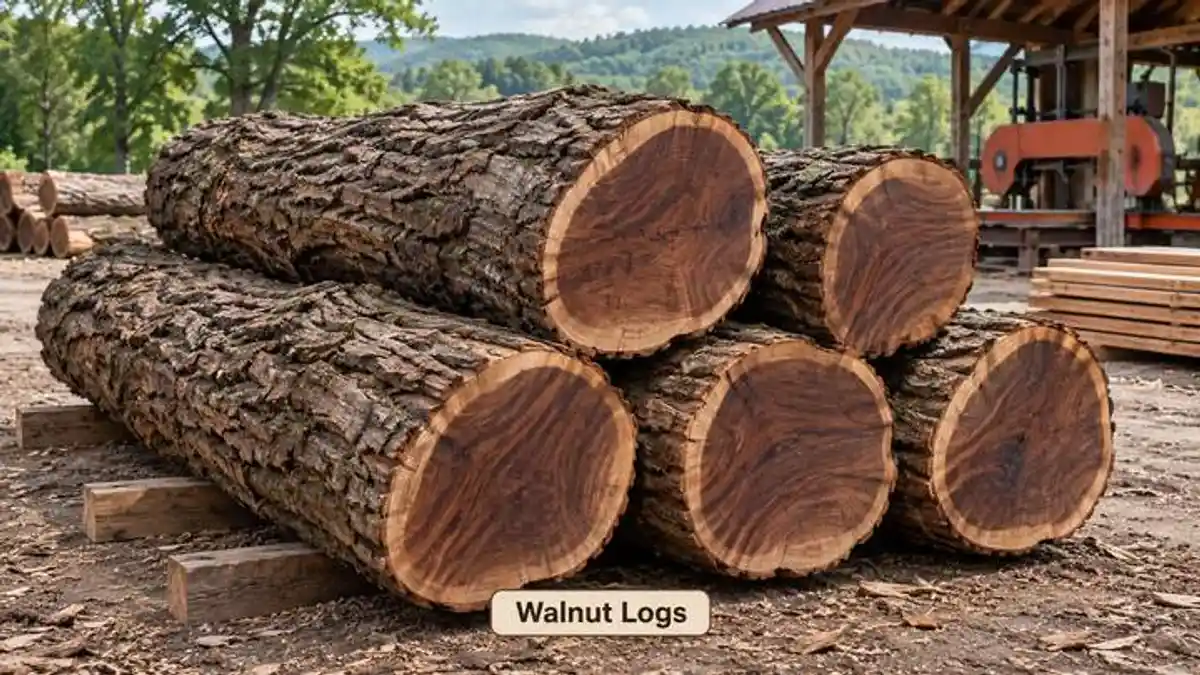
Walnut log classification and import controls
Heading 4403 covers wood in the rough, including wood stripped of bark or sapwood and roughly squared wood. Untreated walnut falls within 4403 99 00 00; preservative-treated non-coniferous rough wood falls within 4403 12 00 00. The table shows different walnut forms sharing these codes. For other species, see our rough wood guide.
Read from the UK Trade Tariff on 29 September 2026, both relevant lines carried 0% duty for goods from China, with no anti-dumping or countervailing measure and no suspension listed. Both attach quarantine release and CITES import and export controls. For imports from China, the clearance certificate must be presented to HMRC with the customs declaration. Confirm the applicable plant health arrangements with your broker before dispatch.
Check the botanical species against CITES listings rather than assuming the tariff flag means every walnut shipment needs a permit. Listed species in the relevant annexes require permits. Ask the Forestry Commission to confirm species-specific phytosanitary and treatment requirements; regulated consignments need a phytosanitary certificate. Confirm the commodity code from the species, processing and treatment.
| Goods | Commodity code | Duty | Anti-dumping or countervailing duty on China |
|---|---|---|---|
| Untreated rough walnut logs with bark | 4403 99 00 00 | 0% | None |
| Rough walnut wood treated with preservatives | 4403 12 00 00 | 0% | None |
Specify the walnut species and recoverable timber
Write the botanical species, country of harvest and intended use into the order. A Chinese supplier may be selling logs harvested elsewhere. Ask the relevant authority to confirm the legality due diligence obligations of the business first placing timber on the Great Britain market. Gather harvest and supply-chain documents, assess the risk of illegal harvesting and resolve gaps before ordering.
Agree log lengths, small-end diameter, measurement method, whether bark is included in the volume calculation, and acceptable taper and sweep. Specify heartwood and sapwood expectations, knots, end splits, ring shake, rot and insect damage. State whether the logs are green or dried, and agree how moisture will be measured.
Ask for a log-by-log tally with identification marks and photographs of both ends. Match the offered logs to your sawmill or veneer process. An attractive end photograph does not establish the usable timber through the whole log.
Worked duty example
Illustrative example, not a quote: Illustrative order: 50 cubic metres of untreated rough walnut logs under 4403 99 00 00, invoiced at £22,000 free on board, with £3,500 of freight and insurance to the UK. The customs value is £25,500. Duty at 0% is £0. Import VAT at 20% is charged on the customs value plus duty, £25,500, so it is £5,100. With no duty, the only import tax is the VAT, which a VAT-registered importer can usually reclaim. The import duty and VAT guide explains each step.
Inspection checklist
Identity: match log marks, botanical species and harvest records to the tally and shipment documents.
Dimensions: remeasure length and small-end diameter using the agreed method; check bark deductions, taper and total volume.
Condition: inspect ends and accessible surfaces for splits, ring shake, decay, insect holes and concealed damage beneath coatings.
Arrival: compare the delivered tally with loading photographs, record moisture and new damage, and photograph discrepancies before processing. Arrange a quality inspection against the written specification.
Working out your own order? Send us the product on WhatsApp and we reply the same working day: WhatsApp us
What goes wrong
A walnut trade name can conceal a different species or harvest origin. Volume disputes arise when the supplier measures over bark while the buyer expects usable timber. Large sapwood sections, sweep, knots and hidden splits can reduce recovery even when the delivered volume matches the invoice.
Freshly cut ends and end coatings can obscure defects. Ask for photographs before coating and agree acceptance criteria before loading. A commercial inspection does not replace official clearance; confirm any timber legality due diligence requirements with the relevant authority. Keep the log identities consistent across the tally, harvest records and shipping documents.
Cambridge China Bridge sources these products for UK businesses, checking the factory and the documents before shipment. See factory verification. For repeat volumes, see container programmes.
Frequently asked questions
What is the UK import duty on rough walnut logs from China?
The supplied tariff snapshot shows 0% on both untreated and preservative-treated rough walnut categories, with no anti-dumping or countervailing duty and no suspension listed.
Do walnut logs from China need plant health documents?
Regulated consignments need a phytosanitary certificate. Ask the Forestry Commission to confirm the requirements for the species and origin. Present the applicable clearance certificate to HMRC with the customs declaration.
Does the CITES tariff flag mean all walnut logs need a permit?
Check the exact botanical species. The flag alone does not establish that the logs are listed; permits are required for species in the relevant CITES annexes.
What should I check before buying walnut sawlogs?
Agree species, harvest origin, bark deductions, measurement method, dimensions and defect allowances. Match individual log marks to photographs and the tally, then check the same logs on arrival.