Sourcing rough-sawn sandstone slabs from China
Rough-sawn sandstone slabs from China carry 0% UK duty under 2516 20 00 00, with no trade remedy shown. Confirm that the slabs are merely sawn rectangular stone: further working or supply as finished flagstones can change classification. Cambridge China Bridge sources rough-sawn sandstone slabs.
Buying from China for a business? How our UK China sourcing agent service works · China sourcing agent for small orders and first imports
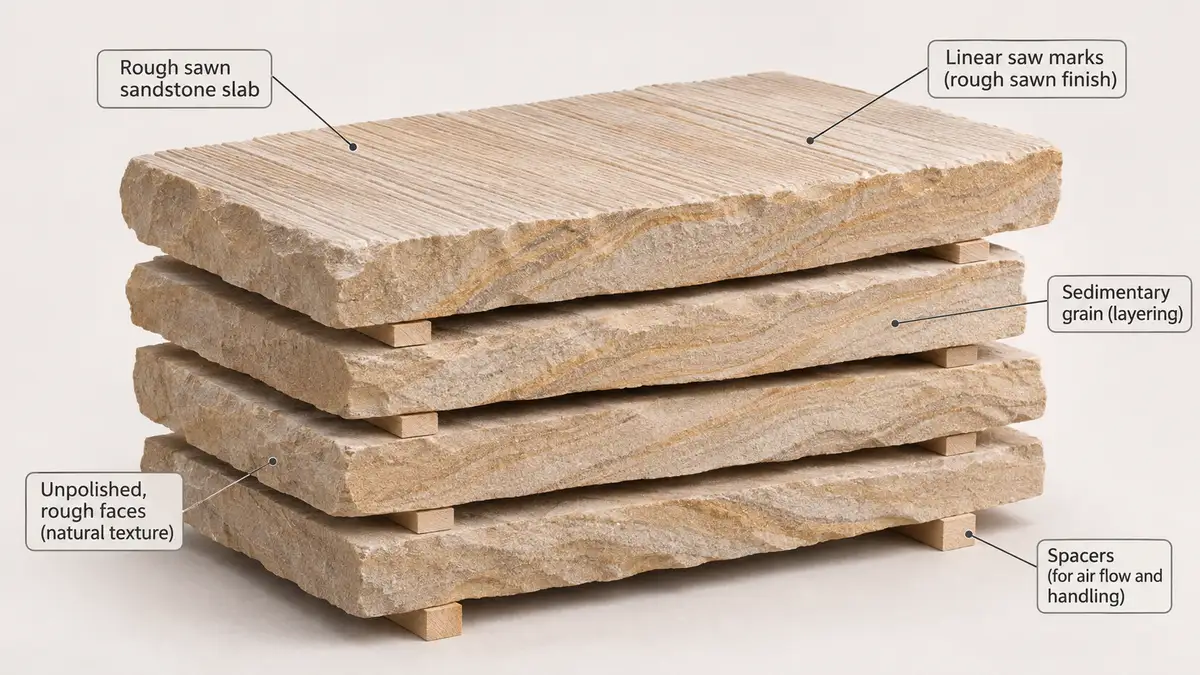
Duty on rough-sawn sandstone slabs
Heading 2516 covers crude, roughly trimmed or merely cut rectangular building stone. Sandstone uses 2516 20 00 00. The other table rows are wider-heading comparisons, not alternative sandstone codes. Polished or otherwise worked stone falls under heading 6802, while natural-stone flagstones fall under 6801. Confirm the commodity code from photographs, processing details and intended supply form. See the wider stone guide.
Read from the UK Trade Tariff on 4 October 2026, all the listed heading 2516 lines carried 0% duty for goods from China. The supplied tariff record shows no anti-dumping or countervailing duty and no suspension. Import VAT is separate from customs duty.
The UK Trade Tariff attaches import and export waste controls. Environment Agency guidance for England says waste shipment controls apply only where the material is waste. For a shipment from China, confirm with your customs broker whether any waste-control requirement applies, particularly if the consignment contains discarded stone or processing rejects. Do not assume that the commodity code alone settles waste status.
| Goods | Commodity code | Duty | Anti-dumping or countervailing duty on China |
|---|---|---|---|
| Sandstone, including merely sawn rectangular slabs | 2516 20 00 00 | 0% | None |
| Wider-heading comparison: merely sawn rectangular granite blocks or slabs | 2516 12 00 00 | 0% | None |
| Wider-heading comparison: crude or roughly trimmed granite | 2516 11 00 00 | 0% | None |
| Wider-heading comparison: other monumental or building stone | 2516 90 00 00 | 0% | None |
Specify the quarry bed and usable slab
Name the quarry and bed, sandstone colour and grain, cutting direction relative to bedding, and the approved sample range. Specify length, width, thickness, squareness, flatness and the allowance for later cutting. Describe the supplied surface as rough-sawn and agree whether repairs, resin filling, open veins or friable edges are acceptable.
Request quarry-bed test reports for water absorption, flexural strength and frost resistance where relevant to the intended use. Match reports to the stone being supplied. Before selling for construction use, check which conformity requirements apply to the supplied product and its use. CE marking remains available for construction products placed on the Great Britain market.
Agree bundle identification, separators, edge protection, supports and restraint before packing. Plan dust control for UK processing: cutting sandstone releases respirable crystalline silica, and wet cutting and extraction are needed. Ask for factory verification to check the processor and its quarry supply.
Worked duty example
Illustrative example, not a quote: Illustrative order: 25 tonnes of rough-sawn sandstone slabs for a stone merchant under 2516 20 00 00, invoiced at £11,000 free on board, with £2,400 of freight and insurance to the UK. The customs value is £13,400. Duty at 0% is £0. Import VAT at 20% is charged on the customs value plus duty, £13,400, so it is £2,680. With no duty, the only import tax is the VAT, which a VAT-registered importer can usually reclaim. The import duty and VAT guide explains each step.
Inspection checklist
Identity: compare dry and wetted faces with the approved colour range and check that bundle records identify the agreed quarry bed.
Dimensions: measure thickness across sampled slabs, check diagonals and flatness, and confirm the usable area after edge trimming.
Integrity: examine faces and edges for bedding cracks, open veins, iron staining, loose grains and undisclosed repairs.
Packing and arrival: check supports, separators and restraint before dispatch; photograph damaged bundles on arrival and record breakage against bundle identifiers.
Working out your own order? Send us the product on WhatsApp and we reply the same working day: WhatsApp us
What goes wrong
A small sample can hide variation across the quarry bed. Mixed-bed loads arrive with different colours or absorption behaviour; weak bedding opens during machining; thin edges and hidden cracks cause losses during unloading. Approve a representative sample range and agree how disputed slabs will be recorded and assessed.
Classification also goes wrong when an order described as rough slabs is supplied as worked stone or finished paving. Keep photographs and the agreed processing description with the order, and recheck classification if the factory changes the finish or supply form.
Cambridge China Bridge sources these products for UK businesses, checking the factory and the documents before shipment. See factory verification. For repeat volumes, see container programmes.
Frequently asked questions
What is the UK import duty on rough-sawn sandstone slabs from China?
The supplied tariff record shows 0% under 2516 20 00 00, with no anti-dumping or countervailing duty and no suspension. Import VAT is separate.
Are rough-sawn sandstone slabs classified as paving?
Check the actual supply form. Merely sawn rectangular sandstone slabs use 2516 20 00 00; natural-stone flagstones fall under 6801. A supplier's product name does not resolve the distinction.
What should I ask the sandstone factory to test?
Ask for reports tied to the supplied quarry bed covering water absorption, flexural strength and frost resistance where relevant to the intended use.
How do I reduce sandstone slab breakage?
Inspect bedding cracks and thin edges before packing. Agree supports, separators, edge protection and restraint, then record bundle condition and breakage on arrival.