Sourcing rennet casein from China
Rennet casein from China has a UK tariff rate of 0% across the listed casein lines, with no trade remedies. Food-use imports into Great Britain are prohibited; an industrial order needs a separate import-permission check. Cambridge China Bridge checks whether a product can be imported before any order is placed.
Buying from China for a business? How our UK China sourcing agent service works · China sourcing agent for small orders and first imports
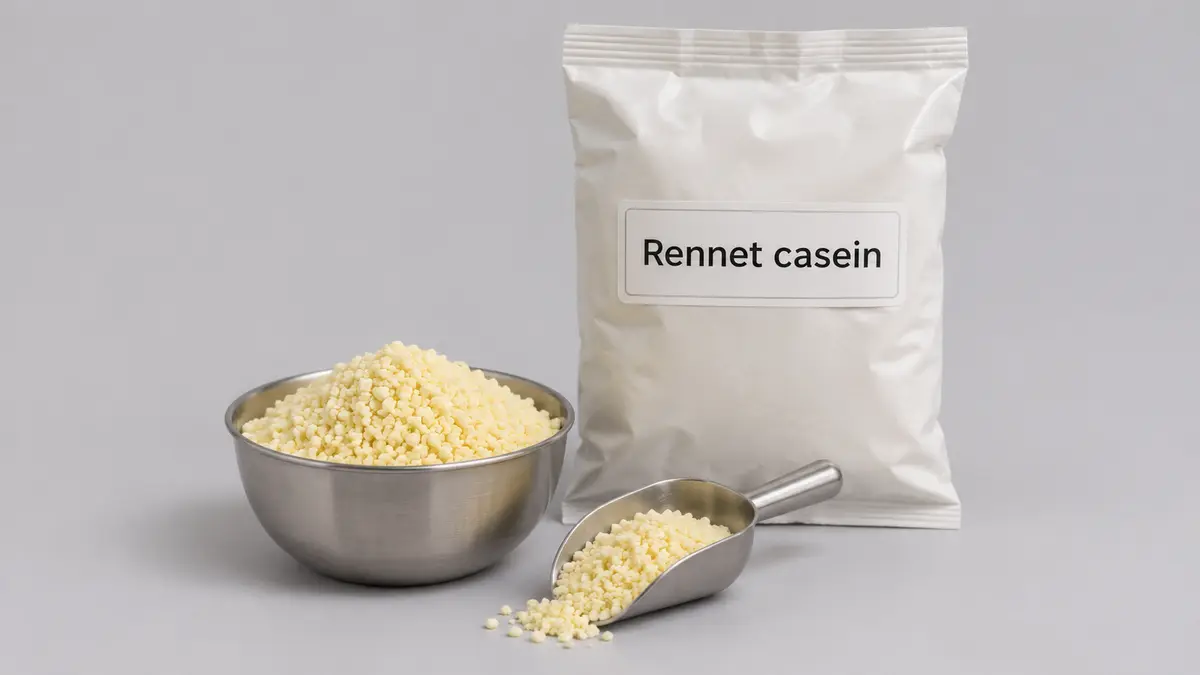
Zero duty does not establish import permission
Read from the UK Trade Tariff on 29 September 2026, heading 3501 covers casein, caseinates, other casein derivatives and casein glues. This guide concerns rennet casein. The listed casein lines carry 0% duty for goods from China, with no recorded anti-dumping or countervailing measures or suspensions. The table shows classification routes, not permission to import. See the wider casein guide.
Rennet casein for human consumption cannot be imported from China into Great Britain: official guidance prohibits dairy products from China. For non-food milk-derived products, APHA guidance requires an appropriate health certificate, and animal by-product guidance specifies entry through an approved border control post. Ask APHA and your customs broker to confirm the country, establishment, treatment and document conditions for the proposed industrial product before ordering.
The tariff attaches veterinary control and both import and export waste controls to these lines. For waste shipments under notification controls, dispatch, destination and transit authorities must consent before shipment. Ask your broker to confirm how the attached controls apply to the actual goods. Confirm the commodity code against intended use and water content; a zero duty rate does not override the food-use prohibition.
| Goods | Commodity code | Duty | Anti-dumping or countervailing duty on China |
|---|---|---|---|
| Rennet casein for regenerated textile fibre manufacture | 3501 10 10 00 | 0% | None |
| Industrial rennet casein, excluding food or fodder, water content above 50% | 3501 10 50 10 | 0% | None |
| Other industrial rennet casein, excluding food or fodder | 3501 10 50 90 | 0% | None |
| Other rennet casein; classification does not establish import permission | 3501 10 90 00 | 0% | None |
Specify the rennet process and intended use
Start with the intended use and a written import-permission check. Do not place a food-use order for delivery into Great Britain from China. For a proposed industrial order, ask the supplier to describe the milk source, coagulating enzyme, washing and drying process, and any additives. Specify rennet casein explicitly and agree how its identity will be checked.
Agree protein content and its reporting basis, moisture, ash, fat, lactose, particle size, colour and odour. Set acceptance criteria for the actual process, such as dispersion and bond performance for an adhesive application. Require a batch-specific certificate of analysis and a retained sample. Use factory verification to check the production process and laboratory capability.
Worked duty example
Illustrative example, not a quote: Illustrative only: 5 tonnes of bagged industrial rennet casein, conditional on import permission being confirmed under 3501 10 50 90, invoiced at £22,000 free on board, with £1,800 of freight and insurance to the UK. The customs value is £23,800. Duty at 0% is £0. Import VAT at 20% is charged on the customs value plus duty, £23,800, so it is £4,760. With no duty, the only import tax is the VAT, which a VAT-registered importer can usually reclaim. The import duty and VAT guide explains each step.
Inspection checklist
Identity: compare the batch documents and sample with the agreed rennet-casein specification, including the coagulating enzyme and additives.
Composition: check protein, moisture, ash and particle size against the purchase specification and verify the analytical reporting basis.
Performance: trial a representative arrival sample in the intended industrial formulation before releasing the batch for production.
Packing: check bag seals, liners, batch identification, caking, foreign matter and abnormal odour; record wet or damaged bags. See quality inspection.
Working out your own order? Send us the product on WhatsApp and we reply the same working day: WhatsApp us
What goes wrong
A buyer treats zero duty or a supplier's food-grade certificate as permission to import. That does not resolve the prohibition on food-use dairy products from China into Great Britain. Keep food and industrial enquiries separate and confirm the proposed industrial route before paying for production.
Material can match a headline protein result yet fail in the buyer's formulation because moisture, mineral content or particle size differs from the approved sample. Damp bags can also produce caking and uneven handling. Compare batch results with the agreed sample and test performance before accepting a substitute.
Cambridge China Bridge sources these products for UK businesses, checking the factory and the documents before shipment. See factory verification. For repeat volumes, see container programmes.
Frequently asked questions
What is the UK import duty on rennet casein from China?
The listed casein lines carry 0% duty, with no recorded trade remedies or suspensions. This tariff rate does not establish import permission; food-use imports from China into Great Britain are prohibited.
Can I import Chinese rennet casein for food manufacture?
No, for delivery into Great Britain. Official guidance prohibits dairy products from China. A supplier's food-grade certificate does not remove that prohibition.
Can I buy industrial rennet casein from China?
Confirm the specific route with APHA and your customs broker before ordering. Non-food milk-derived product guidance requires an appropriate health certificate; country and plant eligibility need checking.
What should I check when rennet casein arrives?
Check batch identity, protein reporting basis, moisture, ash, particle size and bag condition. Trial the material in your intended formulation and compare it with the approved sample.