Sourcing removal blankets from China
Removal blankets within heading 6301 from China carry UK duty of 6% to 12%, depending on fibre and construction, with no listed trade remedies. Textile labels must show fibre content. Specify padding, finished size and binding, then check shedding and colour transfer. Cambridge China Bridge sources removal blankets.
Buying from China for a business? How our UK China sourcing agent service works · China sourcing agent for small orders and first imports
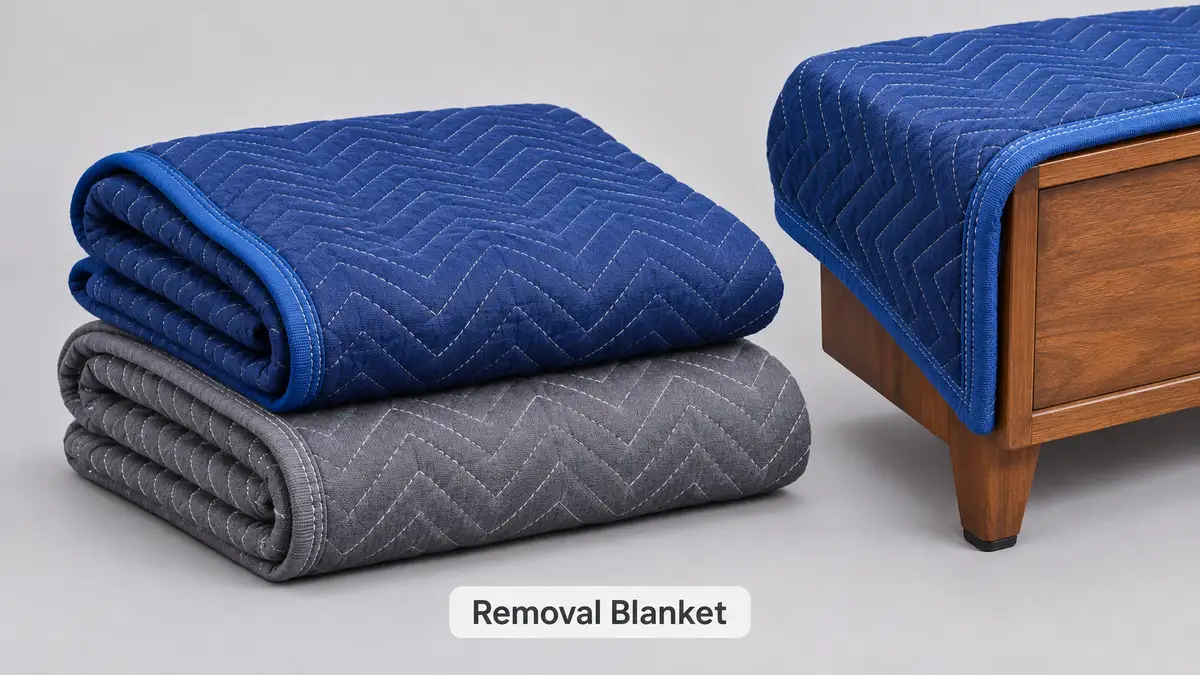
Duty depends on fibre and construction
Read from the UK Trade Tariff on 1 October 2026, heading 6301 covers blankets and travelling rugs. For removal blankets falling within this heading, non-knitted cotton lines carry 6% duty from China; knitted cotton, synthetic-fibre and other textile-material lines carry 12%. Classification should follow the actual fibre composition and construction, rather than the supplier's description.
The supplied tariff records show no anti-dumping or countervailing measures and no suspensions. The cotton and synthetic lines shown have no attached controls. CITES import and export controls appear on the other-material nonwoven line and several wool or other-material lines. For those routes, the UK Trade Tariff attaches the control; the importer should confirm the requirement for the actual materials with their customs broker.
Confirm the commodity code using the fabric composition and details of any quilting or filling. The polyester fleece blanket guide covers the wider blanket family. Keep removal protection specifications separate from bedding specifications.
| Goods | Commodity code | Duty | Anti-dumping or countervailing duty on China |
|---|---|---|---|
| Cotton blankets, non-knitted, other than hand-made | 6301 30 90 90 | 6% | None |
| Synthetic-fibre nonwoven blankets | 6301 40 90 10 | 12% | None |
| Synthetic-fibre blankets, other, other than hand-made | 6301 40 90 99 | 12% | None |
| Nonwoven blankets of other textile materials | 6301 90 90 10 | 12% | None |
Padding, binding and furniture contact
Specify finished dimensions, total blanket weight, face and backing fabrics, filling composition, quilting pattern and edge binding. Agree whether the blanket is disposable or washable and reusable. For recycled mixed-fibre material, ask for a composition breakdown rather than accepting a description such as recycled felt.
Approve a sample wrapped around a furniture corner. Check whether padding stays in place when folded and dragged, whether the face sheds onto upholstery, and whether dark fabric marks a pale surface. Agree a wash method and acceptable changes in size and padding before production.
Textile labels must show fibre content. If the blankets are sold as consumer products, sell them only once compliance with product safety regulations has been demonstrated appropriately. Do not treat a supplier's description of protective performance as test evidence.
Worked duty example
Illustrative example, not a quote: Illustrative order of 6,000 synthetic-fibre removal blankets under 6301 40 90 99, invoiced at £24,000 free on board, with £3,000 of freight and insurance to the UK. The customs value is £27,000. Duty at 12% is £3,240. Import VAT at 20% is charged on the customs value plus duty, £30,240, so it is £6,048. Import taxes total £9,288; a VAT-registered importer can usually reclaim the VAT, so the lasting cost is the £3,240 of duty. The import duty and VAT guide explains each step.
Inspection checklist
Dimensions and weight: measure finished blankets and weigh them against the approved specification; check padding distribution at corners and between quilting lines.
Stitching and binding: pull edge binding and quilting seams, look for skipped stitches and exposed filling, and check that folding does not open the corners.
Furniture contact: rub the face against a pale test cloth, check loose fibres and hard inclusions, and repeat checks after the agreed cleaning method.
Labels and packing: compare fibre information with the agreed composition, inspect for dampness or mould, and let compressed samples recover before judging thickness. Record findings during quality inspection.
Working out your own order? Send us the product on WhatsApp and we reply the same working day: WhatsApp us
What goes wrong
A blanket can match the sample's overall weight yet have thin corners or uneven filling. Loose quilting lets padding migrate; weak binding opens when crews pull the blanket around furniture. Mixed recycled fibres can shed or contain hard fragments, while dark faces can transfer colour to pale upholstery.
Compare bulk goods with the retained sample after unpacking and cleaning, rather than approving by carton weight alone. Record defects by fabric, filling and stitching so the factory can correct the cause. Keep damp or contaminated blankets away from furniture while the problem is investigated.
Cambridge China Bridge sources these products for UK businesses, checking the factory and the documents before shipment. See factory verification. For own-brand ranges, see sourcing for brands.
Frequently asked questions
What is the UK import duty on removal blankets from China?
Within heading 6301, non-knitted cotton blankets carry 6%; knitted cotton, synthetic-fibre and other textile-material blankets carry 12%. The supplied records show no anti-dumping or countervailing measures.
Which code applies to quilted moving blankets?
Do not choose by the name alone. Send the broker the face, backing and filling compositions plus construction details, and confirm whether the finished blanket belongs in heading 6301.
Do removal blankets need fibre labels?
Textile labels must show fibre content. Agree the composition before production and compare the label with fabric evidence, especially for mixed recycled material.
How do I check removal blankets will not mark furniture?
Rub the face against a pale test cloth, inspect for hard inclusions and shedding, and repeat after the agreed cleaning method. Compare bulk samples with the approved blanket.