Sourcing refrigerant dehumidifiers from China
The supplied heading 8479 record gives a duty range of 0% for refrigerant dehumidifiers provisionally classified under its residual machinery line. Confirm classification and refrigerant controls before ordering; where quota cover is required, obtain it before import. Cambridge China Bridge sources refrigerant dehumidifiers.
Buying from China for a business? How our UK China sourcing agent service works · China sourcing agent for small orders and first imports
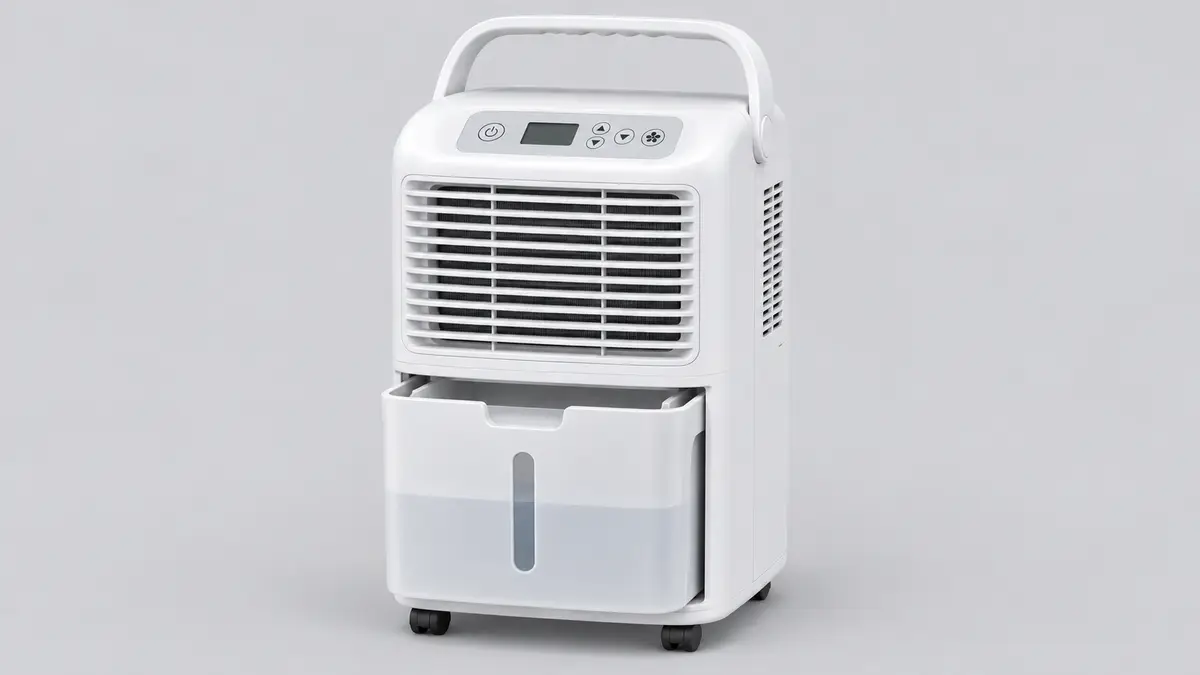
UK duty on refrigerant dehumidifiers
Heading 8479 covers machines with individual functions not specified elsewhere in the chapter. The residual line 8479 89 97 90 is a candidate to confirm for these dehumidifiers, rather than a named dehumidifier subdivision. The table shows configurations sharing that candidate code. For related cooling equipment and refrigerant questions, see air conditioners and heat pumps.
Read from the UK Trade Tariff on 7 December 2026, the candidate line carries 0% ordinary duty for goods from China. The supplied record lists no anti-dumping duty, countervailing duty or suspension. It attaches fluorinated greenhouse gas import controls and waste import and export controls.
Where quota authorisations or delegations are required for pre-charged equipment entering Great Britain, obtain sufficient cover before importing. For China shipments subject to waste notification controls, the exporter must apply to the dispatch-country authority for consent. Ask your customs broker to confirm whether these controls apply. Confirm the commodity code using the complete machine specification, refrigerant details and intended function.
| Goods | Commodity code | Duty | Anti-dumping or countervailing duty on China |
|---|---|---|---|
| Tank-type refrigerant dehumidifiers, subject to classification | 8479 89 97 90 | 0% | None |
Specify extraction conditions and condensate handling
Specify moisture extraction at agreed inlet temperature and relative humidity, with power consumption measured under the same conditions. Include the operating temperature range, defrost behaviour, humidistat accuracy, airflow and noise test method. A headline extraction figure without its test conditions is unsuitable for comparing machines.
Define refrigerant identity and charge, compressor model, tank capacity, full-tank shut-off, hose connection and continuous-drain arrangement. For pumped drainage, agree the discharge lift and hose route. Include supply voltage, frequency, plug, filter access, cleaning instructions and replacement tank, pump and sensor availability.
For supply in Great Britain, confirm applicable safety, technical-file, declaration of conformity, CE or UKCA marking and English instruction requirements with the relevant authority. Match documents to the delivered model and configuration. Check electromagnetic compatibility and restricted-substance documentation for the compressor and controls.
Under restricted-substance rules, products must show the importer's name or trademark and a contactable address on the product or packaging. Confirm your electrical-waste producer status; producers must register annually. Resolve these arrangements before approving production labels.
Worked duty example
Illustrative example, not a quote: Illustrative batch of tank-type refrigerant dehumidifiers under 8479 89 97 90, invoiced at £8,000 free on board, with £1,200 of freight and insurance to the UK. The customs value is £9,200. Duty at 0% is £0. Import VAT at 20% is charged on the customs value plus duty, £9,200, so it is £1,840. With no duty, the only import tax is the VAT, which a VAT-registered importer can usually reclaim. The import duty and VAT guide explains each step.
Inspection checklist
Extraction: measure collected water and power consumption under the agreed temperature and humidity conditions; record defrost interruptions and humidistat response.
Drainage: check tank seating, full-tank shut-off, hose sealing and continuous drainage; test any condensate pump against the agreed discharge arrangement.
Refrigeration circuit: compare refrigerant identity and charge with the approved specification; inspect accessible pipework, coil fins, compressor mounts and signs of leakage or transit damage.
Identity and documents: match model labels, compressor and controls to the approved sample, declaration and English instructions. Record these checks through your quality inspection.
Working out your own order? Send us the product on WhatsApp and we reply the same working day: WhatsApp us
What goes wrong
A machine tested in warm, humid air may collect much less water in a cool storeroom. Frequent defrosting, inaccurate humidity sensing or restricted airflow can undermine the intended application. Agree representative test conditions and acceptance criteria before production.
Poorly seated tanks, loose drain fittings and unsuitable pump arrangements can cause water leaks despite satisfactory extraction. Compressor or refrigerant substitutions also change the agreed configuration. Record substitutions and recheck performance, documents and refrigerant-control applicability before shipment.
Cambridge China Bridge sources these products for UK businesses, checking the factory and the documents before shipment. See factory verification. For machinery and equipment, see machinery imports.
Frequently asked questions
What is the UK import duty on refrigerant dehumidifiers from China?
The supplied record gives 0% under candidate code 8479 89 97 90, with no listed anti-dumping or countervailing duty. Confirm the classification of your complete machine.
Do imported refrigerant dehumidifiers need gas quota cover?
Check the refrigerant and your import circumstances before ordering. Where quota authorisations or delegations are required, pre-charged equipment cannot be imported into Great Britain without sufficient cover.
How do I compare dehumidifier extraction claims?
Compare extraction and power consumption at the same inlet temperature and relative humidity. Ask for a test covering your intended room conditions, including defrost behaviour.
What should I test on a dehumidifier sample?
Check extraction, power consumption, humidity sensing, defrosting, tank shut-off and drainage. Test any pump with the intended hose route and discharge lift, and match the sample to its documents.