Sourcing railway check rails from China
UK duty across check rails and associated fittings ranges from 0% to 50% in the supplied tariff snapshot. Other new rails carry 50%; used rails and listed fittings carry 0%. Confirm with Network Rail whether product acceptance is needed for the proposed national-network track components. Cambridge China Bridge sources railway check rails.
Buying from China for a business? How our UK China sourcing agent service works · China sourcing agent for small orders and first imports
Duty on check rails and their fittings
Read from the UK Trade Tariff on 1 October 2026, heading 7302 covers iron or steel railway and tramway track construction material, including check rails. Other new rails, including check rails, fall under 7302 10 50 00. The table also includes used rails and associated mounting and jointing fittings, rather than treating every item as a new check rail.
The supplied snapshot lists 50% duty for other new rails and 0% for used rails, fish-plates, sole plates and other track fittings from China. It lists no anti-dumping or countervailing duties, suspensions or attached import controls for these lines. The older published guide describes quota relief, but the supplied snapshot does not record it. Budget using the recorded rate and ask your broker to confirm any relief before shipment.
Give your broker the profile drawing, material, condition and description of any attached fittings to confirm the commodity code. A separately supplied mounting plate or clip should be checked on its own description. For the wider heading and adjoining crossing components, see railway crossings and frogs.
| Goods | Commodity code | Duty | Anti-dumping or countervailing duty on China |
|---|---|---|---|
| Other new rails, including railway check rails | 7302 10 50 00 | 50% | None |
| Used rails, including used check rails | 7302 10 90 00 | 0% | None |
| Fish-plates and sole plates for rail assemblies | 7302 40 00 00 | 0% | None |
| Other track fittings, including chairs and rail clips | 7302 90 00 00 | 0% | None |
Specify the check-rail profile and installed geometry
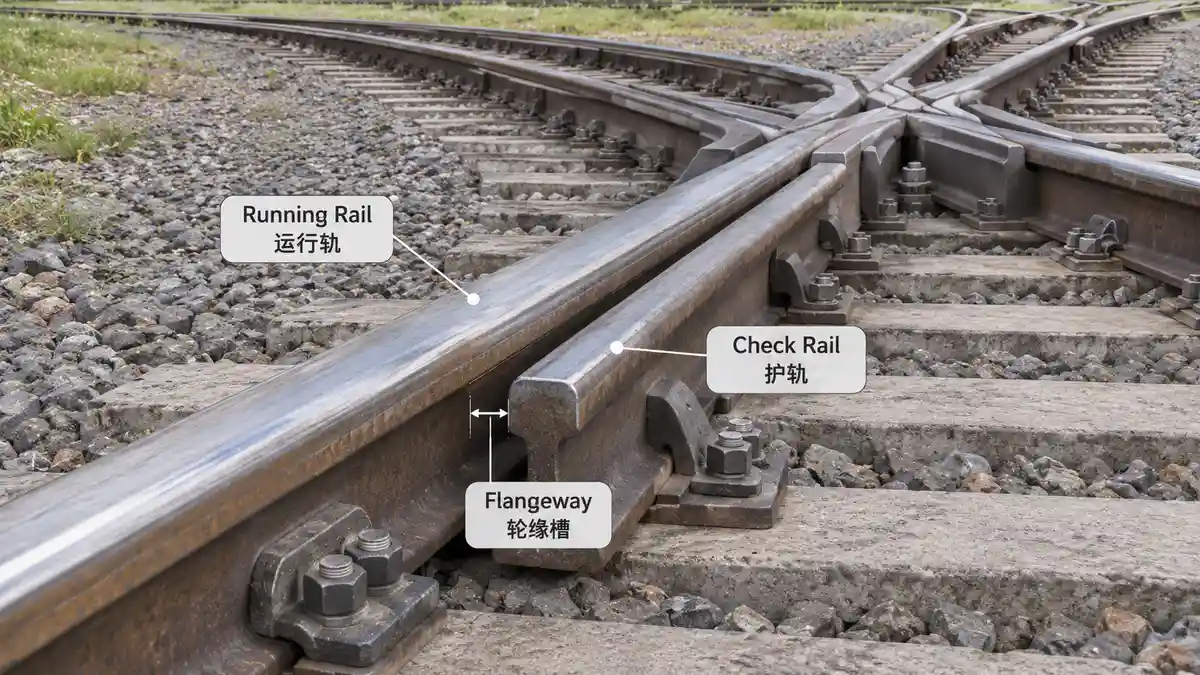
Issue a controlled drawing showing the check-rail section, overall length, end flare or bend, hole positions and mounting arrangement. Specify the steel grade, hardness, heat treatment, straightness tolerances and certificate type. Identify the running rail, crossing and fastening system it must match, and have the track designer define the installed flangeway and check gauge.
For a structural subsystem within Great Britain's interoperability regime, authorisation from the Office of Rail and Road is required before first use. Agree the project's acceptance documents with the operator before ordering, and establish which documents the mill must supply.
Ask for mill records linked to the supplied rail lengths and a trial assembly with the proposed chairs, plates and fastenings. Use factory verification to check the mill's manufacturing and document capability against your specification.
Worked duty example
Illustrative example, not a quote: Illustrative order: 50 new railway check-rail lengths under 7302 10 50 00, invoiced at £18,000 free on board, with £4,000 of freight and insurance to the UK. The customs value is £22,000. Duty at 50% is £11,000. Import VAT at 20% is charged on the customs value plus duty, £33,000, so it is £6,600. Import taxes total £17,600; a VAT-registered importer can usually reclaim the VAT, so the lasting cost is the £11,000 of duty. The import duty and VAT guide explains each step.
Inspection checklist
Profile and geometry: compare the section, length, straightness, twist and end flare with the approved drawing; check the installed relationship to the running rail in the trial assembly.
Drilling and fit: measure hole positions, inspect burrs and confirm that chairs, plates and fastenings seat correctly without forced alignment.
Material and traceability: match heat numbers and rail markings to mill certificates; check chemistry, hardness and heat-treatment records against the ordered grade.
Surface and arrival condition: inspect for cracks, laps, bent ends, rust and handling damage; photograph affected lengths before unpacking further. Plan checks with the quality inspection guide.
Working out your own order? Send us the product on WhatsApp and we reply the same working day: WhatsApp us
What goes wrong
A rail section can resemble the ordered profile yet place the working face incorrectly once mounted. Wrong end flares, misplaced holes or incompatible chairs can prevent the assembly achieving the designer's flangeway and check gauge. Approve the drawing and trial fit before releasing the batch.
Other failures include mixed grades, certificates that cannot be traced to the shipment and lengths bent during lifting. Customs costs also change if a new rail is budgeted as a used rail or a fitting. Keep the specification, inspection records and invoice descriptions consistent.
Cambridge China Bridge sources these products for UK businesses, checking the factory and the documents before shipment. See factory verification. For repeat volumes, see container programmes.
Frequently asked questions
What is the UK import duty on railway check rails from China?
The supplied snapshot lists other new rails, including check rails, at 50% under 7302 10 50 00. Used rails and listed associated fittings carry 0%. Confirm the exact classification before shipping.
Do Chinese check rails need Network Rail acceptance?
Agree the acceptance route and supporting documents with the project before ordering.
What drawing should I send a check-rail factory?
Send the profile, length, end flare, hole pattern, mounting details, steel grade and tolerances. Include the designer's flangeway and check gauge, plus the running rail and fastening arrangement.
Can I buy used check rails from China?
The supplied tariff lists used rails at 0%. That rate does not establish suitability: agree acceptable wear, condition, traceability and operator acceptance before buying.