Sourcing rail-mounted battery carts from China
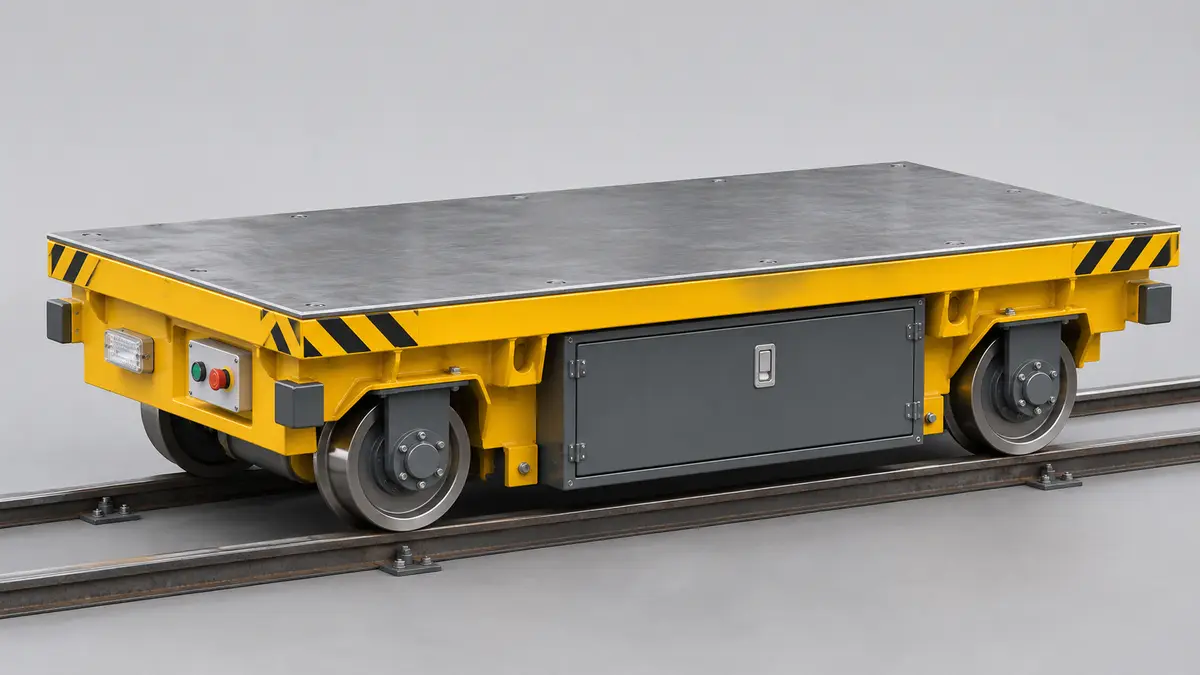
Rail-mounted battery transfer carts accepted under heading 8709 carry 0% UK duty from China, with no recorded anti-dumping or countervailing duty. For Great Britain, confirm the applicable machinery marking, conformity-document and English-instruction requirements with the relevant product safety authority. Cambridge China Bridge sources rail-mounted battery transfer carts.
Buying from China for a business? How our UK China sourcing agent service works · China sourcing agent for small orders and first imports
UK duty and classification
Heading 8709 covers self-propelled works trucks without lifting or handling equipment, used for short-distance goods transport, and their parts. This guide concerns battery-powered rail-mounted transfer carts with fixed load decks. The table shows alternative cart configurations sharing the electrical works-truck code, plus parts. Confirm acceptance of the actual rail-mounted design under this heading before using these rates.
Read from the UK Trade Tariff on 6 October 2026, the supplied lines carry 0% duty for goods from China, with no recorded anti-dumping or countervailing duty or suspension. The tariff attaches ozone-depleting-substance restrictions, fluorinated greenhouse gas import controls and waste import controls to the electrical vehicle line, plus cultural-object and waste export controls. The importer should confirm the requirements and applicable declarations with their customs broker.
Send drawings, propulsion details, rail arrangement and a description of any lifting mechanism to your broker to confirm the commodity code. Do not assume that a battery, charger or controller supplied separately shares the cart's parts code. For the wider works-truck family, see trackless die transfer carts.
| Goods | Commodity code | Duty | Anti-dumping or countervailing duty on China |
|---|---|---|---|
| Rail-mounted battery transfer carts with flat decks | 8709 11 90 00 | 0% | None |
| Parts classified as works-truck parts | 8709 90 00 00 | 0% | None |
Specify the cart around the installed track
Provide the track drawing, rail profile, gauge, joints, gradients and any curves. Agree wheel tread and flange geometry, wheel spacing, deck height and stopping positions. Specify payload together with its footprint and centre of gravity, including concentrated loads from dies or stillages. Agree how the load is restrained and how the cart interfaces with loading stations.
Specify battery chemistry, voltage, capacity, accessible isolation, charger supply and charging location. Define the loaded travel cycle, reversing frequency, parking conditions and required operating time between charges. Agree braking behaviour after power loss, emergency-stop operation, warning devices and the response to a broken control cable. Include replacement wheels, brakes, controllers and wiring diagrams in the supply agreement.
For supply in Great Britain, confirm with the relevant product safety authority whether the works truck requires CE or UKCA marking, a declaration of conformity, a technical file and English instructions. Also confirm whether the supplied battery charger falls under the Electrical Equipment (Safety) Regulations 2016. Match the documents to the supplied cart and charger, and arrange a testing and certification review before shipment.
Worked duty example
Illustrative example, not a quote: Illustrative order of 4 rail-mounted battery transfer carts; freight includes insurance under 8709 11 90 00, invoiced at £54,000 free on board, with £3,200 of freight and insurance to the UK. The customs value is £57,200. Duty at 0% is £0. Import VAT at 20% is charged on the customs value plus duty, £57,200, so it is £11,440. With no duty, the only import tax is the VAT, which a VAT-registered importer can usually reclaim. The import duty and VAT guide explains each step.
Inspection checklist
Rail fit: measure wheel geometry, gauge and deck height against the approved drawings before shipment. On arrival, inspect flanges, axles, bearings and transit restraints before placing the cart on the installed track.
Loaded movement: test starting, reversing, stopping and parking with the agreed load and its actual support footprint. Check wheel contact, load stability, emergency stops and behaviour after power loss.
Battery and charging: run the agreed operating cycle, record battery condition and charging behaviour, and inspect terminals, cable protection, isolation and charger identification.
Documents and support: match identification plates, conformity documents, English instructions and electrical drawings to the delivered build. Check the spares supplied against the packing list. Plan these checks through quality inspection.
Working out your own order? Send us the product on WhatsApp and we reply the same working day: WhatsApp us
What goes wrong
A cart can pass a factory demonstration yet bind on the buyer's rails because the wheel profile or gauge differs. Concentrated loads can distort a deck that was demonstrated with a distributed load. An unloaded stopping test can also conceal weak braking. Agree the track interface, load arrangement and acceptance test in writing before production.
Short battery endurance and inaccessible controllers can leave a cart idle after arrival. Check replacement access and diagnostic support. If cooling equipment is fitted, obtain its refrigerant details: official guidance includes vehicle air-conditioning within pre-charged equipment. Waste shipment controls apply only where the material is waste. For used or damaged carts from China, have the broker confirm waste status and import requirements before shipment.
Cambridge China Bridge sources these products for UK businesses, checking the factory and the documents before shipment. See factory verification. For machinery and equipment, see machinery imports.
Frequently asked questions
What is the UK import duty on rail-mounted battery transfer carts from China?
The supplied electrical works-truck line, 8709 11 90 00, carries 0% duty, with no recorded anti-dumping or countervailing duty. Confirm that the actual cart belongs in this line. Import VAT is normally 20%.
Do rail-mounted battery carts need CE or UKCA marking?
Check that the documents identify the supplied build.
What track details should I send the Chinese factory?
Send the track drawing, gauge, rail profile, joints, gradients and curves. Agree wheel geometry, deck height, stopping positions and the load footprint before approving production drawings.
How should I test a battery transfer cart before shipment?
Use the agreed load and operating cycle. Check rail fit, starting, reversing, stopping, parking, emergency stops, power-loss behaviour and battery endurance. Repeat the track-interface checks on arrival.