Sourcing pressed glass balusters from China
Pressed glass architectural balusters from China carry 0% UK duty under heading 7016, with no anti-dumping duty listed. For guarding in England, official guidance calls for resistance to the specified loads. Settle the assembly design and evidence before ordering. Cambridge China Bridge sources pressed glass architectural balusters.
Buying from China for a business? How our UK China sourcing agent service works · China sourcing agent for small orders and first imports
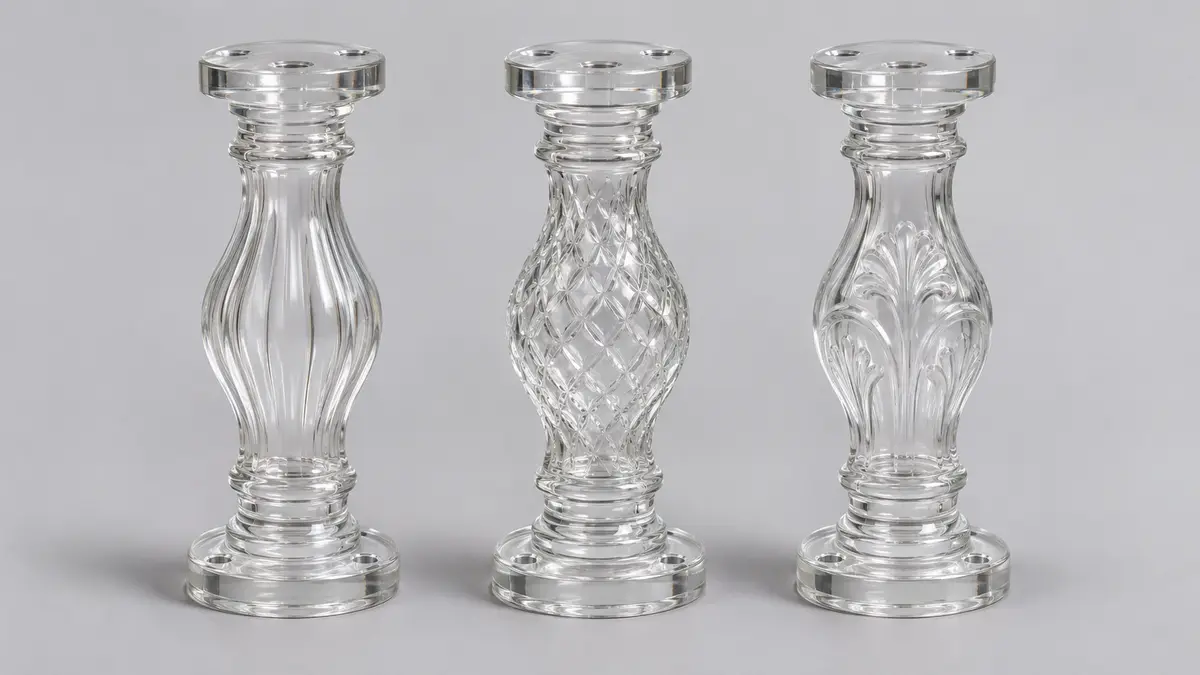
Duty on pressed glass architectural balusters
Heading 7016 covers pressed or moulded glass articles for building and construction, alongside glass mosaic smallwares, leaded lights and foam glass forms. Architectural balusters are candidates for the other construction glass line, 7016 90 70 00. The table also identifies neighbouring categories within the heading; these are distinct goods, not alternative descriptions of balusters.
Read from the UK Trade Tariff on 2 October 2026, all listed lines carried 0% duty for goods from China. The supplied tariff record lists no anti-dumping or countervailing duties, suspensions or attached import controls. Import VAT is normally 20%; see UK import duty and VAT.
Confirm the commodity code using drawings, photographs, manufacturing method and intended building use, especially if the shipment includes rails or metal fittings. For the wider heading, see moulded glass stair treads.
| Goods | Commodity code | Duty | Anti-dumping or countervailing duty on China |
|---|---|---|---|
| Other pressed or moulded construction glass, including architectural balusters | 7016 90 70 00 | 0% | None |
| Glass building blocks and bricks, distinct from balusters | 7016 90 40 00 | 0% | None |
| Leaded lights and similar articles, distinct from balusters | 7016 90 10 00 | 0% | None |
| Glass mosaic cubes and smallwares, distinct from balusters | 7016 10 00 00 | 0% | None |
Specify the baluster and its fixing system
State whether the balusters are decorative or form part of guarding. Specify the profile, overall height, neck and base dimensions, solid or hollow construction, colour, surface finish and acceptable mould seams. Draw the fixing interfaces, sockets, inserts and contact surfaces. Approve a sample fitted into the proposed rail and base before authorising production.
For work in England, Approved Document K gives guidance on protection from falling, collision and impact. Its guarding guidance calls for resistance to specified loads. Ask the project designer to settle the assembly, fixing details and evidence for the intended location. Request reports identifying the actual baluster, rails and fixings being assessed.
Establish the construction product marking route before agreeing labels. Under the CE route, a harmonised standard or a European Technical Assessment is needed; covered products require a declaration of performance, subject to applicable derogations. CE marking continues to be recognised for construction products in Great Britain. Ask which route covers this baluster and request the supporting documents through testing and certification.
Worked duty example
Illustrative example, not a quote: Illustrative order of 190 pressed glass architectural balusters under 7016 90 70 00, invoiced at £9,000 free on board, with £2,500 of freight and insurance to the UK. The customs value is £11,500. Duty at 0% is £0. Import VAT at 20% is charged on the customs value plus duty, £11,500, so it is £2,300. With no duty, the only import tax is the VAT, which a VAT-registered importer can usually reclaim. The import duty and VAT guide explains each step.
Inspection checklist
Dimensions: measure height, straightness, neck, base and fixing interfaces against the approved drawing. Trial-fit samples with the specified sockets and rails without forcing the glass.
Glass and finish: check for cracks, chipped ends, inclusions, prominent mould seams and uneven colour. Compare the profile and finish with the approved sample under consistent lighting.
Assembly evidence: match report photographs, product references and fixing details to the ordered assembly. Record any change in glass section, insert or rail before accepting the batch.
Arrival and packing: inspect restraints, individual separation and protection around projecting sections. Photograph damaged packs, count broken pieces and keep batch identification. Use the same checks for quality inspection before dispatch.
Working out your own order? Send us the product on WhatsApp and we reply the same working day: WhatsApp us
What goes wrong
A matching silhouette can hide a different neck or base, leaving the baluster loose in its socket or requiring force to fit. Chips around fixing seats, uneven mould seams and colour variation can also make an otherwise matching batch unsuitable. Keep drawings and the approved assembly sample available to the inspector.
Decorative samples can be mistaken for evidence of guarding performance. A report for another glass shape or fixing arrangement does not establish the performance of the ordered assembly. Resolve those differences before shipment, and hold damaged or mismatched pieces aside on arrival.
Cambridge China Bridge sources these products for UK businesses, checking the factory and the documents before shipment. See factory verification. For own-brand ranges, see sourcing for brands.
Frequently asked questions
What is the UK import duty on pressed glass balusters from China?
The supplied tariff record shows 0% for heading 7016, including 7016 90 70 00, with no anti-dumping or countervailing duties listed. Confirm classification for the actual product.
Can pressed glass balusters be used as stair guarding?
Have the project designer assess the proposed assembly. In England, Approved Document K calls for guarding to resist specified loads. Agree evidence for the actual balusters, rails and fixings.
Do pressed glass balusters need CE marking?
Check the applicable product route. CE marking under the construction products regime needs a harmonised standard or European Technical Assessment. Do not assume a generic glass certificate covers the baluster.
What should I check when glass balusters arrive?
Check cracks, chipped fixing seats, colour, dimensions and fit against the approved sample. Photograph packing damage, count broken pieces and retain batch identification.