Sourcing prepared UV absorber blends from China
Prepared UV absorber blends for rubber or plastics from China carry 0% UK duty across the relevant heading 3812 lines, with no listed trade remedies. Check UK REACH registration for the constituent substances and arrange competent hazard classification, correct labelling and packaging. Cambridge China Bridge sources prepared UV absorber blends.
Buying from China for a business? How our UK China sourcing agent service works · China sourcing agent for small orders and first imports
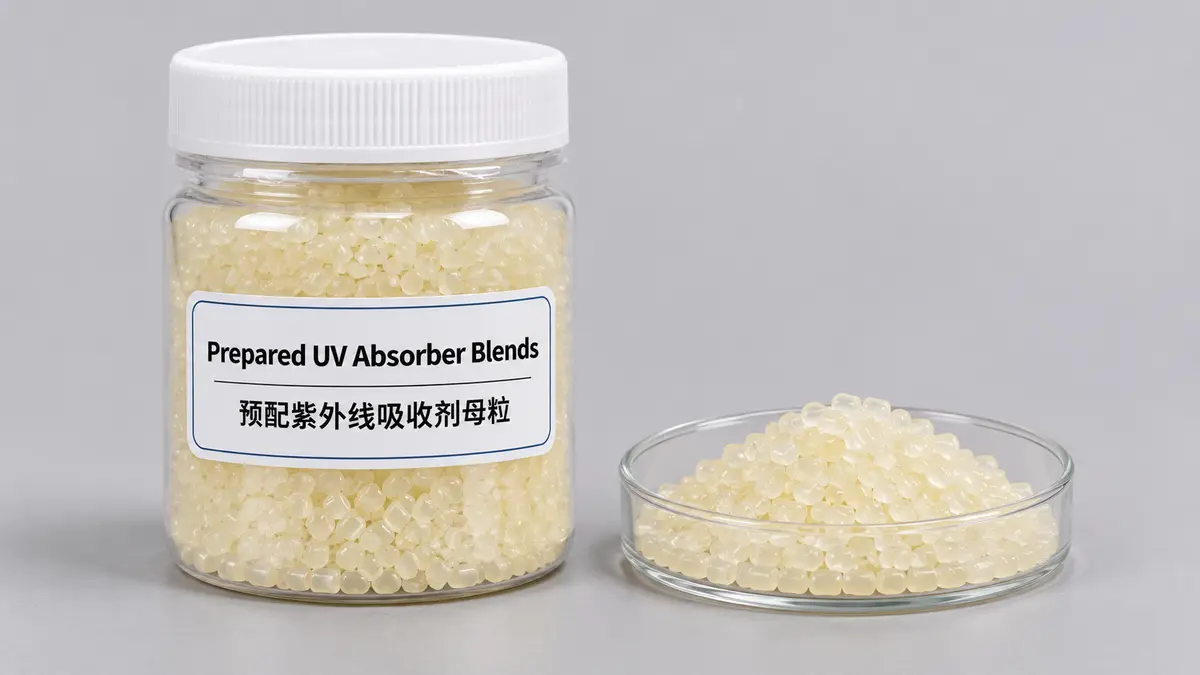
UK duty on prepared UV absorber blends
Read from the UK Trade Tariff on 1 October 2026, heading 3812 covers prepared rubber accelerators, compound plasticisers, anti-oxidising preparations and other compound stabilisers for rubber or plastics. This guide selects prepared UV absorber blends, including absorber and hindered amine combinations. The selected lines all carry 0% duty for goods from China, with no listed anti-dumping or countervailing duties, suspensions or attached import controls.
The named lines describe particular chemical mixtures and, where specified, composition ranges. Match the full formulation, including solvent and stabiliser components, to the tariff description. A trade name alone does not establish the code. Confirm your commodity code using the composition and safety data sheet.
UK REACH registration applies to substances in mixtures, so assess the constituent substances rather than treating the blend name as registration evidence. Have classification carried out by someone with scientific competence, and ensure correct labelling and packaging before market supply. For related compound stabilisers within this heading, see the hindered amine light stabiliser blends guide.
| Goods | Commodity code | Duty | Anti-dumping or countervailing duty on China |
|---|---|---|---|
| Listed benzotriazole UV absorber blend with hindered amine stabilisers | 3812 39 90 25 | 0% | None |
| Listed benzotriazole and hindered amine reaction-mass blend | 3812 39 90 28 | 0% | None |
| Listed benzotriazole ester UV absorber and hindered amine blend | 3812 39 90 33 | 0% | None |
| Listed triazine UV absorber preparation in methoxypropanol | 3812 39 90 38 | 0% | None |
| Listed chlorobenzotriazole propionate ester reaction mixture | 3812 39 90 43 | 0% | None |
| Listed benzotriazole ester UV absorber preparation with solvent | 3812 39 90 75 | 0% | None |
Specify absorber chemistry and carrier
Specify the absorber chemistry, chemical identifiers, active content and blend ratio, including any hindered amine component. Name the solvent or carrier and agree colour, viscosity, moisture and physical form. Ask for the formulation statement, technical data sheet, English safety data sheet and batch certificate of analysis.
State the target polymer, processing conditions, intended exposure and acceptable colour change. Compare the proposed blend with your approved grade in your own formulation, checking dispersion, clarity, surface deposits and ageing performance. For plastic food packaging, confirm with the Food Standards Agency which authorisation requirements and restrictions apply to each additive for the intended use.
Worked duty example
Illustrative example, not a quote: Illustrative order: 600 kg of the listed triazine UV absorber preparation under 3812 39 90 38, invoiced at £32,000 free on board, with £1,600 of freight and insurance to the UK. The customs value is £33,600. Duty at 0% is £0. Import VAT at 20% is charged on the customs value plus duty, £33,600, so it is £6,720. With no duty, the only import tax is the VAT, which a VAT-registered importer can usually reclaim. The import duty and VAT guide explains each step.
Inspection checklist
Composition: check batch identity, absorber content, blend ratio and solvent against the agreed specification and certificate of analysis.
Condition: check colour, viscosity and homogeneity for liquids; check caking and particle form for powders. Look for separation, sediment or unexpected odour.
Application: compare dispersion, clarity, yellowing and surface deposits with the approved sample in the target polymer, then compare ageing performance.
Packing and documents: check seals, leaks, batch identification, labels and the matching English safety data sheet. Record samples and findings using the quality inspection guide.
Working out your own order? Send us the product on WhatsApp and we reply the same working day: WhatsApp us
What goes wrong
A supplier substitutes the absorber chemistry, changes the solvent or dilutes the active content while retaining the same grade name. The blend then separates, disperses poorly or changes the finished plastic's colour. Matching appearance on arrival does not establish matching ageing performance.
Keep the approved formulation and sample alongside incoming batch results. Investigate composition or carrier changes before releasing material into production. A generic chemical compliance statement does not identify the substances in your blend or establish whether they require UK REACH registration.
Cambridge China Bridge sources these products for UK businesses, checking the factory and the documents before shipment. See factory verification. For repeat volumes, see container programmes.
Frequently asked questions
What is the UK import duty on prepared UV absorber blends from China?
The selected heading 3812 lines carry 0% duty for goods from China. The supplied tariff record lists no anti-dumping or countervailing duties, suspensions or attached import controls.
Does UK REACH apply to a prepared UV absorber blend?
Registration applies to substances in mixtures. Assess the constituent substances and whether they require registration; a blend trade name is insufficient.
Can I use the supplier's UV absorber grade as a direct replacement?
Compare chemistry, active content, carrier and blend ratio, then trial it in your polymer. Check dispersion, colour, surface deposits and ageing against your approved grade.
Can these blends be used in plastic food packaging?
Confirm with the Food Standards Agency which authorisation requirements and restrictions apply to each additive for the intended plastic food-contact application. Ask for evidence for each additive rather than accepting a general food-grade claim.