Sourcing polyester-viscose yarn from China
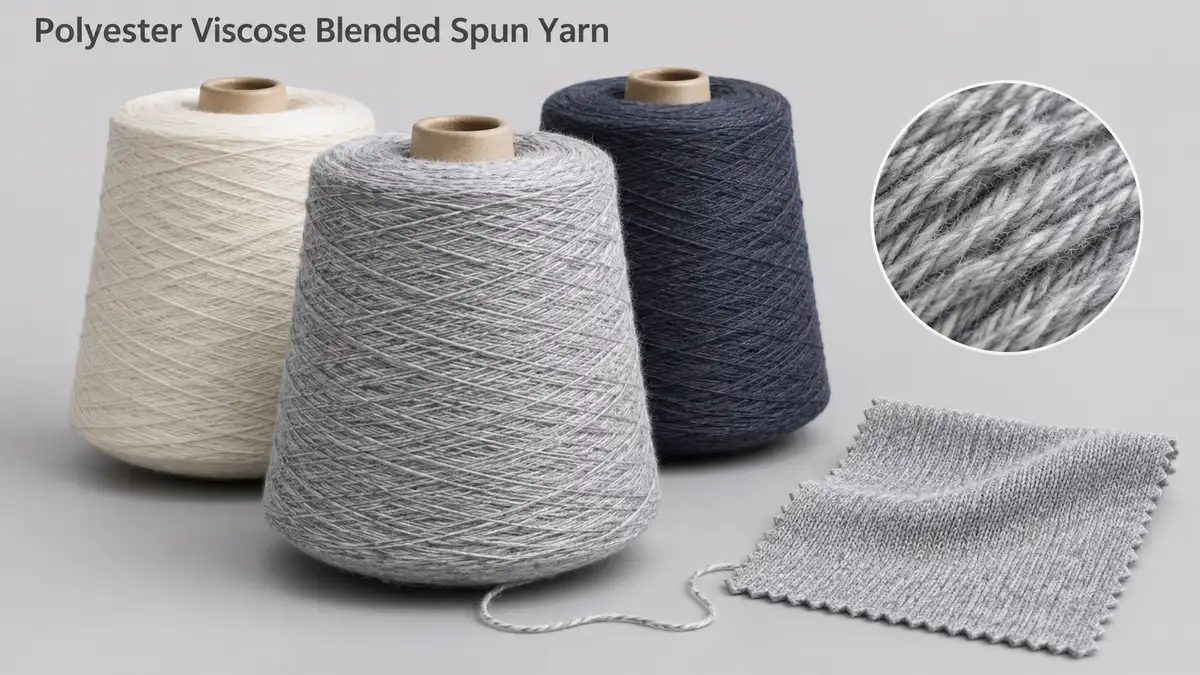
Polyester-viscose blended spun yarn within heading 5509 pays a flat 4% UK duty from China, with no anti-dumping or countervailing duty in the supplied tariff snapshot. The code depends on composition and construction; fibre content must follow textile labelling rules. Cambridge China Bridge sources polyester-viscose blended spun yarn.
Buying from China for a business? How our UK China sourcing agent service works · China sourcing agent for small orders and first imports
A flat 4% duty on the relevant yarn lines
Read from the UK Trade Tariff on 4 October 2026, heading 5509 covers synthetic staple-fibre yarn other than sewing thread, not put up for retail sale. For polyester yarn mixed mainly or solely with artificial staple fibres, including viscose, check 5509 51 00 00. The table shows single and folded commercial variants sharing that code, alongside blends containing at least 85% polyester staple.
The listed codes all carry 4% duty for goods from China. The supplied snapshot records no anti-dumping or countervailing duty, suspension or attached import control on these codes. Elsewhere in heading 5509, wool or fine-animal-hair blend lines have CITES controls attached; if the specification includes those fibres, confirm the requirement with your customs broker.
Confirm the commodity code using the tested fibre composition, single or folded construction and packaging. Do not classify every polyester-viscose blend from its trade name alone. See the wider spun-yarn guide for the rest of the heading.
| Goods | Commodity code | Duty | Anti-dumping or countervailing duty on China |
|---|---|---|---|
| Polyester staple mixed mainly with viscose, single yarn | 5509 51 00 00 | 4% | None |
| Polyester-viscose single yarn containing at least 85% polyester staple | 5509 21 00 00 | 4% | None |
| Polyester-viscose folded yarn containing at least 85% polyester staple | 5509 22 00 00 | 4% | None |
Specify the blend, spinning and cone winding
Write down polyester and viscose percentages by weight, yarn count and its measurement system, spinning method, single or folded construction, twist direction, twist level, strength and evenness tolerances. Agree limits for hairiness and imperfections, plus cone net weight, tube dimensions and winding suitable for your knitting or weaving equipment.
For dyed yarn, agree an approved shade sample, dye-lot identification and colour fastness checks. Fibre content must follow textile labelling rules. Ask for composition results tied to the supplied lot, and agree how composition information will accompany the cones. Keep an approved yarn sample and a knitted or woven trial panel for comparison.
Worked duty example
Illustrative example, not a quote: Illustrative order: 1,200 kg of polyester-viscose blended spun yarn on cones under 5509 51 00 00, invoiced at £2,400 free on board, with £1,200 of freight and insurance to the UK. The customs value is £3,600. Duty at 4% is £144. Import VAT at 20% is charged on the customs value plus duty, £3,744, so it is £748.80. Import taxes total £892.80; a VAT-registered importer can usually reclaim the VAT, so the lasting cost is the £144 of duty. The import duty and VAT guide explains each step.
Inspection checklist
Composition: test polyester and viscose content on samples from different cartons, and compare results with the order and fibre descriptions.
Yarn performance: check count, twist, breaking strength, elongation, evenness and hairiness against the agreed specification; run a trial on your equipment.
Shade: compare cones with the approved sample under consistent lighting, inspect a trial panel for barring and keep dye lots separate.
Cones and cartons: check net yarn weight, winding, damaged tubes, loose ends, dampness and lot identification. Plan sampling with the quality inspection guide.
Working out your own order? Send us the product on WhatsApp and we reply the same working day: WhatsApp us
What goes wrong
A changed blend alters handle and dye response even when the count looks correct. Uneven yarn or excessive hairiness can cause breaks and a rough fabric surface. Mixed dye lots can produce barring that is easier to see in a knitted panel than on individual cones.
Poor winding causes snagging or uneven unwinding, while damp cartons make weight checks unreliable. Compare arrival samples with the retained sample before bulk use, record affected lot labels and keep suspect cones separate.
Cambridge China Bridge sources these products for UK businesses, checking the factory and the documents before shipment. See factory verification. For repeat volumes, see container programmes.
Frequently asked questions
What is the UK import duty on polyester-viscose yarn from China?
The relevant heading 5509 lines carry 4% duty in the supplied snapshot read on 4 October 2026, with no anti-dumping or countervailing duty.
Which commodity code covers polyester-viscose spun yarn?
Check 5509 51 00 00 for polyester staple yarn mixed mainly or solely with artificial staple fibres. Blends containing at least 85% polyester have separate single and folded lines. Confirm the tested composition.
Does polyester-viscose yarn need fibre composition information?
Yes. Textile fibre content must follow the applicable fibre naming and labelling rules. Ask the mill for lot-linked composition results and agree the information accompanying the cones.
How do I check whether the yarn will run on my knitting machine?
Agree count, twist, strength, evenness, hairiness and winding first. Test sampled cones and knit a trial panel, checking breaks, unwinding and shade barring before bulk use.