Sourcing polyester quilt batting from China
Polyester quilt batting from China normally pays 4% UK duty; the man-made wadding lines range from 2% to 4%, depending on roll diameter. Consumer batting sold in Great Britain must be safe in normal or reasonably foreseeable use. Specify weight, loft and wash performance. Cambridge China Bridge sources polyester quilt batting.
Buying from China for a business? How our UK China sourcing agent service works · China sourcing agent for small orders and first imports
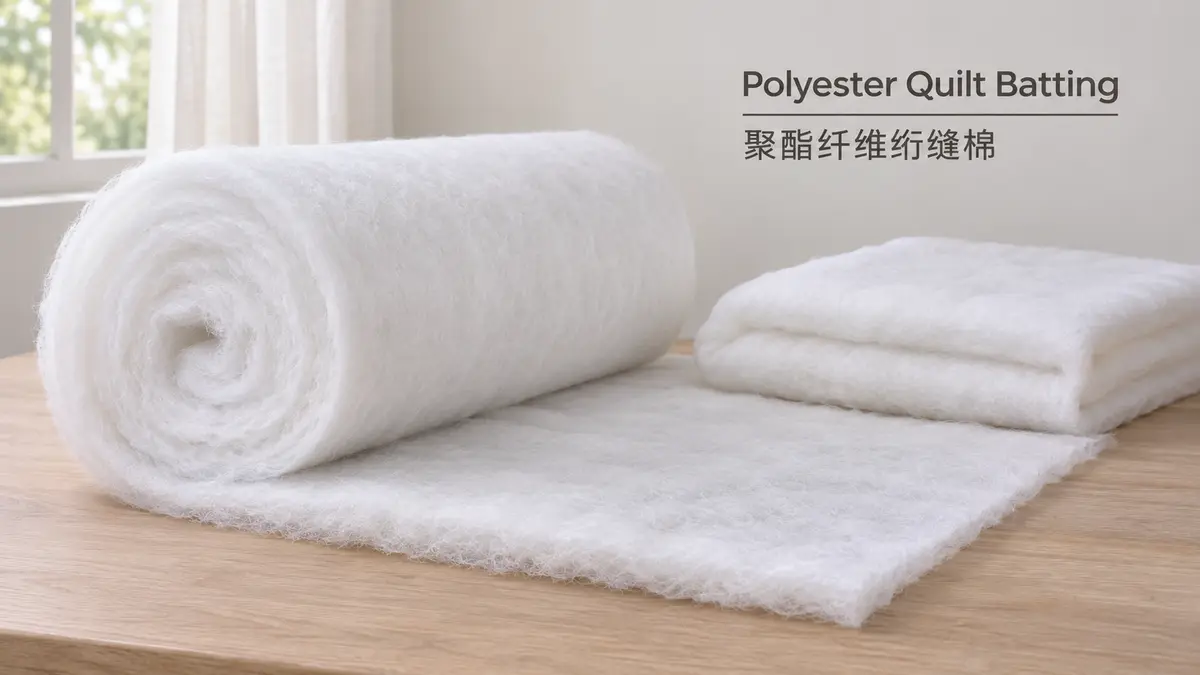
Normally 4% duty on polyester quilt batting
Heading 5601 covers textile wadding and articles of wadding, alongside flock, textile dust and mill neps. This guide concerns polyester wadding supplied for quilting. The table shows supply forms within the same commodity line, rather than different tariff rates. For the other materials, see our wadding, cotton wool and flock guide.
Read from the UK Trade Tariff on 5 October 2026, ordinary polyester quilt batting under 5601 22 90 00 carries 4% duty from China. Man-made wadding in rolls of a diameter not exceeding 8 mm under 5601 22 10 00 carries 2%. Neither line has a listed anti-dumping or countervailing duty, suspension or attached import control. The suspensions recorded for particular flock fibres do not apply to these wadding lines.
Confirm the fibre composition, construction and presentation before using the commodity code guide. Loose polyester staple fibre falls under heading 5503, rather than the wadding line. Send your customs broker the specification and a sample photograph, especially where the supplier describes the material as a nonwoven.
| Goods | Commodity code | Duty | Anti-dumping or countervailing duty on China |
|---|---|---|---|
| Polyester quilt batting in ordinary rolls | 5601 22 90 00 | 4% | None |
Specify loft, bonding and quilting behaviour
Specify polyester fibre composition, mass per unit area, width, roll length or sheet dimensions, and thickness under an agreed measuring pressure. Describe the bonding method, any scrim or backing, and whether recycled fibre is acceptable. Approve a sample for softness, drape and loft, then keep it as the comparison sample for production.
Agree how long compressed batting should recover before thickness is measured. Quilt a sample between your intended fabrics using the planned stitch spacing. Check fibre migration, bunching and handling through the sewing machine. Wash and dry the sample using the intended care method, then assess shrinkage, clumping and retained loft.
Textile labels must show fibre content. Agree the retail fibre wording before printing packaging, and match it to the supplied material. For checks on the actual product and its intended use, see testing and certification.
Worked duty example
Illustrative example, not a quote: Illustrative order: 8 tonnes of polyester quilt batting in rolls under 5601 22 90 00, invoiced at £14,000 free on board, with £2,200 of freight and insurance to the UK. The customs value is £16,200. Duty at 4% is £648. Import VAT at 20% is charged on the customs value plus duty, £16,848, so it is £3,369.60. Import taxes total £4,017.60; a VAT-registered importer can usually reclaim the VAT, so the lasting cost is the £648 of duty. The import duty and VAT guide explains each step.
Inspection checklist
Weight and dimensions: weigh cut samples from different rolls to check mass per unit area. Measure usable width, roll length and sheet dimensions against the order.
Loft and recovery: unpack compressed rolls and allow the agreed recovery period. Measure thickness under the agreed pressure and compare softness and drape with the approved sample.
Quilting and washing: check a sewn sample for fibre migration, tearing and bunching. Repeat the agreed washing and drying trial to check clumping, shrinkage and loft loss.
Condition and identification: check for dampness, dirt, foreign fibres and strong odour. Match fibre labels and batch identification to the order, and check wrapping protects roll edges.
Working out your own order? Send us the product on WhatsApp and we reply the same working day: WhatsApp us
What goes wrong
A roll can look full while its mass per unit area is below specification. Compression can leave batting flat after unpacking, and uneven bonding can produce thin patches or stiff areas. A sample that feels soft by hand can still shed fibres through the quilt fabric or bunch after washing.
Compare production with the retained sample before shipment and repeat the agreed checks on arrival. Record defects by batch and keep affected rolls apart while the supplier investigates. Use our quality inspection guide to agree what is checked and how results are recorded.
Cambridge China Bridge sources these products for UK businesses, checking the factory and the documents before shipment. See factory verification. For repeat volumes, see container programmes.
Frequently asked questions
What is the UK import duty on polyester quilt batting from China?
Ordinary polyester quilt batting under 5601 22 90 00 carries 4%. The 2% man-made wadding line is restricted to rolls of a diameter not exceeding 8 mm. The supplied tariff snapshot lists no trade remedy on either line.
Is loose polyester stuffing the same as quilt batting?
Loose polyester staple fibre falls under heading 5503. Quilt batting supplied as textile wadding normally uses 5601 22 90 00. Confirm the actual construction and presentation before declaring it.
How do I check the weight of quilt batting?
Weigh samples cut to a known area from different rolls and calculate mass per unit area. Compare with the order specification; total roll weight also includes wrapping and any core.
How can I check whether batting will bunch after washing?
Quilt a sample between your intended fabrics at the planned stitch spacing. Wash and dry it using the intended care method, then check clumping, fibre migration, shrinkage and retained loft.