Sourcing Pollock oil from China
Pollock oil from China carries UK duty from 0% to 10%, depending on whether it is body oil, liver oil or a solid fraction. For food-grade oil, confirm country and establishment eligibility and applicable marine-oil contaminant limits with the relevant authority or customs broker. Cambridge China Bridge sources Pollock oil.
Buying from China for a business? How our UK China sourcing agent service works · China sourcing agent for small orders and first imports
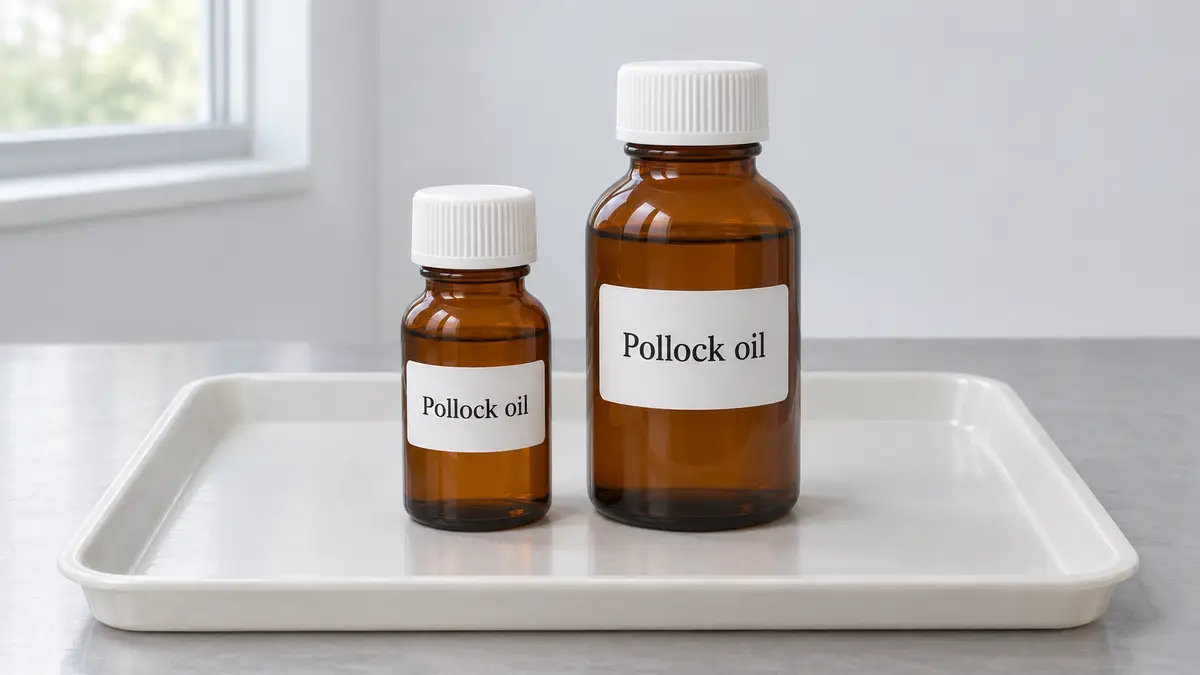
Pollock oil duty and import controls
Read from the UK Trade Tariff on 4 October 2026, heading 1504 covers fish oils and their fractions, refined or not, but not chemically modified. Pollock body oil other than solid fractions carries 0%; solid fractions carry 10%. Pollock liver oil carries 2% where vitamin A does not exceed 2 500 International Units per gram, otherwise 0%. The supplied lines show no anti-dumping or countervailing duty and no suspensions.
For food-grade Pollock oil, confirm country and establishment eligibility and any pre-notification requirements with the relevant authority or customs broker before arrival. Medium and high risk imports need a health certificate; confirm the documentation for low risk imports with your broker. Confirm the product's risk category before shipping. For feed or technical oil, ask the relevant authority to confirm whether animal by-product import conditions apply. The tariff attaches veterinary control, including a common health entry document for animal-origin products; confirm the applicable documents with your customs broker.
The tariff also attaches organic, CITES and waste import controls, and CITES and waste export controls. Confirm their applicability and requirements with your customs broker rather than assuming every attachment requires a permit for your oil. For organic goods, also consult your approved UK organic control body. Confirm the commodity code using the source tissue, physical form and processing details. See the wider fish oil guide.
| Goods | Commodity code | Duty | Anti-dumping or countervailing duty on China |
|---|---|---|---|
| Pollock body oil, other than solid fractions | 1504 20 90 00 | 0% | None |
| Solid fractions of Pollock body oil, other packings | 1504 20 10 90 | 10% | None |
| Pollock liver oil, vitamin A not exceeding 2 500 IU per gram | 1504 10 10 00 | 2% | None |
| Other Pollock liver oil | 1504 10 99 00 | 0% | None |
Specify the Pollock source and oil grade
Ask the factory to identify the exact fish species, fishery, raw-material supplier and whether the oil comes from body tissue or liver. State whether you need a food ingredient, feed ingredient or technical oil. Record refining steps, any blending and added antioxidants. Do not accept a generic fish oil specification as proof that the batch is Pollock oil.
Agree EPA and DHA content, peroxide and anisidine values, total oxidation value, free fatty acids, shelf life and storage conditions. For food-grade oil, confirm applicable marine-oil dioxin and PCB limits with the relevant authority. Specify independent batch testing and sealed packing that protects against oxygen and heat. For prepacked food, allergens must be highlighted on the label.
Worked duty example
Illustrative example, not a quote: Illustrative order: 1 tonne of refined Pollock body oil in sealed drums under 1504 20 90 00, invoiced at £4,000 free on board, with £2,500 of freight and insurance to the UK. The customs value is £6,500. Duty at 0% is £0. Import VAT at 20% is charged on the customs value plus duty, £6,500, so it is £1,300. With no duty, the only import tax is the VAT, which a VAT-registered importer can usually reclaim. The import duty and VAT guide explains each step. This assumes the goods are standard-rated for VAT. Most food for human consumption is zero-rated, and animal feed can be too, in which case no import VAT is due, so check the rate for your product in HMRC's VAT Notice 701/14.
Inspection checklist
Identity: match the species, body or liver source, refining description and batch identifiers across the order, production records and analysis certificate.
Laboratory: independently sample the shipment and compare fatty-acid composition, oxidation results, dioxins, PCBs and heavy metals with the agreed specification.
Documents: match the producer's approval and applicable import documents to the actual oil grade and shipment, rather than accepting certificates for another product.
Arrival: check drum seals, leakage, batch labels, storage records and any rancid odour; hold suspect batches for testing before use.
Working out your own order? Send us the product on WhatsApp and we reply the same working day: WhatsApp us
What goes wrong
A supplier quotes Pollock oil but provides analysis for an unspecified fish-oil blend. Body oil and liver oil are confused, or oxidation results describe the production sample rather than the shipped batch. Ask for traceable batch records and test a shipment sample.
Food, feed and technical grades are treated as interchangeable, leaving the documents inconsistent with the intended use. Heat, oxygen or damaged seals can also undermine the agreed quality during transport. Set the import route before ordering and arrange quality inspection around both documents and physical samples.
Cambridge China Bridge sources these products for UK businesses, checking the factory and the documents before shipment. See factory verification. For repeat volumes, see container programmes.
Frequently asked questions
What is the UK import duty on Pollock oil from China?
Body oil other than solid fractions carries 0%; solid fractions carry 10%. Liver oil carries 2% at vitamin A content not exceeding 2 500 International Units per gram, otherwise 0%. No trade remedy or suspension is listed.
What documents do I need for food-grade Pollock oil?
Confirm country and establishment eligibility and any pre-notification requirements with the relevant authority or customs broker. Confirm the risk category and veterinary paperwork with your broker.
How do I check that the oil is really Pollock oil?
Request the exact species, raw-material traceability and batch production records. Match them to the shipment's analysis certificate and independently test its fatty-acid composition.
Can I use feed-grade Pollock oil in food?
Do not treat the grades as interchangeable. For food-grade oil, confirm the food import route and applicable marine-oil contaminant requirements with the relevant authority or customs broker; for feed-grade oil, confirm whether separate animal by-product conditions apply.