Sourcing pneumatic conveying systems from China
Pneumatic conveying systems from China carry 0% ordinary UK duty across the pneumatic conveyor lines, with no listed trade remedy. For complete machinery supplied in Great Britain, check conformity assessment, CE or UKCA marking, the declaration of conformity and English instructions. Cambridge China Bridge sources pneumatic conveying systems.
Buying from China for a business? How our UK China sourcing agent service works · China sourcing agent for small orders and first imports
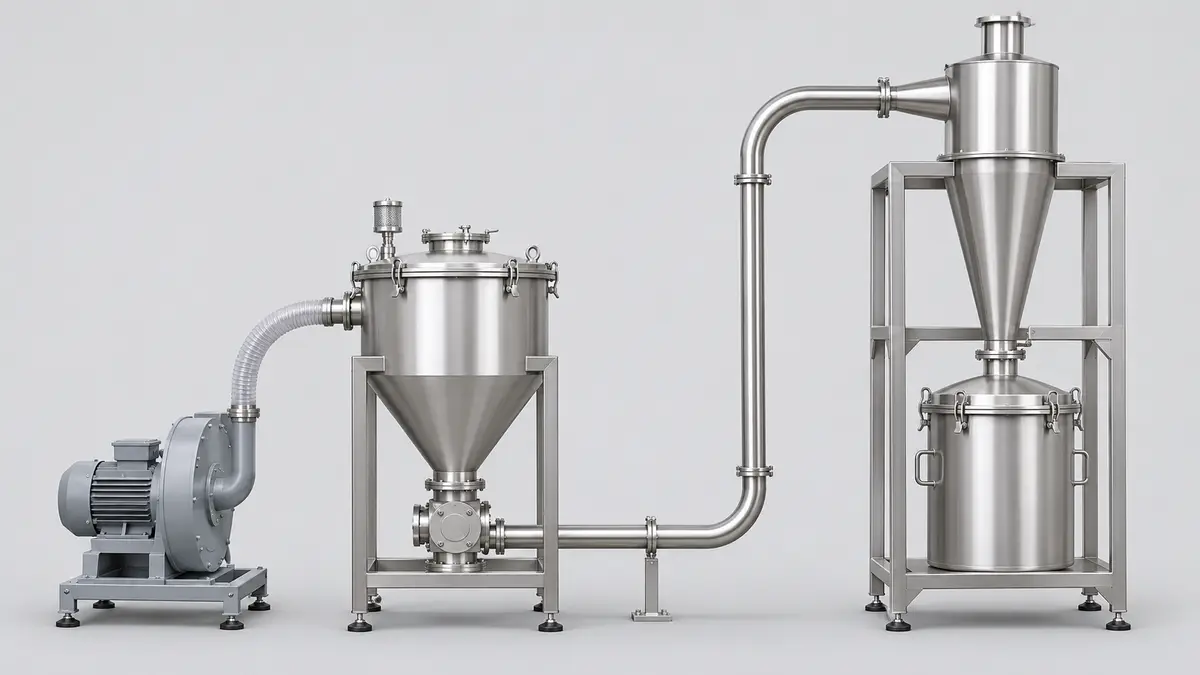
UK duty on pneumatic conveying systems
Heading 8428 covers lifting, handling, loading and unloading machinery. Pneumatic conveyors for bulk materials fall under 8428 20 20 00; other pneumatic elevators and conveyors fall under 8428 20 80 00. The mechanical conveyor rows are comparisons for adjoining transfer equipment, rather than alternative pneumatic conveyor codes. For wider heading context, see our screw conveyor guide.
Read from the UK Trade Tariff on 17 December 2026, both pneumatic conveyor lines carried 0% ordinary duty for goods from China, with no listed anti-dumping duty, countervailing duty, suspension or import control. The comparison lines also carried 0% and had none of these listed measures.
Confirm the commodity code against the supplied system, its conveying method and the material handled. Identify separately supplied equipment when preparing the classification brief. An empty controls field in the tariff data does not replace machinery conformity checks.
| Goods | Commodity code | Duty | Anti-dumping or countervailing duty on China |
|---|---|---|---|
| Pneumatic elevators and conveyors for bulk materials | 8428 20 20 00 | 0% | None |
| Other pneumatic elevators and conveyors | 8428 20 80 00 | 0% | None |
| Bucket conveyors, for comparison with mechanical transfer equipment | 8428 32 00 00 | 0% | None |
| Other continuous-action conveyors, for mechanical conveyor comparison | 8428 39 90 00 | 0% | None |
Specify the material and conveying route
Give the factory representative material samples and describe particle size, bulk density, moisture, abrasiveness, stickiness and sensitivity to breakage. Agree the required throughput over the actual horizontal route, vertical rise and bends. Specify vacuum or pressure conveying, the feeding arrangement, receiving hopper and interfaces with existing machinery.
Agree contact materials, pipe joints, bend construction, filter access, cleaning arrangements and acceptable material residue. Specify the available electrical supply and compressed air quality. Require a material trial that records throughput, air consumption, filter behaviour, product damage and restart after a planned stoppage.
For complete machinery supplied in Great Britain, check the applicable technical file, conformity assessment, declaration of conformity, CE or UKCA marking and English instructions. Agree who documents the completed installation. Employers must assess workplace fire and explosion risks from dangerous substances. Discuss combustible powder risks with a competent adviser before agreeing the equipment specification.
Have a competent adviser determine whether the pressure equipment qualifies for pressure-system examination requirements. Before qualifying equipment is used, a written scheme of examination must be in place and an examination undertaken. Include this assessment in commissioning planning.
Worked duty example
Illustrative example, not a quote: Illustrative compact pneumatic conveying package for a small processor under 8428 20 20 00, invoiced at £8,000 free on board, with £1,200 of freight and insurance to the UK. The customs value is £9,200. Duty at 0% is £0. Import VAT at 20% is charged on the customs value plus duty, £9,200, so it is £1,840. With no duty, the only import tax is the VAT, which a VAT-registered importer can usually reclaim. The import duty and VAT guide explains each step.
Inspection checklist
Material trial: check throughput using the agreed material and a representative route. Record blockages, filter loading, product breakage, receiver discharge and restart behaviour.
Pipework and receiver: check joint fit, seals, bend orientation, internal finish and cleaning access against the drawings. On arrival, inspect for dented pipes, cracked filter housings and damaged sealing faces.
Controls and safety: check level sensors, filter-cleaning sequences, emergency stops, guards and maintenance isolation against the agreed design. Confirm how the system responds to a blocked pipe or full receiver.
Documents and spares: match the declaration, marking, English instructions and electrical drawings to the delivered configuration. Check filter elements, seals and wear parts against the packing list. Record results in the agreed inspection checklist.
Working out your own order? Send us the product on WhatsApp and we reply the same working day: WhatsApp us
What goes wrong
A short factory test with free-flowing pellets can conceal problems with damp or cohesive powder. The installed route may have more bends or greater lift, causing plugging, reduced throughput or excessive product damage. Agree representative material and route conditions before accepting the trial.
Poor receiver discharge, undersized filtration and leaking joints can interrupt conveying or release dust. Inaccessible filters make cleaning difficult, while unrecorded blower or valve substitutions can alter performance. Record the actual components and repeat functional checks after installation.
Cambridge China Bridge sources these products for UK businesses, checking the factory and the documents before shipment. See factory verification. For machinery and equipment, see machinery imports.
Frequently asked questions
What is the UK import duty on pneumatic conveying systems from China?
The supplied tariff data shows 0% ordinary duty under 8428 20 20 00 and 8428 20 80 00, with no listed trade remedy, suspension or import control. Confirm which line matches the system.
What material information does the factory need?
Provide representative samples, particle size, bulk density, moisture, abrasiveness and breakage sensitivity. Specify the actual route, required throughput and cleaning needs.
Is CE marking enough for a pneumatic conveying system?
Marking alone is insufficient. Check the declaration of conformity, English instructions and applicable conformity assessment and technical file requirements for the supplied configuration.
What should I test before shipment?
Use your material to test throughput, filter loading, discharge, restart and product damage over a representative route. Check controls, seals, pipe joints and the delivered component list.