Sourcing pewter plates from China
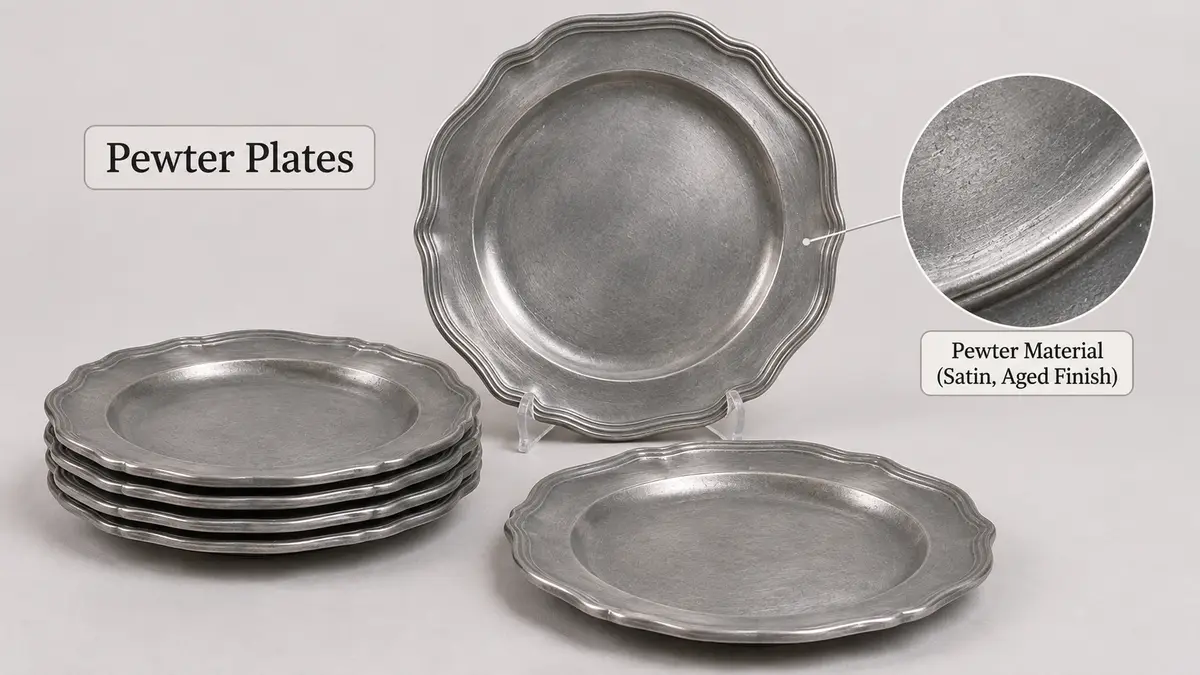
Pewter plates from China under heading 8007 carry 0% UK import duty, with no anti-dumping or countervailing duty shown in the supplied tariff record. Plates used with food need low-lead alloy composition and food contact evidence. Specify serving use or decorative use before approving samples. Cambridge China Bridge sources pewter plates.
Buying from China for a business? How our UK China sourcing agent service works · China sourcing agent for small orders and first imports
UK duty on pewter plates
Read from the UK Trade Tariff on 4 October 2026, heading 8007 covers other articles of tin. Finished pewter plates fall within the other-articles line, 8007 00 80 00. The table shows plate variants sharing that line. The heading's separate plates, sheets and strip line describes metal stock rather than finished tableware.
The supplied record shows 0% duty for goods from China, no anti-dumping or countervailing duty and no suspensions. It attaches import and export waste controls to the other-articles line. For a China shipment involving discarded plates or material for recovery, confirm the requirements with your customs broker. For waste imports into England under notification controls, the exporter must apply to the competent authority in the dispatch country for consent.
Confirm the alloy, construction and intended use through our commodity code guide. Do not classify plated base-metal dishes solely from a pewter-style finish. For related products within this heading, see our pewter tankards guide.
| Goods | Commodity code | Duty | Anti-dumping or countervailing duty on China |
|---|---|---|---|
| Polished pewter plates | 8007 00 80 00 | 0% | None |
Specify the alloy, rim and intended use
State whether the plate is for direct food contact, presentation or display. Specify alloy composition, lead limit, diameter, weight, thickness, rim profile, base flatness and finish. Agree the engraving area and artwork position, including how lettering should sit relative to any embossed border.
For food-use plates, obtain composition certificates, a supplier declaration and migration evidence for lead and other metals. A polished surface alone does not establish suitability for food contact. Match the evidence to the supplied alloy and finished surface. Arrange testing and certification support before approving production.
Consumer plates should only be sold once compliance with product safety regulations has been demonstrated appropriately. Include edge quality and stability in sample approval, and agree cleaning instructions suited to the finish.
Worked duty example
Illustrative example, not a quote: Illustrative order of 1,500 pewter plates; FOB and freight values are illustrative. under 8007 00 80 00, invoiced at £27,000 free on board, with £900 of freight and insurance to the UK. The customs value is £27,900. Duty at 0% is £0. Import VAT at 20% is charged on the customs value plus duty, £27,900, so it is £5,580. With no duty, the only import tax is the VAT, which a VAT-registered importer can usually reclaim. The import duty and VAT guide explains each step.
Inspection checklist
Composition: match batch certificates to the ordered alloy and test samples through a laboratory where needed; check food contact evidence for serving plates.
Shape: measure diameter, rim depth and thickness against the approved specification; place plates on a flat surface and check for rocking or distortion.
Finish: inspect the food-facing surface and rim for pits, casting seams, burrs and scratches; check engraving spelling, position and depth against approved artwork.
Packing: check that surfaces are separated and rims protected inside rigid boxes; inspect arrival samples for dents and rubbing. See our quality inspection guide.
Working out your own order? Send us the product on WhatsApp and we reply the same working day: WhatsApp us
What goes wrong
A decorative alloy can be substituted for the alloy approved for serving food. Other failures include porous castings, uneven polishing, distorted rims and engraving that breaks into a raised border. Approve a finished sample and keep it available for comparison with production.
Soft plates can arrive dented or scratched when stacked without separation. Agree the packing with the actual plate shape, inspect it before dispatch and compare arrival condition with the approved sample. Hold suspect food-use stock while composition and migration evidence are checked.
Cambridge China Bridge sources these products for UK businesses, checking the factory and the documents before shipment. See factory verification. For repeat volumes, see container programmes.
Frequently asked questions
What is the UK import duty on pewter plates from China?
The supplied tariff record, read on 4 October 2026, shows 0% for other articles of tin under 8007 00 80 00, with no anti-dumping or countervailing duty.
Can pewter plates be used for serving food?
Food-use plates need low-lead composition and food contact evidence, including a supplier declaration and migration evidence. Check the finished product, rather than relying on its appearance.
What should I specify for engraved pewter plates?
Specify the alloy, plate weight, rim profile, finish, engraving area and artwork position. Approve an engraved sample so lettering and borders can be checked together.
Does the tariff waste control apply to my plates?
The tariff attaches waste controls to the commodity line. Ask your customs broker to confirm the requirements for your China shipment, especially if it contains discarded plates or material for recovery.