Sourcing perforated plasterboard from China
Perforated acoustic plasterboard from China carries 0% UK duty across the relevant board lines. For Great Britain, confirm with the relevant authority which construction standard, declaration of performance and CE or UKCA marking requirements apply. Check evidence for the finished perforated panel. Cambridge China Bridge sources perforated acoustic plasterboard.
Buying from China for a business? How our UK China sourcing agent service works · China sourcing agent for small orders and first imports
Zero duty on the relevant board lines
Read from the UK Trade Tariff on 1 October 2026, heading 6809 covers articles of plaster or compositions based on plaster. The relevant unornamented board lines carry 0% duty for goods from China, with no anti-dumping or countervailing duty and no suspension recorded. The table distinguishes board and panel formats within shared codes. See the wider plasterboard guide for other plaster products.
Both board codes have a waste import control attached; the tariff also records a waste export control. For waste shipments into England subject to notification controls, consent from the competent authorities of dispatch, destination and transit is needed before shipment. For your China order, ask the customs broker to confirm the requirement attached to the code and how new saleable board should be declared.
Confirm the commodity code using the gypsum composition, facing, reinforcement and finished condition. Paper or paperboard-only facing or reinforcement points towards 6809 11 00 00; other unornamented plaster boards fall within 6809 19 00 00. Give the broker details of any acoustic backing rather than classifying from the product name alone.
| Goods | Commodity code | Duty | Anti-dumping or countervailing duty on China |
|---|---|---|---|
| Perforated plaster boards faced or reinforced with paper only | 6809 11 00 00 | 0% | None |
| Other unornamented perforated plaster boards | 6809 19 00 00 | 0% | None |
Specify the perforation and acoustic build-up
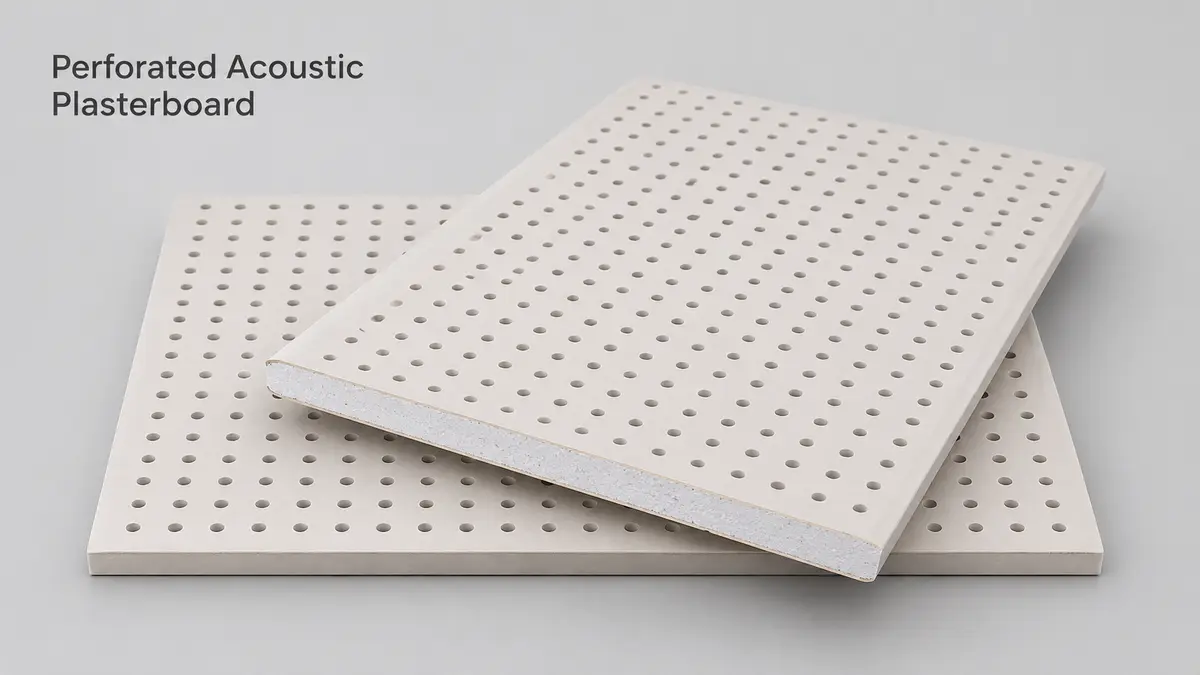
Specify board dimensions, thickness, edge profile, hole shape, hole spacing, perforation layout and unperforated margins. Include a drawing showing how the pattern continues across joints. Agree the backing fleece material, colour and bonding, the exposed finish and the intended ceiling or wall installation.
Ask for acoustic test evidence matching the finished board, backing, cavity and any insulation in the proposed installation. Request the declaration of performance and declared reaction to fire for the supplied product. Confirm with the relevant authority which declaration of performance and CE or UKCA marking requirements apply to products covered by the relevant construction standard in Great Britain. CE marking remains accepted there. Confirm the applicable standard for the finished perforated panel rather than accepting paperwork for the base board.
Worked duty example
Illustrative example, not a quote: Illustrative order: 1,500 square metres of paper-faced perforated acoustic plasterboard under 6809 11 00 00, invoiced at £7,500 free on board, with £2,400 of freight and insurance to the UK. The customs value is £9,900. Duty at 0% is £0. Import VAT at 20% is charged on the customs value plus duty, £9,900, so it is £1,980. With no duty, the only import tax is the VAT, which a VAT-registered importer can usually reclaim. The import duty and VAT guide explains each step.
Inspection checklist
Perforations: compare hole shape, spacing, margins and pattern alignment with the approved drawing; check for blocked holes and chipped rims.
Board and joints: measure dimensions and thickness, check flatness and edges, and dry-fit adjoining panels to check pattern continuity.
Backing and documents: check fleece adhesion and coverage, then match product and batch identification to the performance documents and acoustic test sample.
Arrival condition: inspect pallet edges and sampled boards for cracks, broken corners, damp marks and detached facing; photograph damage before moving the stack. Agree sampling through the inspection guide.
Working out your own order? Send us the product on WhatsApp and we reply the same working day: WhatsApp us
What goes wrong
A report for a different hole pattern, backing or cavity leaves the proposed acoustic performance unsubstantiated. Paint or adhesive can obstruct perforations, fleece can detach, and misaligned hole patterns make joints visible. Approve a joined sample assembly and record the tested installation before production.
Moisture, unsupported stacking and shifting pallets can cause warping, cracked strips between holes and broken edges. Agree flat support, edge protection and dry packing. Keep damaged boards separate on arrival and record the affected batches before installation.
Cambridge China Bridge sources these products for UK businesses, checking the factory and the documents before shipment. See factory verification. For repeat volumes, see container programmes.
Frequently asked questions
What is the UK import duty on perforated acoustic plasterboard from China?
The relevant board lines under heading 6809 carry 0% duty for goods from China, with no anti-dumping or countervailing duty recorded in the supplied tariff facts.
Does perforated acoustic plasterboard need CE or UKCA marking?
For Great Britain, confirm with the relevant authority which declaration of performance and CE or UKCA marking requirements apply. Confirm the standard for the finished perforated panel.
What acoustic test report should I ask the factory for?
Ask for a report matching the supplied hole pattern, backing fleece and installation build-up, including the cavity and insulation. Compare the tested sample with the production specification.
How do I check perforated plasterboard on arrival?
Check hole alignment, chipped rims, backing adhesion, flatness, cracked edges and damp marks. Dry-fit adjoining panels and photograph damage before moving the stack.