Sourcing PEN tyre cord fabric from China
PEN tyre cord fabric from China carries 0% UK duty across the relevant polyester lines. Confirm rubber impregnation and check the finished fabric against UK REACH chemical restrictions. Specify PEN identity, heat shrinkage and adhesion to your rubber compound. Cambridge China Bridge sources PEN tyre cord fabric.
Buying from China for a business? How our UK China sourcing agent service works · China sourcing agent for small orders and first imports
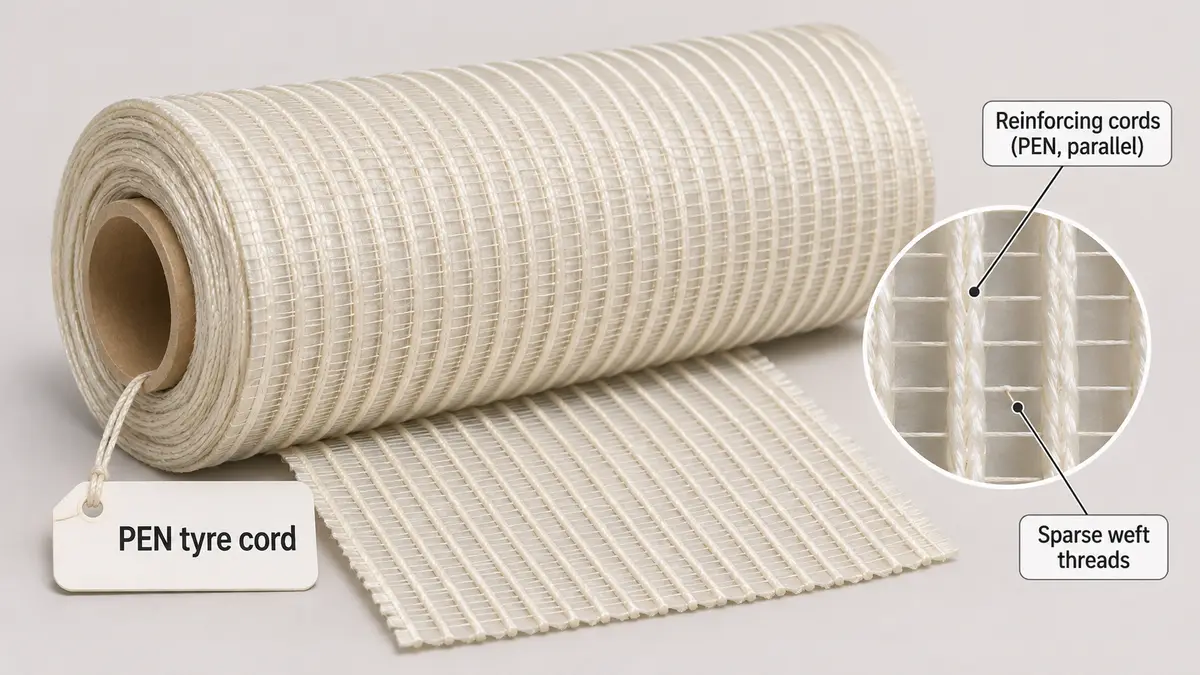
PEN tyre cord fabric: 0% duty
Read from the UK Trade Tariff on 6 October 2026, heading 5902 covers tyre cord fabric of high-tenacity nylon or other polyamide, polyester or viscose rayon yarn. PEN is a polyester, so this guide shows only the applicable polyester lines. Both carry 0% duty for goods from China. The supplied tariff record lists no anti-dumping or countervailing duty, suspension or attached import control for these lines.
Rubber-impregnated polyester tyre cord fabric falls under 5902 20 10 00; other polyester tyre cord fabric falls under 5902 20 90 00. Do not select the rubber-impregnated line solely because the supplier calls the fabric dipped. Confirm the treatment and commodity code using the composition and finishing details. See the wider tyre cord fabric guide for other fibres.
| Goods | Commodity code | Duty | Anti-dumping or countervailing duty on China |
|---|---|---|---|
| Polyester tyre cord fabric, including PEN, impregnated with rubber | 5902 20 10 00 | 0% | None |
| Other polyester tyre cord fabric, including PEN | 5902 20 90 00 | 0% | None |
Specify PEN yarn and compound compatibility
Write out poly(ethylene naphthalate) in the purchase specification rather than accepting a generic polyester description. Ask for yarn producer and grade records linked to the fabric lot. Specify yarn linear density, twist, cord density, weft construction, usable width, roll length and finish. Agree breaking strength, elongation, heat shrinkage and adhesion acceptance criteria with the laboratory methods and conditioning stated.
For dipped fabric, agree the adhesive treatment and test adhesion with your intended rubber compound and curing conditions. Ask for the finished fabric's chemical declaration covering the fibre and treatment. UK REACH restrictions can limit, ban or set conditions on substances. Check applicable restrictions before supplying the fabric in Great Britain, and ask for a statement on substances of very high concern.
Worked duty example
Illustrative example, not a quote: Illustrative trial consignment of PEN tyre cord fabric in rolls under 5902 20 90 00, invoiced at £14,000 free on board, with £1,200 of freight and insurance to the UK. The customs value is £15,200. Duty at 0% is £0. Import VAT at 20% is charged on the customs value plus duty, £15,200, so it is £3,040. With no duty, the only import tax is the VAT, which a VAT-registered importer can usually reclaim. The import duty and VAT guide explains each step.
Inspection checklist
Identity: match yarn grade records, fabric lot certificates and roll labels to the agreed PEN specification; investigate any document that describes only generic polyester.
Mechanical properties: compare breaking strength, elongation and heat shrinkage with the agreed methods and conditioning; retain samples linked to each inspected lot.
Adhesion and fabric: test treated cord with your rubber compound, check dip pick-up, and inspect cord spacing, width, broken ends, knots and contamination.
Packing and storage: check sealed wrapping, dry roll cores, protected edges, lot identification and production dates against the agreed storage conditions and shelf life.
Working out your own order? Send us the product on WhatsApp and we reply the same working day: WhatsApp us
What goes wrong
A polyester description alone does not establish PEN identity. Unapproved yarn substitutions or changes in twist and heat treatment can leave a delivery outside the agreed performance specification. An adhesion result obtained with a different rubber compound or curing cycle does not establish suitability for your process.
Uneven treatment, moisture exposure and ageing can undermine adhesion even when the roll looks acceptable. Check arriving rolls against retained samples and lot results before releasing them into production. Define sampling and acceptance checks in the purchase order using the quality inspection guide.
Cambridge China Bridge sources these products for UK businesses, checking the factory and the documents before shipment. See factory verification. For own-brand ranges, see sourcing for brands.
Frequently asked questions
What is the UK import duty on PEN tyre cord fabric from China?
The supplied tariff record gives 0% for both relevant polyester lines, with no anti-dumping or countervailing duty recorded.
Does dipped PEN tyre cord fabric use the rubber-impregnated code?
Check the actual treatment. The tariff distinguishes rubber-impregnated fabric from other polyester tyre cord fabric; a supplier's dipped description alone is insufficient.
How do I check that the yarn is PEN?
Require the full polymer description, yarn producer and grade records, and traceability to the fabric lot. Agree independent material identification if the documentation is unclear.
Which adhesion test result should I ask the factory for?
Ask for results using your intended rubber compound and agreed curing conditions, with the method, conditioning and lot identity recorded.